What yoga can and cannot claim
The studies point in different directions, and the mix shows how much yoga can claim:
-
Yoga and HRV: a split answer. One review of 14 randomized trials found that ten reported favorable effects on various HRV measures and nine did not, and only two of the 14 trials were of acceptable methodological quality. The authors concluded there was no convincing evidence that yoga changes HRV [1].
-
A wider review leans the other way. Across 59 studies (2,358 participants), HRV and vagal dominance were higher during yoga practice, and regular practitioners had higher resting vagal tone than people who do not practice. Most of those studies were small, many were single laboratory sessions with healthy male practitioners, and only 15 were randomized trials, so the authors called firm conclusions premature. They asked future studies to describe the yoga practices in detail and to report any accompanying changes in breathing [2].
-
Stress physiology looks favorable. A meta-analysis of 42 randomized trials found that practices including yoga postures were associated with lower evening and waking cortisol, lower ambulatory systolic blood pressure and a lower resting heart rate than active control conditions, although the interventions varied widely [3].
-
Self-reported stress: yoga and mindfulness did equally well. In the RELAX trial, 102 adults with elevated stress were assigned to an integrative yoga class, an Iyengar class that was mostly physical postures, or mindfulness training with no physical practice. Perceived stress fell in all three groups, and the differences between groups were not significant [4].
-
Beginners also report less stress. In a separate trial of 98 healthy yoga beginners, eight weeks of hatha yoga reduced self-reported stress and stress reactivity and raised mindfulness compared with a waitlist, with no change in anxiety [5].
Put together, the studies support yoga as a way to lower felt stress over weeks, and they leave open whether the postures, the breathing or the attention does the work. Mindfulness training with no postures did as well as yoga in the RELAX trial, so if floor work does not appeal to you, other relaxation exercises are a reasonable substitute.
Who should adapt or skip it
In randomized trials, yoga caused no more adverse events than usual care or exercise. A review of 94 trials (8,430 participants) found no difference in serious or non-serious adverse events against those comparisons, though non-serious events were more frequent than with psychological or educational interventions [6].
Surveys of everyday practitioners are less reassuring. Among 1,702 German yoga practitioners, 21.4% reported at least one acute adverse effect, mostly musculoskeletal. Of the acute cases, 76.9% recovered fully. The risk of chronic adverse effects was higher in people with chronic illnesses [7].
Bone health is a separate concern. A systematic review of yoga in people at risk of fractures found very low certainty evidence overall, and two case series reported vertebral fractures related to yoga, possibly due to excessive spinal flexion [8]. Anyone with osteoporosis or a fracture risk should ask a clinician before trying the half fold and child's pose below.
Speak to a doctor before starting if you have a heart condition, low or unstable blood pressure, back, hip or knee problems that a pose could aggravate, or if you are pregnant. Rise slowly from the floor, and stay seated until any lightheadedness passes.
The 15-minute sequence
The sequence has ten poses, four at a chair and six on the floor, and takes about fifteen minutes. The head stays in line with the spine throughout, and the sequence has no neck movements and no inversions. The breath cues are relative on purpose: where the table says the exhale runs a little longer than the inhale, let it; elsewhere, breathe as you would sitting quietly.
|
Pose
|
Time
|
Breath cue
|
Setup
|
|
1. Seated mountain (chair)
|
1 minute
|
Let the breath settle without counting
|
Feet flat, sit tall, hands on thighs, gaze level
|
|
2. Seated cat-cow with a still head (chair)
|
8 slow rounds, about 1.5 minutes
|
Inhale to arch the lower back, exhale to round it
|
Hands on knees; the movement comes from the lower back
|
|
3. Seated side bend (chair)
|
3 breaths per side, about 1.5 minutes
|
Reach up on the inhale, bend on the exhale
|
Anchor the opposite hip; head stays in line with the spine
|
|
4. Half fold with hands on the chair (standing)
|
1 minute
|
Exhale a little longer than the inhale
|
Hands on the seat, back flat, knees soft; rise slowly
|
|
5. Child's pose (floor)
|
1.5 minutes
|
Exhale a little longer than the inhale
|
Knees wide, hips toward heels, forehead on stacked fists or a cushion
|
|
6. Supported bridge (floor)
|
1.5 minutes
|
Breathe naturally once lifted
|
Cushion or block under the pelvis, feet hip-width apart
|
|
7. Reclining twist (floor)
|
1 minute per side
|
Exhale as the knees lower
|
Knees fall to one side; face stays toward the ceiling
|
|
8. Legs on the chair (floor)
|
2 minutes
|
Exhale a little longer than the inhale
|
Lie on your back with calves on the seat, hips near the chair
|
|
9. Reclining butterfly (floor)
|
1 minute
|
Breathe naturally
|
Soles together, knees open, cushions under the knees if they hang
|
|
10. Final rest (floor)
|
2 minutes
|
No counting
|
Lie flat, arms by your sides, and let breath and attention settle
|
Put the chair against a wall so it cannot slide, and keep the whole sequence pain-free. A pose that pinches or strains has been held too far.
Pairing breath with movement
Move on the exhale where the table says so, and never hold your breath inside a pose. If the breath turns ragged, or you start to strain, ease out of the pose; the routine is meant to leave you slower than you started. The review of 59 studies asked for better reporting of breathing changes [2], which leaves open how much of any benefit comes from the breath, so the routine does not ask you to count or pace it.
How long to give it
The trials cited here ran for eight to twelve weeks [4] [5], so judge the routine over a similar stretch and not after a single session. Choose a time you can repeat and a length you will finish. A fifteen-minute routine you complete beats a longer one you abandon halfway.
What to leave out
Skip headstand, shoulder stand and handstand. In the German survey, hand-, shoulder- and head stands were the practices most often linked to acute adverse effects, and practicing only by self-study without supervision was associated with higher risk [7]. Learn the poses with a qualified teacher where you can. A review of published case reports found that headstand, shoulder stand, lotus position and forceful breathing were the most commonly cited postures and techniques, and it advised beginners to avoid them [9]. Skip any pose that makes you dizzy or reaches into pain.
Where Pulsetto fits around the routine
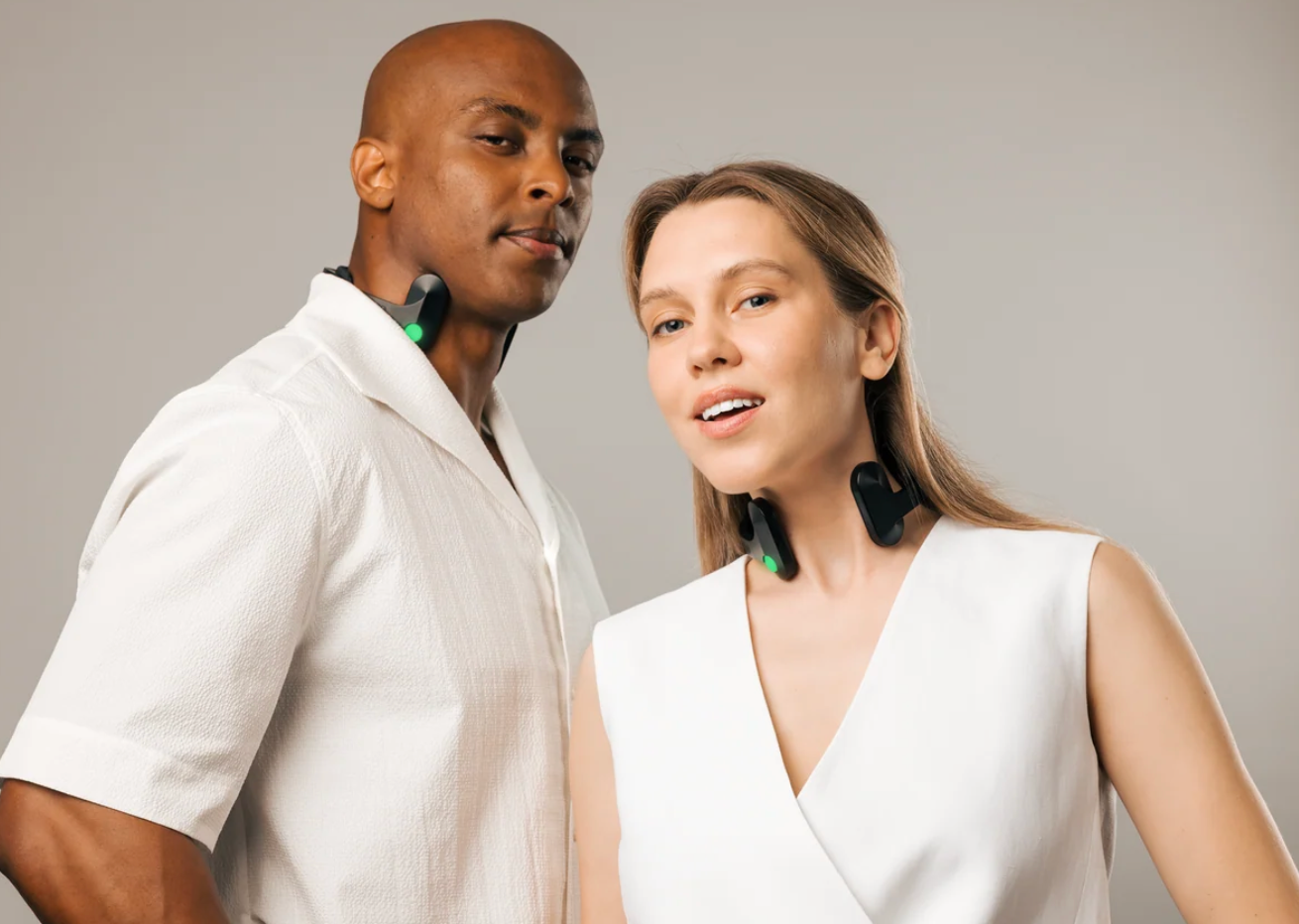
Because it is hands-free, the 4-minute stress program, one of the free app's programs, fits on either side of the routine. Run it in the chair before the first pose to settle in, or after the final rest. Run it before or after the poses and not during them, so the session and the movement stay separate, and doing one on its own for a week first shows you what each contributes. Pulsetto is a general wellness product and does not treat any condition. Anyone with a pacemaker, an implantable device or epilepsy should not use it.
Start with three poses
Learn three poses first: seated cat-cow with a still head, child's pose and the final rest. Together they take about five minutes, and once they feel familiar you can add the rest of the sequence one pose at a time. If you want a hands-free session beside your practice, Pulsetto has a 4-minute stress program you can run before or after.
Best Vagus Nerve Yoga Exercises FAQs
Does yoga help with anxiety?
It may help people with elevated anxiety, and the evidence is thinner for diagnosed anxiety disorders. A meta-analysis of eight randomized trials (319 participants) found a small short-term effect against no treatment and a larger one against active comparators, but no effect in people whose anxiety disorder was diagnosed by DSM criteria. Only people with elevated anxiety and no formal diagnosis showed one, and only three trials reported safety data, which showed no increase in injuries [10]. A second meta-analysis of 17 studies (501 participants) found that the effect was larger the more hours people practiced, though the quality of the studies was low [11]. The beginner trial cited above found no change in anxiety scores [1]. If anxiety is affecting your daily life, talk to a doctor or mental health professional, and treat yoga as an addition to that conversation.
Can I do yoga in a chair instead of on the floor?
Yes, and chair-based programs have been tested. In a trial of 131 older adults with lower-limb osteoarthritis who could not take part in standing exercise, eight weeks of twice-weekly chair yoga reduced pain interference more than a health education program, and the difference held at three months. Gait speed and fatigue improved during the program but those gains faded afterward, and balance did not change [12]. A larger trial of a 12-week chair-based program in 454 adults aged 65 and over with multiple long-term conditions found no significant difference in its primary quality-of-life measure over 12 months. No serious related adverse events were reported and participants found it acceptable [13]. The first three poses in the table above are fully seated, so you can start there.
Does yoga count as strength or balance training?
For adults aged 60 and over it can contribute. A meta-analysis of 22 randomized trials in older adults not selected for any particular condition found that yoga improved balance, lower body flexibility and lower limb strength against inactive controls (effect sizes 0.45 to 0.7). Against active controls such as walking and chair aerobics, lower limb strength and flexibility still favored yoga [14]. The sequence in this guide is gentle and was not tested in those trials, so use it as a starting point, and keep to any strength or balance program a clinician has given you.
Who should not use Pulsetto?
Do not use Pulsetto if you have a pacemaker, an implantable medical device, or epilepsy, and do not use it while pregnant unless a healthcare provider has cleared you. Talk to a doctor first if you have a cardiovascular condition, recent neck or throat surgery or injury, or carotid artery problems.
Scientific research
-
Yoga for Heart Rate Variability: A Systematic Review and Meta-analysis of Randomized Clinical Trials (Posadzki et al., 2015, Applied Psychophysiology and Biofeedback)
-
Yoga and heart rate variability: A comprehensive review of the literature (Tyagi et al., 2016, International Journal of Yoga)
-
Yoga, mindfulness-based stress reduction and stress-related physiological measures: A meta-analysis (Pascoe et al., 2017, Psychoneuroendocrinology)
-
Stress Reduction by Yoga versus Mindfulness Training in Adults Suffering from Distress: A Three-Armed Randomized Controlled Trial including Qualitative Interviews (RELAX Study) (Fischer et al., 2022, Journal of Clinical Medicine)
-
The influence of hatha yoga on stress, anxiety, and suppression: A randomized controlled trial (Szaszkó et al., 2023, Acta Psychologica)
-
The Safety of Yoga: A Systematic Review and Meta-Analysis of Randomized Controlled Trials (Cramer et al., 2015, American Journal of Epidemiology)
-
Adverse effects of yoga: a national cross-sectional survey (Cramer et al., 2019, BMC Complementary and Alternative Medicine)
-
Effect of yoga on health-related outcomes in people at risk of fractures: a systematic review (Kim et al., 2021, Applied Physiology, Nutrition, and Metabolism)
-
Adverse events associated with yoga: a systematic review of published case reports and case series (Cramer et al., 2013, PLoS ONE)
-
Yoga for anxiety: A systematic review and meta-analysis of randomized controlled trials (Cramer et al., 2018, Depression and Anxiety)
-
Effect of Hatha Yoga on Anxiety: A Meta-Analysis (Hofmann et al., 2016, Journal of Evidence-Based Medicine)
-
A Pilot Randomized Controlled Trial of the Effects of Chair Yoga on Pain and Physical Function Among Community-Dwelling Older Adults With Lower Extremity Osteoarthritis (Park et al., 2016, Journal of the American Geriatrics Society)
-
Chair-based yoga programme for older adults with multimorbidity: RCT with embedded economic and process evaluations (Tew et al., 2024, Health Technology Assessment)
-
The effects of yoga compared to active and inactive controls on physical function and health related quality of life in older adults- systematic review and meta-analysis of randomised controlled trials (Sivaramakrishnan et al., 2019, International Journal of Behavioral Nutrition and Physical Activity)