How Each Device Works
Both Pulsetto and Sensate are designed to support the vagus nerve, the long nerve running from the brainstem through the neck and into the body that plays a central role in the body's rest-and-recover mode (the parasympathetic nervous system). Despite sharing this target, the two devices take completely different physical approaches to reach it.
Pulsetto FIT X: Electrical Stimulation at the Neck

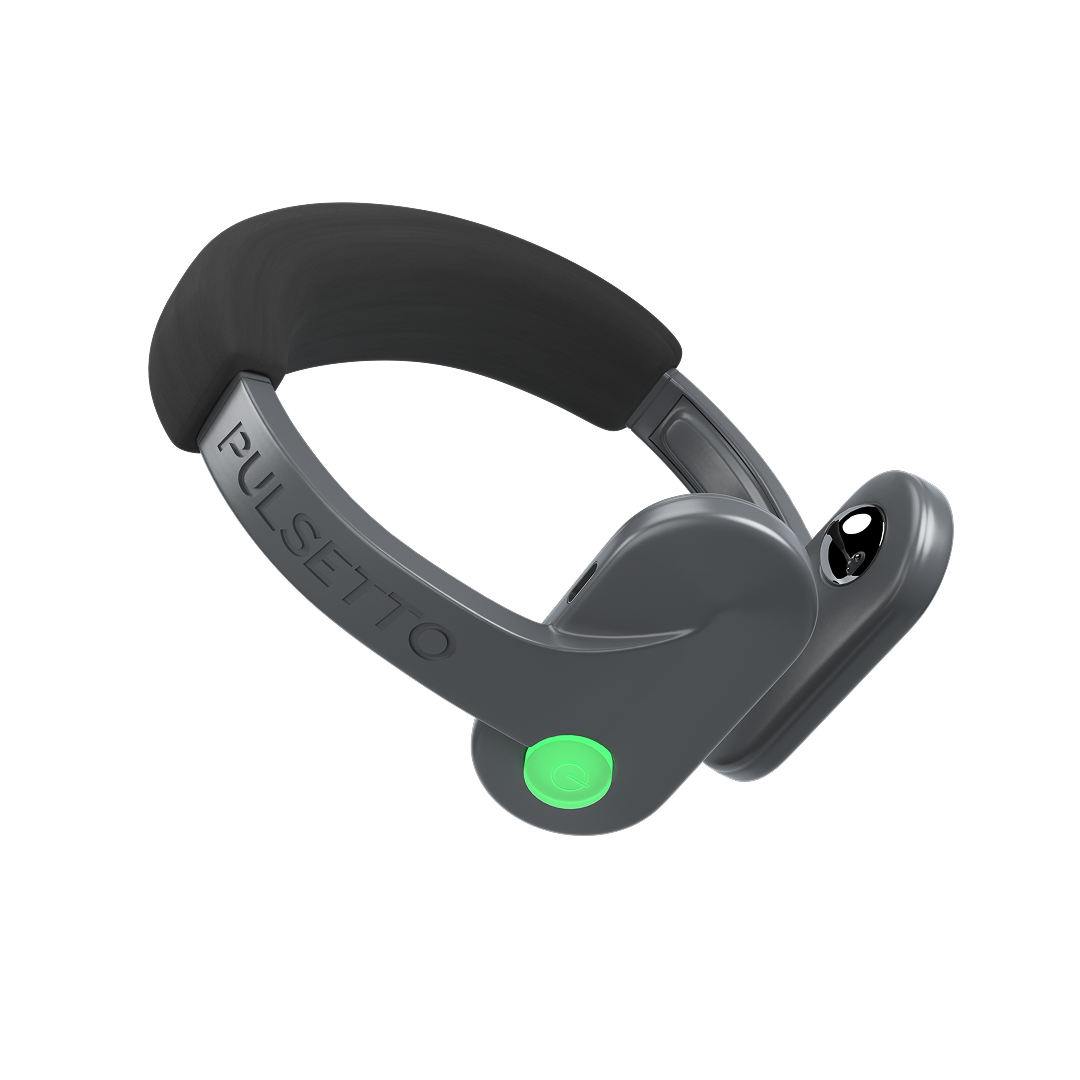
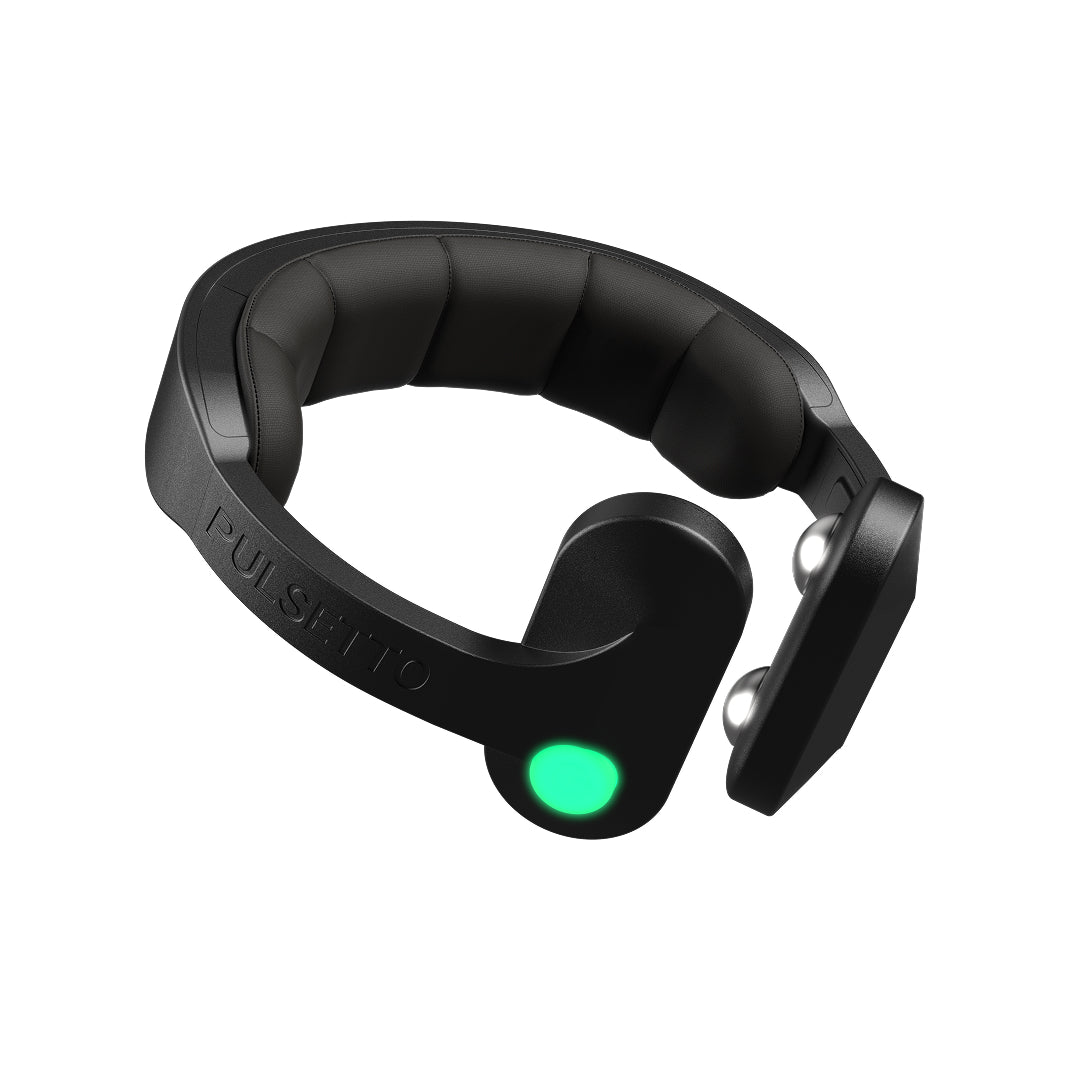
Pulsetto delivers low-level electrical pulses to the sides of the neck through two gel-coated contact points. The device sits against the skin at the carotid region, where the vagus nerve runs close to the surface. This approach is based on the principle of transcutaneous vagus nerve stimulation (tVNS), which means stimulating the nerve through the skin without any surgical procedure.
Sessions are guided through a companion app and typically last around four minutes. Users can adjust intensity levels, and the app offers programs targeting stress, sleep, and focus. The electrical signal is designed to activate the vagus nerve directly at its anatomical location.
For vagus nerve stimulation for stress, this direct stimulation approach is thought to prompt the nervous system to shift away from a heightened stress state and toward a calmer baseline.
Sensate: Infrasonic Resonance at the Chest

Sensate works through a different mechanism entirely. The device rests flat on the sternum (the breastbone in the centre of the chest) and emits infrasonic vibrations, which are low-frequency sound waves that you feel rather than hear. The theory is that these vibrations travel through the chest cavity and may stimulate the vagus nerve indirectly through resonance in surrounding tissue.
There is no gel required. The user simply places the device on their chest, opens the Sensate app, selects an audio track, and remains still for the duration of the session. Sessions typically run between 10 and 30 minutes.
The key practical difference is engagement level. Pulsetto involves gel application, device placement at the neck, and app interaction to select and start a session. Sensate is closer to a passive sensory experience, more similar to listening to ambient sound with an added physical vibration component. For a closer look at setting up Pulsetto, the how to stimulate vagus nerve by pulsetto quick-start guide covers the process step by step.
What’s New in Pulsetto FIT X
FIT X is the current generation of the Pulsetto platform, and the changes are mostly about removing the variables the earlier device left to the user. Intensity adapts while the session runs instead of being set once at the start. Intelligent contact sensing checks electrode contact rather than leaving it to guesswork. The electrodes are angled to form an X across the neck, creating a crossed field that reaches both vagus nerve pathways instead of one side at a time. Vibro-tactile feedback confirms the device is responding, and offline mode plus improved battery life remove the two most common reasons people skip a session.
Adaptive stimulation that adjusts to you while the session runs
Intelligent contact sensing, so quality does not depend on manual tuning
X-shape electrode design creating a crossed field across both vagus nerve pathways
Advanced stimulation profiles for different goals and situations
Vibro-tactile feedback, offline mode and improved battery life
Deeper app integration, with progress tracked over time
What does the X mean? Two things. First, geometry: the electrodes are angled so they form an X across the neck. Second, multiplication. FIT X is not a cosmetic refresh of Pulsetto FIT but the next generation of the same platform. Pulsetto FIT and Lite remain available as lower-cost entry points.
Pulsetto FIT X vs Sensate: Side-by-Side Comparison
With the mechanism differences clear, the practical comparison becomes much easier to evaluate. The table below covers the criteria that most pre-purchase shoppers are weighing.
Stimulation Method and Placement
Feature |
Pulsetto |
Sensate |
Stimulation method |
Transcutaneous electrical stimulation |
Infrasonic (low-frequency) vibration |
Device placement |
Sides of the neck |
Flat on the sternum (chest) |
Gel required |
Yes, conductive gel on contact points |
No |
Typical session length |
~4 minutes |
10-30 minutes |
App required |
Yes, for session control |
Yes, for audio content |
Price, App, and Subscription Model
Feature |
Pulsetto |
Sensate |
Device price |
Approximately $269 (Pulsetto Fit) |
Approximately $299 (Sensate 2) |
Free app tier |
Yes, core sessions included |
Basic access available |
Premium subscription |
Optional, unlocks additional programs |
App content is central to experience |
Subscription required to use device |
No |
No, but experience is content-dependent |
Pulsetto's pricing sits slightly below Sensate at launch, though both prices may vary by region or promotion. The important point for budget-conscious buyers is that Pulsetto's core functionality does not require an ongoing payment. For a direct answer on this, the does pulsetto require a subscription page explains exactly what the free tier includes.
HRV Tracking and Reported Side Effects
Feature |
Pulsetto |
Sensate |
HRV tracking |
Yes, built into the app |
No |
Biometric feedback |
HRV scores tracked over time |
Not available |
Common side effects |
Mild tingling at contact points |
Sensitivity to vibration intensity |
Cardiac device users |
Not suitable |
Not suitable |
Use during pregnancy |
Not recommended |
Not recommended |
Side effects for both devices are generally mild and temporary. Pulsetto users may notice a tingling or buzzing sensation at the neck during sessions, which is a normal response to low-level electrical stimulation. Sensate users occasionally report discomfort if the vibration intensity is set too high, particularly on the first few uses.
Both devices carry contraindications for users with implanted cardiac devices such as pacemakers, and neither is recommended during pregnancy. For full safety information on Pulsetto, the pulsetto side effects page covers contraindications in detail. As with any wellness device, consulting a healthcare provider before starting is a sensible step, particularly for anyone managing an existing health condition.
HRV Benefits: What the Research Suggests
Heart rate variability (HRV) is a measure of the variation in time between consecutive heartbeats. Despite the name, it is not about heart rate speed. It reflects how flexibly the autonomic nervous system (the system that governs automatic body functions like breathing and digestion) responds to moment-to-moment demands. Higher HRV is generally associated with better stress resilience and stronger rest-and-recover capacity.
The vagus nerve plays a direct role in regulating HRV. Techniques that are thought to activate the vagus nerve, including controlled breathing, cold exposure, and devices like Pulsetto, may support improvements in HRV over time. Some Pulsetto users report noticeably improved HRV scores after several weeks of consistent daily use, though individual results vary and are not guaranteed.
Pulsetto's app includes HRV measurement tools that allow users to take readings before and after sessions and track trends over time. This built-in feedback loop is one of Pulsetto's clearest practical advantages for users who want to see whether their practice is having an effect.
Sensate does not offer built-in HRV tracking. Its app focuses on audio content, soundscapes, and guided relaxation rather than biometric monitoring. Users who want to pair Sensate with HRV tracking would need a separate device or app to do so.
For users whose primary goal is measurable nervous system improvement rather than relaxation alone, Pulsetto's integrated approach is more suited to that outcome. The pulsetto clinical trial page provides additional background on how Pulsetto has been studied in a structured setting.
Which Device Is Right for You?
The honest answer to which device is better is that neither is objectively superior. Pulsetto suits users who want active, app-guided stimulation with built-in HRV tracking and the ability to target specific goals like stress, sleep, or focus. Sensate suits users who prefer a passive, screen-free experience with no gel and no adjustments to make mid-session. The right choice depends entirely on whether you want measurable feedback or effortless simplicity.
Choose Pulsetto FIT X If...
You want to track HRV and see data-based evidence of progress over time.
You prefer short, targeted sessions of around four minutes rather than longer passive sessions.
You want to customise session intensity and choose programs for different goals such as stress relief, sleep support, or mental focus.
You are comfortable with a small amount of preparation, specifically applying conductive gel before each session.
You want a device that fits into a broader wellness routine and integrates with app-guided programming.
You want to avoid ongoing subscription costs but still access a functional, structured experience through the free tier.
For sleep-specific use, the improve sleep by pulsetto page covers how Pulsetto is designed to support sleep routines specifically.
Choose Sensate If...
You prefer a completely passive experience with no gel, no electrodes, and no real-time app interaction during a session.
You want a longer session format rather than a short focused burst of stimulation.
Skin sensitivity or discomfort with electrical sensation near the neck is a concern for you.
Neither device is a wrong choice. The decision comes down to whether you want an active, data-informed tool or a passive sensory aid. Both may support relaxation and nervous system balance when used consistently, and both represent a meaningful investment in daily stress management.
For users who want to explore how vagus nerve stimulation relates to anxiety specifically, the vagus nerve stimulation for anxiety page covers that angle in more detail.
Pulsetto FIT X vs Sensate vs Other Vagus Nerve Devices
The vagus nerve stimulator market has grown considerably, and Pulsetto and Sensate are two of the more well-known options, but they are not the only ones worth knowing about. Other devices in the category include Apollo Neuro, which delivers vibration at the wrist, and Nurosym, a medical-grade device positioned at a higher price point with a different target audience.
Each device in this category uses a different stimulation mechanism and is positioned for a slightly different use case. Apollo Neuro focuses heavily on wearability during activity. Nurosym targets clinical and therapeutic applications. Pulsetto and Sensate both focus on daily at-home wellness routines, which is why they come up together so often in comparison searches.
If you are weighing Pulsetto against Apollo Neuro, the pulsetto vs apollo neuro comparison covers that pairing in full detail. For those considering Nurosym alongside Pulsetto, the nurosym vs pulsetto article is a useful next read. There is also a dedicated nurosym vs sensate comparison for anyone researching that specific pairing.
Practical Tips for Getting the Most from Either Device
Whichever device you choose, consistency matters more than any single session. Both Pulsetto and Sensate are designed to build a cumulative effect on the nervous system over weeks of regular use, not to deliver a dramatic result in one sitting.
For Pulsetto users:
Apply a thin, even layer of conductive gel to both sides of the neck before placing the device. Insufficient gel is the most common reason for a weak or uneven sensation.
Start at a low intensity setting, especially in the first few sessions. The goal is a noticeable but comfortable tingling, not strong discomfort.
Use the device at the same time each day. Many users find morning sessions help with daytime stress resilience, while evening sessions support wind-down before sleep.
Pair each session with slow, deliberate breathing for potentially added effect on the rest-and-recover response.
Track your HRV readings in the app before and after sessions over the first few weeks to give yourself a baseline for comparison.
For Sensate users:
Place the device flat against the centre of the sternum and ensure it sits stably before starting.
Use the Sensate app's audio content rather than running sessions in silence. The audio is designed to complement the vibration pattern.
Choose a quiet environment. The experience is most effective without competing noise or interruption.
Evening use before sleep is the most commonly recommended approach, particularly for users dealing with pre-sleep anxiety.
Both devices work best with regular use over several weeks. Users tracking HRV with Pulsetto often find it easier to stay consistent because the data creates a feedback loop that makes the habit feel purposeful. A visible trend in HRV scores is a strong motivator to keep going on days when it would be easy to skip. The how to use pulsetto video page walks through device setup and session structure for new users, and the can you use pulsetto too much guide covers safe daily usage frequency.
Ready to Try Pulsetto FIT X?
If this comparison has helped you identify Pulsetto as the right fit for your goals, the next step is straightforward. Pulsetto is designed for daily use, requires no ongoing subscription to access core features, and comes with a return policy that reduces the risk of trying something new.
For anyone who values active engagement, HRV tracking, and app-guided sessions for stress, sleep, and focus, Pulsetto is a well-considered starting point. Explore the full device range and current pricing at the vagus nerve stimulator homepage, and review the pulsetto return policy before purchasing so you know exactly what to expect.
Frequently Asked Questions 💬
Which is better, Pulsetto or Sensate?
Neither device is objectively better. Pulsetto suits users who want active, app-guided electrical stimulation with built-in HRV tracking and customisable session intensity. Sensate suits users who prefer a passive, no-gel experience with longer, more meditative sessions. The right choice depends on whether you value measurable feedback or effortless simplicity. Both may support relaxation and nervous system balance with consistent use.
Does Pulsetto actually stimulate the vagus nerve?
Pulsetto delivers low-level electrical pulses to the neck at the location where the vagus nerve runs close to the skin's surface. This approach is based on the principle of transcutaneous vagus nerve stimulation (tVNS), meaning nerve activation through the skin without surgery. Pulsetto is a wellness device, not a medical device, and is not intended to diagnose or treat any condition. Many users report feeling calmer and more relaxed during and after sessions.
What is the best vagus nerve stimulator device?
The best vagus nerve stimulator depends on what you need it for. Pulsetto is a strong option for users who want direct electrical stimulation with app integration and HRV tracking built in. Sensate is better suited to users who want a passive, vibration-based experience. Apollo Neuro and Nurosym are worth considering for different use cases. Reviewing specific head-to-head comparisons for each pairing is the most reliable way to find the right fit.
Is Pulsetto worth the money?
Pulsetto's upfront cost is comparable to other premium vagus nerve stimulators in the category. The free app tier means users are not locked into ongoing costs to access the core stimulation experience. For users seeking daily stress or sleep support without pharmaceuticals, the cost per session over time is relatively low given the device's reusability. The return policy also reduces purchase risk for first-time buyers who want to try before committing fully.
Does Pulsetto require a subscription to use?
Pulsetto can be used without a premium subscription. The free app tier includes core stimulation sessions across the main program categories. A premium subscription unlocks additional guided programs and extended content, but it is not required to operate the device or access the fundamental features. Users who want to explore the full range of Pulsetto's session library can upgrade at any time, but upgrading is a choice rather than a requirement.
Is Pulsetto FIT X different from Pulsetto FIT?
Yes. FIT X is the next generation of the same platform rather than a redesign. It adds adaptive stimulation that adjusts to you during the session, intelligent contact sensing, X-shape electrodes that target both vagus nerve pathways, advanced stimulation profiles, vibro-tactile feedback, improved battery life and a more stable Bluetooth connection. Pulsetto FIT and Lite remain available as lower-cost entry points.
Train your nervous system. Build your stress resilience. Pulsetto FIT X combines adaptive stimulation, guided protocols and measurable progress in one connected Stress Fitness system. Meet Pulsetto FIT X.