What Stress Fitness Means
Stress fitness is a practical term for something stress researchers have been converging on for a while: resilience is not a fixed trait some people have and others don't. A framework proposed for organizing resilience research treats it as the dynamic process of successful adaptation to stressors, an outcome that emerges from identifiable, modifiable mechanisms rather than something set from birth [1]. Stress fitness takes that research framing and makes it actionable: if resilience is a process built from specific mechanisms, those mechanisms can be trained on purpose, the same way cardiovascular fitness is built from specific, repeatable physical adaptations rather than luck.
How Stress Fitness Differs From Stress Management, Resilience, and Mental Toughness

These terms get used interchangeably, but they describe different things.
-
Stress management is about reducing exposure or intensity: fewer stressors, calmer environments, better boundaries.
-
Stress resilience is the broader outcome, staying mentally healthy despite adversity. Mental toughness is a psychological framing focused on willpower and grit under pressure.
-
Stress fitness is narrower and more mechanical than any of those: it's specifically about training the physiological and cognitive systems that determine how you respond to and recover from stress you can't avoid or manage away.
The underlying mechanism is allostasis, the process by which the body maintains stability by actively adjusting its internal systems in response to demand, rather than staying static the way it would under simple homeostasis [2]. Repeated, controlled exposure to manageable stress is what lets those systems adapt efficiently; repeated, uncontrolled or excessive stress is what wears them down instead, a distinction known as allostatic load. Stress fitness training is, in effect, deliberately practicing the first kind of exposure so the systems involved get better at their job, which is also why it pairs naturally with, rather than replaces, broader resilience work like building resilience without relying on medication.
The Five Trainable Systems of Stress Fitness
Nervous System Regulation
Your autonomic nervous system, specifically the balance between sympathetic activation and parasympathetic recovery, is the most immediately trainable piece of stress fitness. A systematic review and meta-analysis covering 223 studies found that voluntary slow breathing measurably increased vagally mediated heart rate variability, the physiological marker of parasympathetic control [3]. Breathing practice, vagus nerve stimulation, and other nervous-system-focused techniques all work on this same lever. See a full daily routine built around this system.
Physical Conditioning
General cardiovascular fitness changes how your body reacts to psychological stress, not just physical exertion. A randomized controlled trial found that 12 weeks of endurance training improved cardiovascular stress reactivity and heart-rate recovery in response to a psychosocial stress test [4]. This is the slowest-building of the five systems, but also the one with the broadest downstream effects.
Stress Tolerance
This is the capacity to face a stressor without your reaction spiking as hard, built through graduated, deliberate exposure rather than avoidance. A study using repeated cold-pressor exposure found measurable habituation in heart rate, blood pressure, and cardiac output reactivity, evidence that the acute stress response itself can be trained [5].
Cognitive Reappraisal
How you interpret a stress response changes its physiological impact. A study found that reframing physiological arousal as a resource rather than a threat improved both cardiovascular and cognitive responses to a stressor [6]. This is the one system trained entirely through practice rather than equipment or exposure.
Recovery Capacity
How fast you return to baseline after a stressor ends is a distinct trainable skill from how you handle the stressor itself. A scoping review synthesizing 291 studies found this return-to-baseline process is measurably linked to resilience and attentional control, while a slow recovery is linked to depression and emotion dysregulation [7].
Why Stress Fitness Matters
Untrained, these five systems don't stay neutral. Under chronic modern stress, they tend to drift toward the less adaptive end: blunted parasympathetic recovery, lower stress tolerance, more catastrophic interpretation of pressure. Training them deliberately is what keeps that drift from compounding, and it's a different lever than reducing stress exposure itself, which isn't always possible. Someone with a demanding job or family situation can't always lower how much stress reaches them, but they can change how well-equipped their systems are to handle it, which is the entire premise behind increasing your stress capacity rather than just trying to reduce exposure to stress.
How to Start Building Stress Fitness
Trying to train all five systems at once usually stalls out. The more durable approach is picking one system, typically nervous system regulation or physical conditioning since both show measurable change fastest, and building a small, consistent practice around it for a few weeks before layering in the next one. A good first practice is short and specific: five minutes of extended-exhale breathing after a stressful moment, or three light cardio sessions a week, rather than an ambitious full-stack routine from day one. Once that first practice is automatic, add a second system instead of trying to overhaul everything at once, and keep building outward from there until all five are part of a normal week.
Accelerating Nervous System Regulation: Vagus Nerve Stimulation

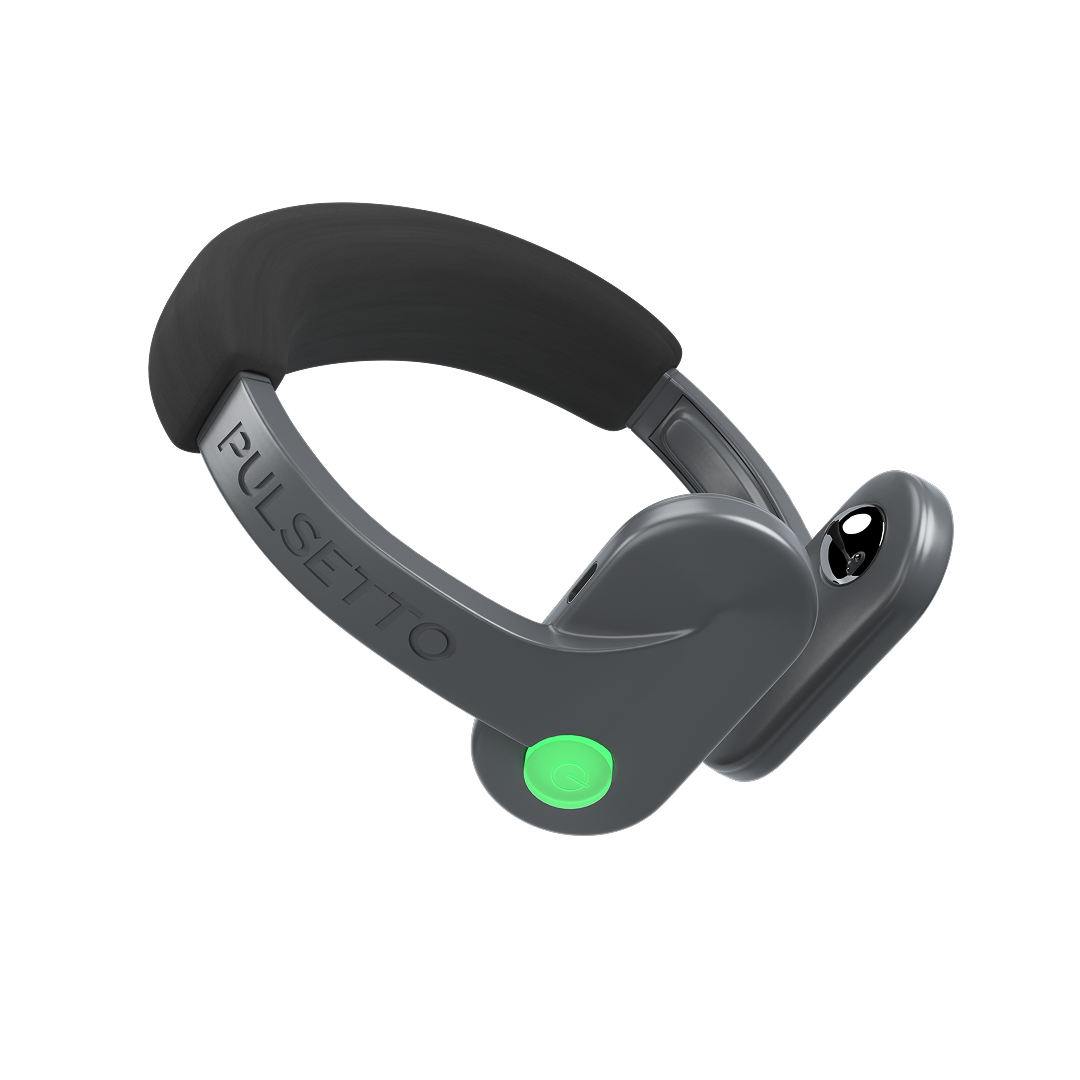
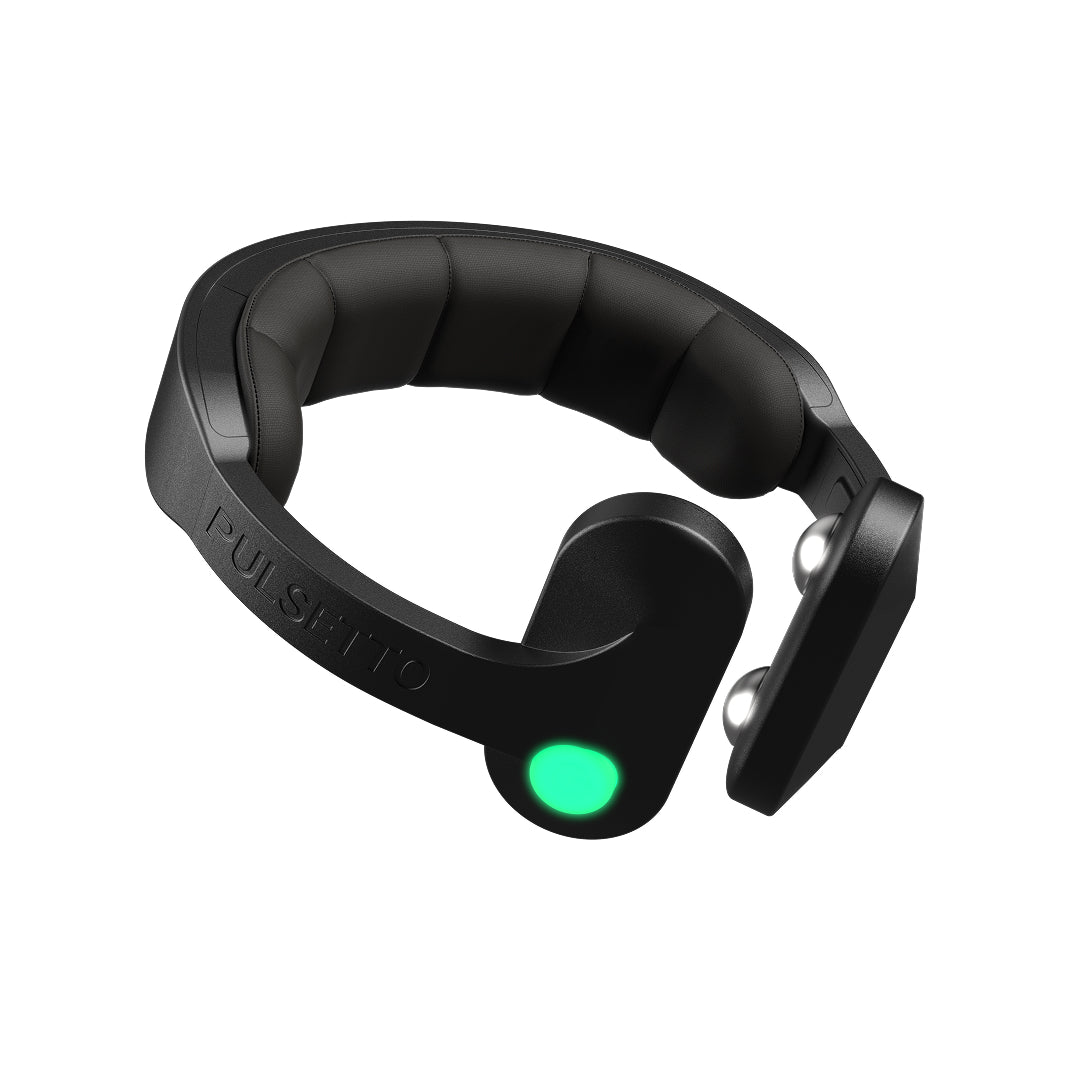
Of the five systems, nervous system regulation is the one a device can accelerate most directly. Pulsetto delivers bilateral cervical vagus nerve stimulation in a 4 to 10 minute session, working on the same parasympathetic lever that breathing practice trains, without requiring a technique to be learned or practiced correctly first.
Pulsetto tested this in a randomized, open-label pilot study of 40 adults over 4 weeks, comparing bilateral against unilateral cervical stimulation. Participants in the bilateral group reported a 55.9% reduction in depression symptoms (PHQ-9) and a 41.0% reduction in sleep disturbance (PSQI) from baseline at the 2-week mark.
It's best positioned as an accelerant for the nervous-system-regulation system specifically, not a substitute for the other four. Someone building physical conditioning, stress tolerance, cognitive reappraisal, or recovery capacity still needs the practices those systems actually respond to.
When to Get Professional Guidance First
Breathing practice, cognitive reappraisal, and graduated exposure carry no special risk for a healthy adult. Physical conditioning and cold exposure specifically warrant a check with a physician for anyone with an existing cardiovascular condition before starting. Vagus nerve stimulation carries its own contraindications: anyone with a pacemaker or other implantable device, epilepsy or a seizure disorder, or who is pregnant should get medical guidance first, along with anyone with an active cardiac arrhythmia, a recent neck or throat injury or surgery, or a carotid artery condition [8].
Try Pulsetto
Nervous system regulation is the one stress fitness system you can start accelerating today, without waiting weeks of practice to see it change. The Pulsetto vagus nerve stimulator delivers that regulation directly in a single session. Curious what a full stress fitness stack looks like alongside it? See real user experiences.
Frequently Asked Questions
Is stress fitness the same as resilience?
Not exactly. Resilience is the broader outcome, staying mentally healthy despite adversity. Stress fitness is the narrower, more mechanical set of trainable systems, nervous system regulation, physical conditioning, stress tolerance, cognitive reappraisal, and recovery capacity, that contribute to resilience but can each be trained individually.
How long does it take to build stress fitness?
It depends on the system. Nervous system regulation can show measurable change within days to weeks of consistent breathing or vagus nerve stimulation practice. Physical conditioning and stress tolerance typically take 8 to 12 weeks of consistent practice to show a measurable shift.
Do I need special equipment to build stress fitness?
No. Breathing practice, cognitive reappraisal, graduated exposure, and movement all work with no equipment. Tools like vagus nerve stimulation devices can accelerate one system specifically, but they're an addition, not a requirement.
Can stress fitness decline if I stop training it?
Yes, the same way physical fitness declines without maintenance. The systems involved respond to consistency more than intensity, so a modest, sustained practice across all five systems tends to hold up better over time than an intense but short-lived push.
Scientific Research
[1] The resilience framework as a strategy to combat stress-related disorders (Kalisch et al., 2017, Nature Human Behaviour, 658 citations)
[2] Psychobiological allostasis: resistance, resilience and vulnerability (Karatsoreos & McEwen, 2011, Trends in Cognitive Sciences, 432 citations)
[3] Effects of voluntary slow breathing on heart rate and heart rate variability: A systematic review and a meta-analysis(Laborde et al., 2022, Neuroscience and Biobehavioral Reviews, 225 citations)
[4] Effects of a 12-week endurance training program on the physiological response to psychosocial stress in men: a randomized controlled trial (Klaperski, von Dawans, Heinrichs & Fuchs, 2014, Journal of Behavioral Medicine, 156 citations)
[5] Habituation of the stress response multiplex to repeated cold pressor exposure (Bullock et al., 2023, Frontiers in Physiology, 19 citations)
[6] Mind over matter: Reappraising arousal improves cardiovascular and cognitive responses to stress (Jamieson, Nock & Mendes, 2012, Journal of Experimental Psychology: General, 413 citations)
[7] Cardiac vagal recovery following acute psychological stress in human adults: A scoping review (Roddick et al., 2025, Neuroscience and Biobehavioral Reviews, 10 citations)
[8] Safety and tolerability of transcutaneous vagus nerve stimulation in humans: a systematic review (Redgrave et al., 2018, Brain Stimulation, 215 citations)