Which move fits where you are?
Match your situation to a row. Each guide lists who should adapt or skip its move, so read the one you choose before you commit.
|
Where you are
|
Time to set aside
|
Move
|
Where the detail lives
|
|
At your desk or between calls
|
About 5 minutes
|
Slow breathing at roughly six breaths a minute
|
The breathing guide
|
|
In the kitchen, the car or any private spot
|
About 3 minutes
|
Humming
|
The humming and gargling guide
|
|
After you close the laptop
|
About 5 minutes
|
The four-stretch neck routine
|
The neck stretches guide
|
|
A weekend morning or after a workout
|
About 15 minutes
|
The floor and chair yoga sequence
|
The yoga guide
|
|
The last hour of the evening
|
10 to 15 minutes
|
A wind-down that ends with slow breathing
|
The sleep guide
|
You do not need all five. One row you will repeat is worth more than five you will visit once.
How do you write a cue sentence?
A cue sentence ties the move to something that already happens every day. Use this format: After I [existing routine], I will [move] for [minutes] in [place]. A review of planning interventions in health behavior found that the most effective ones used if-then plans, pointed to salient cues, included examples of cues, were guided and not left to the user, and included boosters [2]. The table gives you the examples, and re-reading your sentence once a week is the booster.
|
After I...
|
I will...
|
For...
|
In...
|
|
pour my morning coffee
|
breathe slowly
|
5 minutes
|
the kitchen chair
|
|
close my laptop for the day
|
do the four neck stretches
|
5 minutes
|
beside my desk
|
|
put the kettle on in the evening
|
hum
|
3 minutes
|
the kitchen
|
|
(your routine)
|
(your move)
|
(minutes)
|
(your place)
|
Where the move goes in the routine matters. In a 50-person flossing study, people who flossed after brushing their teeth tended to form stronger habits than those who flossed before, and the gap was still visible eight months later [3]. Put the move right after something you never skip.
How long before it sticks?

Expect about two months. A systematic review and meta-analysis of 20 studies with 2,601 participants found median times to form a habit of 59 to 66 days, with a wide spread between people, from 4 to 335 days [1]. It also found that morning practices and self-selected habits tended to be stronger. Most of those studies carried a high risk of bias, and none tested a vagus exercise, so read the figures as a guide to the pace of habit-building in general.
What does a four-week build look like?
This build is a suggestion and no trial has tested this particular ramp. It exists to protect the cue in the first weeks, and you can adjust it freely.
|
Week
|
Slots
|
Minutes per day
|
Days
|
What to check
|
|
1
|
One
|
3 to 5
|
5
|
Does the cue fire without you thinking about it?
|
|
2
|
One
|
5 to 10
|
5
|
Is the place still working?
|
|
3
|
Two
|
About 10 in total
|
5
|
Does the second slot sit after a different routine?
|
|
4
|
Two
|
About 10 in total
|
5 to 6
|
Keep what you did, swap what you skipped
|
The numbers come from three places. Participants in a 12-week slow-breathing trial with 100 healthy adults averaged 4.8 home practices a week, so five days a week is a realistic target [4]. A review of slow-breathing studies in healthy adults described daily sessions over 4 to 8 weeks [5]. A systematic review of 143 heart rate variability biofeedback studies found no agreement on the number of weeks or the length of each session [6]. Ten minutes a day is therefore a practical figure and not a proven dose.
What do you do when it stops working?
Most stalls have a small fix:
-
You skipped the slot twice. Shrink it to two minutes and keep the cue. Pulsetto's quick stress relief tips list options that take from one to five minutes.
-
The cue keeps moving. Switch to a routine that happens every day, such as making coffee or locking the front door, because the flossing study found that anchoring the move to an established routine was linked with stronger habits [3].
-
It feels like a chore. Swap the move for another row in the menu. Self-selected habits tended to be stronger in the meta-analysis [1].
-
Nothing seems to change. Time to form a habit ranged from 4 to 335 days between people [1], so a slow start says little about where you will end up.
-
You were away or unwell. Restart at the size of week one and rebuild from there.
Where Pulsetto fits in the plan
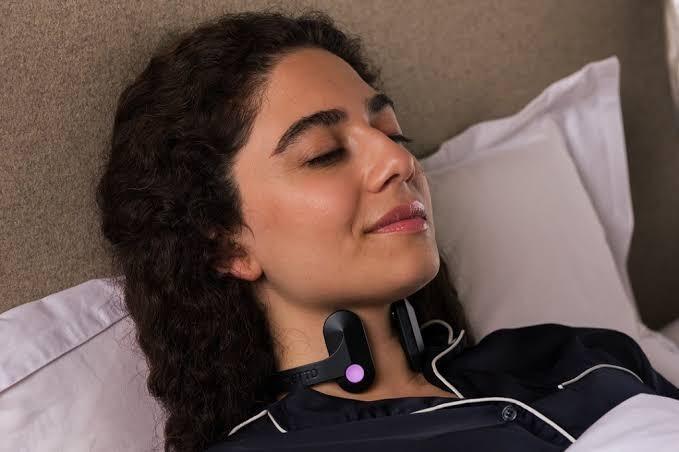
Every move in the menu is something you do. Pulsetto is the slot where the device does the work. It is a neck-worn vagus nerve stimulator used with electrode gel, and its free app includes a 4-minute Stress program, a 4-minute Focus program for the start or middle of the workday and a 10-minute Sleep program for about 30 minutes before bed. Because it is hands-free and short, it fits a cue sentence like any other move: after I sit down at my desk, I will run the Focus program.
In Pulsetto's own randomized, open-label pilot study over 4 weeks, hair cortisol, a longer-term stress marker, decreased significantly with bilateral stimulation and did not with unilateral stimulation.
Disclaimer: Pulsetto is a general wellness product and is not a medical device. Do not use it if you have a pacemaker or an implantable medical device, or if you have epilepsy. Do not use it while pregnant unless a healthcare provider has cleared you. Talk to a doctor first if you have a cardiovascular condition or carotid artery problems, or if you have had recent neck or throat surgery or injury.
Write your cue sentence today
Fill in one row of the cue table before you close this page: the routine you never skip, the move that fits it, the minutes and the place. Put the sentence where you will see it tomorrow morning, such as a sticky note on the coffee machine. If you want a hands-free move in one of your slots, Pulsetto has a 4-minute Stress program that fits a cue like any other.
Best Vagus Nerve Exercises At Home FAQs
Do text reminders help me keep the habit going?
A little. A meta-analysis of 35 studies of text message interventions for preventive health behaviors found a small pooled effect (d = 0.24), and in the seven studies that measured behavior after the messages stopped the effect was smaller still (d = 0.17). Interventions that ran for 6 to 12 months were among the most effective [7]. The studies did not involve vagus exercises. Use a reminder as a prompt for the cue, and let the cue itself take over as the routine settles.
Does telling someone about my plan help?
It can. A meta-analysis of 141 papers found a small positive unique effect of setting a goal on behavior change (d = 0.34), and goal setting worked best when the goal was difficult, set publicly or set as a group goal [8]. The plan here starts small on purpose to protect the cue, so the public and shared parts are the ones that carry over: tell a friend your cue sentence, or practice the same move alongside someone.
Is Pulsetto FDA approved?
It has not received FDA approval as a medical device. Pulsetto is a general wellness product and is not intended to diagnose, treat, cure, or prevent any disease or medical condition. It is FCC certified. If you are exploring options for a specific health condition, speak with a healthcare provider first.
How much does Pulsetto cost?
Pulsetto Lite is $269 and Pulsetto FIT is $296, with a newer FIT X model listed at $368. Every device carries a 2-year warranty and a 30-day money-back guarantee. Check the product page for current pricing, since it changes.
Who should not use Pulsetto?
Do not use Pulsetto if you have a pacemaker, an implantable medical device, or epilepsy, and do not use it while pregnant unless a healthcare provider has cleared you. Talk to a doctor first if you have a cardiovascular condition, recent neck or throat surgery or injury, or carotid artery problems.
Scientific research
-
Time to Form a Habit: A Systematic Review and Meta-Analysis of Health Behaviour Habit Formation and Its Determinants (Singh et al., 2024, Healthcare)
-
Implementation intention and action planning interventions in health contexts: state of the research and proposals for the way forward (Hagger et al., 2014, Applied Psychology: Health and Well-Being)
-
Forming a flossing habit: an exploratory study of the psychological determinants of habit formation (Judah et al., 2013, British Journal of Health Psychology)
-
Slow breathing for reducing stress: The effect of extending exhale (Birdee et al., 2023, Complementary Therapies in Medicine)
-
Breathe better, live better: the science of slow breathing and heart rate variability (Giorgi et al., 2025, Acta Neurologica Belgica)
-
Methods for Heart Rate Variability Biofeedback (HRVB): A Systematic Review and Guidelines (Lalanza et al., 2023, Applied Psychophysiology and Biofeedback)
-
Preventive Health Behavior Change Text Message Interventions: A Meta-analysis (Armanasco et al., 2017, American Journal of Preventive Medicine)
-
Unique effects of setting goals on behavior change: Systematic review and meta-analysis (Epton et al., 2017, Journal of Consulting and Clinical Psychology)