Most users describe this range as a soft tingling sensation.
It’s ideal if:
• You’re new to stimulation
• Your neck feels sensitive
• You prefer a very light,
calming experience
Many people stay here — and that’s perfectly fine.
VAGUS NERVE STIMULATION
If you’ve been feeling stressed or anxious — and nothing seems to fully help — it may not be a mindset issue at all. It could simply be your nervous system feeling overwhelmed.
The vagus nerve runs from your brain to your gut and plays an important role in how safe and balanced your body feels. In today’s fast-paced world, it can become under-supported — leaving you feeling tense, wired, or unable to fully relax.
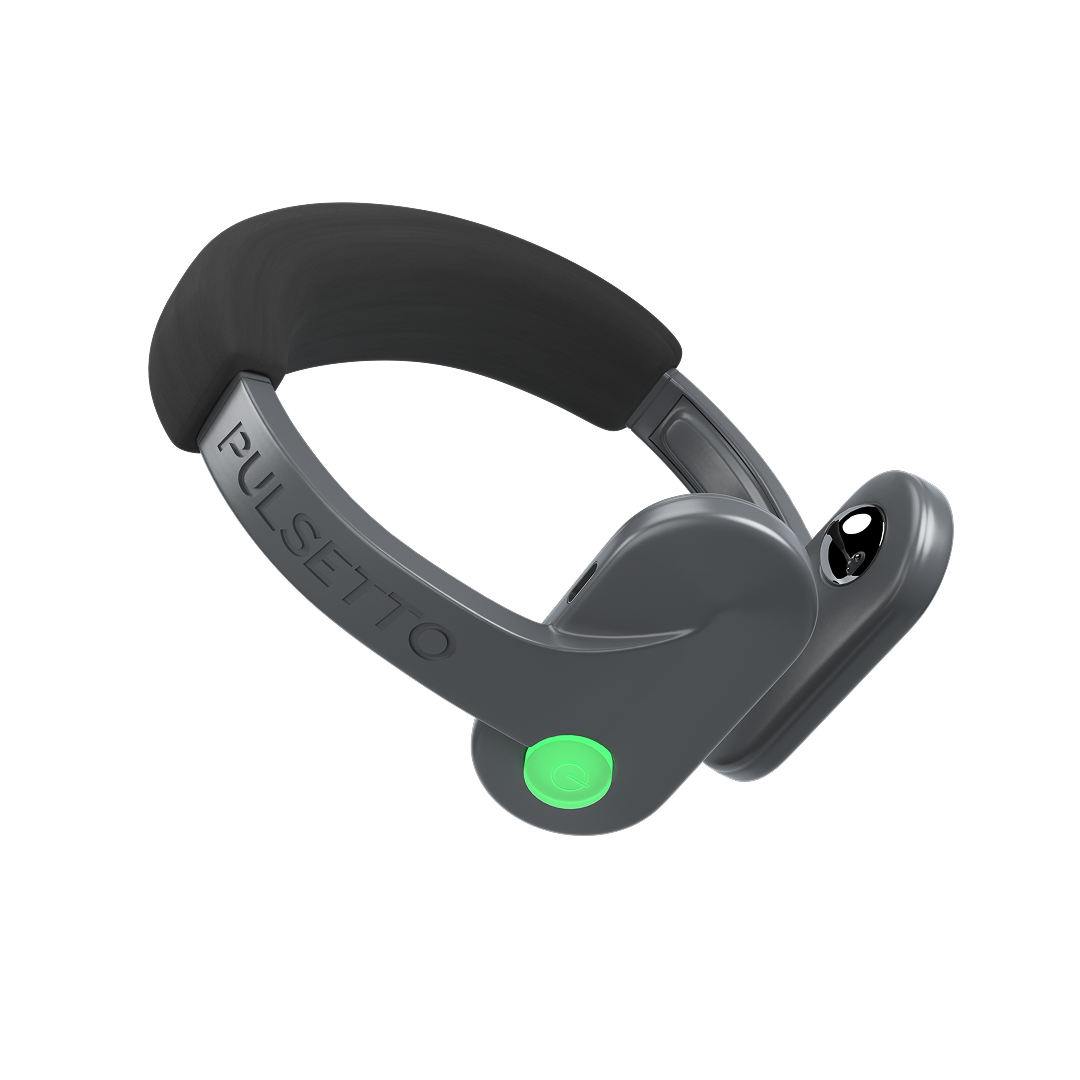
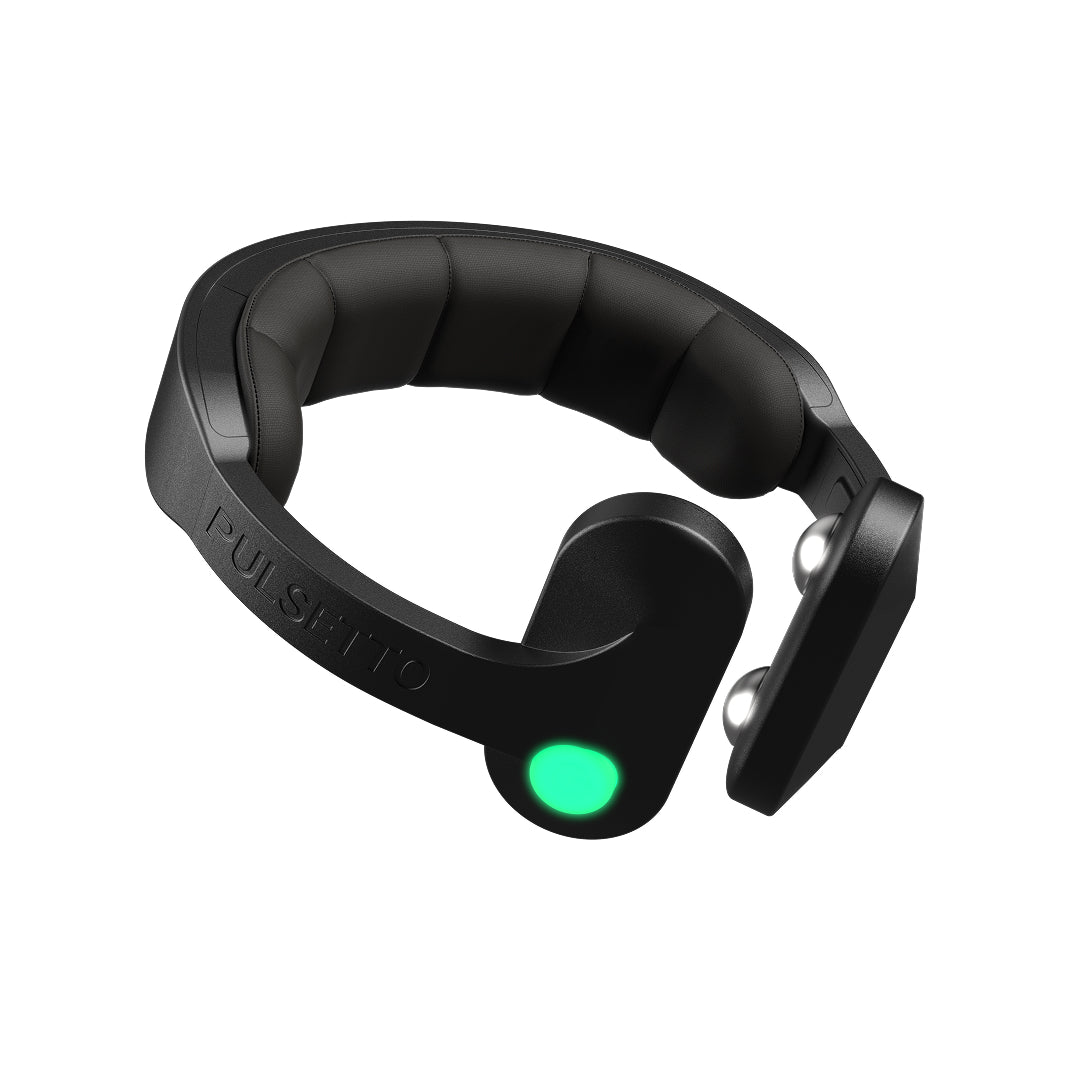
Pulsetto is a doctor-recommended, non-invasive device designed to gently stimulate the vagus nerve at home. In just 4 minutes, it helps your body shift toward a calmer, more regulated state — supporting relief from tension, burnout, and ongoing stress in a natural, steady way.


HOW IT WORKS
One daily session supports your body’s stress-response network — helping regulate sleep, mood, recovery, and resilience through nervous system balance.
A lot of sleep issues are not “lack of discipline.” They’re a regulation issue. If your autonomic system stays in activation mode, you tend to get lighter sleep, more awakenings, and you wake up not restored. Cervical vagus stimulation is designed to support the shift toward a recovery state, which is one upstream driver of sleep continuity.
Measured: In our 4-week study, people used Pulsetto twice a day for 4 weeks. Sleep improved by 41% in 4 weeks (and 32% by week 2), measured with PSQI — a validated sleep score based on real-life experience: time to fall asleep, night awakenings, overall sleep quality, and daytime energy.
A lot of what people call “stress” is a body state — feeling wired, tense, reactive, and unable to fully come down. That usually means your system stays in activation mode longer than it should. Cervical vagus stimulation is designed to support regulation and recovery physiology, helping the body return toward baseline after stressors.
Measured: In our 4-week study, people used Pulsetto twice a day for 4 weeks. We tracked longer-window stress biology using hair cortisol and hair cortisone (these reflect how activated your stress system has been over weeks, not minutes). After 4 weeks, hair cortisol decreased significantly.
Anxiety often has a physical component: higher baseline tension, restlessness, shallow breathing, and feeling keyed up. This is closely linked to autonomic arousal — the system that controls how activated or settled your body is. Cervical vagus stimulation is intended to support autonomic regulation, which may help reduce that persistent activation and make it easier to return to a calmer baseline.
Measured: In our 4-week study, people used Pulsetto twice a day for 4 weeks. Anxiety improved on GAD-7 — a validated 7-question check-in that asks how often anxiety showed up in real life (feeling on edge, trouble controlling worry, restlessness, irritability). The answers add up to one score. Lower score = fewer anxiety symptoms and less disruption to daily life.
Low mood is often tightly linked to recovery physiology: poor sleep, ongoing stress activation, and low “baseline energy.” When the nervous system stays activated for too long, people tend to feel more emotionally flat, less motivated, and more easily drained. Cervical vagus stimulation is intended to support regulation and recovery pathways — not to “force” mood, but to improve the physiological conditions mood depends on.
Measured: In our 4-week study, people used Pulsetto twice a day for 4 weeks. Mood symptoms improved on PHQ-9 — a validated scale that asks how often common symptoms showed up in daily life.
Focus problems are often a nervous system state problem: when your baseline is too activated, your attention becomes jumpy, working memory feels smaller, and mental effort costs more. In that state, the brain prioritizes scanning and rapid switching over sustained concentration. Cervical vagus stimulation is intended to support autonomic regulation and arousal control — the physiology that makes sustained attention easier when the main friction is stress load, poor sleep, or constant stimulation.
Independent research: In human studies, non-invasive vagus stimulation has been shown to shift brain and body signals linked to attention — for example, changes in pupil size (a common marker of alertness/arousal) and changes in brain activity during attention tasks. Some studies also report better performance on simple working-memory tasks.
Slow recovery usually means your system stays activated after load — work pressure, hard training, travel, poor sleep. In that state, the body has a harder time switching into “repair mode,” so you feel depleted longer and bounce back slower. The vagus nerve is part of the control system that supports that downshift into recovery physiology.
Independent research: Researchers often track recovery state with HRV (heart rate variability). HRV reflects how flexible your autonomic system is — higher HRV generally signals better recovery capacity and stress resilience, while consistently low HRV can signal sustained activation. In human studies, non-invasive cervical vagus stimulation has been shown to increase HRV compared to sham in controlled settings, supporting the idea that vagal stimulation can engage recovery-related physiology.
Pain can feel worse when your body is stuck in a higher-alert state: you hold more muscle tension, you sleep lighter, and you become less tolerant to discomfort. That doesn’t mean the pain isn’t real — it means the nervous system can amplify it. Cervical vagus stimulation is intended to support autonomic regulation, which is one reason researchers study non-invasive VNS in the context of pain processing.
Independent research: In controlled human experiments, non-invasive vagus stimulation has been shown to change pain-related responses in the nervous system (how pain signals are processed and regulated), compared with control conditions.
A lot of digestive discomfort is a nervous system pattern: when you’re stressed, digestion often slows or becomes more reactive. People notice it as bloating, fullness, “tight gut,” or discomfort after meals — especially during busy weeks. The vagus nerve is one of the main control lines for gut–brain signaling and upper-GI motility. That’s why vagus stimulation is being studied as a way to support “rest-and-digest” physiology when symptoms track with stress.
Independent research: In human research, non-invasive vagus stimulation has been studied in functional gut disorders, including randomized controlled trials and meta-analyses, with symptom improvements.
The vagus nerve, controlling the parasympathetic nervous system, regulates vital functions. Its stimulation activates this system, enabling the body to restore balance, resulting in a calmer, less stressed, and less anxious state.
Designed to complement your Pulsetto device, the app offers a range of powerful features to enhance your wellness journey. Whether on the free or premium plan, you'll find tools tailored to reduce stress, improve sleep, and gain valuable insights into your health.


Pulsetto offers 9 adjustable stimulation levels inside the app — so you can choose what feels right for your body. There’s no “best” level. The right setting is simply the one that feels comfortable and supportive to you.
Most users describe this range as a soft tingling sensation.
It’s ideal if:
• You’re new to stimulation
• Your neck feels sensitive
• You prefer a very light,
calming experience
Many people stay here — and that’s perfectly fine.
Levels 1–3 feel too subtle, this range provides a slightly stronger but still comfortable sensation.
It’s often chosen by users who:
• Want a clearer physical sensation
• Feel ready to increase intensity gradually
You should still feel relaxed — not strained.
Designed for users who:
• Have lower neck sensitivity
• Prefer a more noticeable stimulation
• Have already adjusted comfortably to lower levels
Even here, comfort comes first. If it feels unpleasant, simply lower the level.
Inside the Pulsetto app, the AI Wellness Check gently reviews your usage patterns and available biometric insights to help you better understand how your nervous system is responding.
Inside the Pulsetto app, you’ll find the Wellness Assistant under the “Wellness Tools” section.
It’s designed to quietly support your calm routine whenever you need guidance.
Ask a simple question about your sleep, stress, or routine.
Think of it as checking in — not tracking performance, just understanding how your body has been feeling.
Oopsie! Looks like your cart needs some company. Let's put some goodies in there!