Pulsetto Medical PMD100
Instructions for Use
PM-0001 2026 Jan 29
Document Version 4
|
|
|
UAB Pulsetto Medical Aludarių st. 1, Vilnius, Lithuania
|

Device Name: Pulsetto – Non-Invasive Vagus Nerve Stimulation (nVNS) Device
Instruction for use
Manufacturer
UAB Pulsetto Medical
Aludarių st. 1, Vilnius, Lithuania
Website: www.pulsetto.tech
Email: [email protected]
 |
Please read this user manual carefully and keep it in an easily accessible place for future reference. |
Any serious incident related to the device must be reported to the manufacturer and to the competent authority of the Member State where the user or patient is resident.
Important information
These are the Instructions for Use for Pulsetto medical device. You must read and understand these Instructions for Use and follow the requirements specified.
Trademarks: All other products or services mentioned in this document are identified by the trademarks or service marks of their respective companies or organizations. UAB Pulsetto Medical disclaims any responsibility for specifying which marks are owned by which companies or organizations.
Intellectual property
The Pulsetto device and associated documentation, including these Instructions for Use, are protected by copyrights and pending patents and may only be used by a Licensee under and subject to the terms of an applicable written Licence Agreement between Licensee and UAB Pulsetto Medical, its successors or assigns.
Copyright ©UAB Pulsetto Medical, 2025. All rights reserved.
IFU version 3 of PM-0001
Content
1. ABOUT THESE INSTRUCTIONS FOR USE 4
3. CONTRAINDICATIONS, WARNINGS AND PRECAUTIONS 8
6. HOW TO USE – DEFINED PROGRAMS 14
9. EMC ENVIRONMENT DESCRIPTION 17
14. RETURNS POLICY & WARRANTY 23
16. CLASSIFICATION AND REGULATORY CERTIFICATION 24
1. ABOUT THESE INSTRUCTIONS FOR USE
These Instructions for Use (IFU) provide the information necessary for the safe and correct operation of the Pulsetto non-invasive vagus nerve stimulation system.
The device is intended for use in a home environment only by patients or caregivers.
Use the device only as described in these instructions and in accordance with its intended purpose.
Before first use, read this IFU in full and follow all instructions, warnings, and safety notices provided.
Failure to do so may result in reduced effectiveness or risk of harm.
Carefully read and follow all applicable instructions that appear on the screen during your workflow.
1.1 DOCUMENT CONVENTIONS
The following conventions on symbols and warnings apply in this guide.
Non-system warnings and notes are included throughout the document and must be read carefully as they may affect the safe operation of your system. They are used to alert you to the possibility of injury, death or serious adverse reactions associated with the use or misuse of the device. Symbols and Warning in this Manual.
|
|
WARNING Warnings and cautions are shown in yellow boxes. They should be read carefully as they may impact on the safe operation of your system.
|
|
|
INFORMATION Important information is shown in blue boxes.
|

2. INTENDED PURPOSE
Pulsetto is a wearable, non-invasive bilateral vagus nerve stimulator (nVNS) designed for transcutaneous electrical stimulation of the cervical vagus nerve. The device delivers mild, controlled pulses through skin-contact electrodes placed on both sides of the neck.
The Pulsetto device is indicated for:
-
supporting the acute treatment of pain associated with migraine headache in adults;
-
supporting the reduction of stress-related anxiety symptoms in adults.
2.1 DEVICE CLINICAL DESCRIPTION
Non-invasive vagus nerve stimulation (nVNS) is an emerging therapeutic modality for conditions involving autonomic imbalance and neuroinflammatory activation. The vagus nerve, the tenth cranial nerve, is a primary component of the parasympathetic nervous system, with extensive innervation of the heart, lungs, gastrointestinal tract, and brainstem structures.
Pulsetto device is designed for non-invasive cervical stimulation, targeting the main vagal trunk bilaterally. It is controlled via a mobile application that allows users to select stimulation programs and adjust intensity. Therapy sessions typically last 10 minutes, and the device is intended for repeated use as part of a prescribed treatment regimen.
2.2 INTENDED USER
The Pulsetto device is intended for use by adults aged 18 years and older in a home environment following appropriate instruction in its operation.
The device is indicated for:
-
supporting the acute treatment of pain associated with migraine headache in adults;
-
supporting the reduction of stress-related anxiety symptoms in adults.
2.3 DEVICE TECHNICAL DESCRIPTION
Pulsetto is a Bluetooth Low Energy (BLE)–enabled device, powered by an internal rechargeable LiPo battery (3.7 V, 350 mAh). Charging is provided via a USB-C interface. The device is equipped with a single button for power control and uses a dedicated smartphone application (iOS and Android compatible) for program selection and stimulation intensity adjustment.
An internal DC-DC converter generates burst-modulated charge-balanced electrical impulses with the following characteristics:
-
Amplitude: 16–37 Vpp.
-
Burst duration: 1 ms.
-
Carrier frequency: 5 kHz.
-
Burst composition: 5 symmetrical 50 % duty cycle biphasic pulses, each of 200 μs duration.
-
Repetition rate: 42 Hz.
The stimulation pattern may vary slightly depending on the selected therapeutic program.
The device includes an integrated ceramic antenna (gain -0.5 dBi) and a BLE transceiver with 0 dBm transmission power. Pulsetto operates as a "System using digital modulation techniques", with a channel bandwidth of 1 MHz and operating frequency range of 2402–2480 MHz.
Pulsetto does not contain user-serviceable parts and must not be disassembled. The device is intended to be used only with compatible conductive gel (SignaGel®) to ensure safe and effective stimulation.
Pulsetto Device Technical Specifications
|
Feature |
Specification |
|
Output Waveform |
Burst-modulated symmetrical biphasic without DC component. |
|
Pulse Duration |
0.2 ms, 50 % duty cycle. Load impedance has no effect. |
|
Burst Repetition Frequency |
Stimulation level 1: 1 pulse at 1 Hz. Stimulation levels 2-13: from 1 to 5 pulses at 42 Hz, pulse count gradually increases from stimulation level 2 to 6. Load impedance has no effect. |
|
Load Impedance |
From 1.5 kΩ to 2.5 kΩ. |
|
Signal Amplitude |
Maximum 34 Vpp (4 V RMS) at 2.5 kΩ load impedance. Minimum 32 Vpp (3.7 V RMS) at 1.5 kΩ load impedance. |
|
Power Source |
Rechargeable LiPo battery, 3.7 V, 350 mAh, 500 typical discharge cycles, duration of complete battery charge less than 1.5 hours. |
|
Charging Port |
USB-C |
|
Connectivity |
Bluetooth Low Energy (2.402–2.480 GHz). |
|
Control Method |
Mobile application and single power button. |
|
Weight |
120 g |
|
Dimensions |
123 x 112 x 60 mm |
Effect of load impedance on output parameters
The Pulsetto stimulation output is designed to maintain the selected intensity over a wide range of skin-electrode contact conditions. The actual output current depends on the electrical impedance of the skin–electrode interface:
-
Lower impedance (good electrode contact) results in delivery of the programmed current with slightly reduced output voltage.
-
Higher impedance (poor contact, dry or dirty skin, partial detachment) may cause the output voltage to increase in order to maintain the set current.
-
If the impedance exceeds the safe operating range, the device automatically limits the output or stops stimulation to prevent discomfort or excessive voltage. Typical operating impedance range: 1.5 kΩ – 2.5 kΩ. Ensure good skin contact and clean electrodes to keep impedance within the normal operating range and maintain stable stimulation.
The output characteristics listed below are valid for load impedances within the range 1.5 kΩ to 2.5 kΩ, which represents typical skin-electrode contact conditions. Outside this impedance range the device may automatically limit the output or stop stimulation to maintain safety.
|
Parameter |
Typical Value |
Adjustable Range |
Valid Load Impedance |
|
Waveform |
Biphasic, charge-balanced rectangular pulses |
- |
1.5 kΩ - 2.5 kΩ |
|
Pulse duration (per phase) |
100 μs |
- |
1.5 kΩ - 2.5 kΩ |
|
Pulse repetition frequency |
42 Hz |
- |
1.5 kΩ - 2.5 kΩ |
|
Maximum output current (RMS, 1 s) |
5 mA |
<= 5mA |
1.5 kΩ - 2.5 kΩ |
|
Maximum output voltage (open-circuit) |
37 Vpp |
<=37 Vpp |
N/A |
|
DC component |
<=50 μA (auto-balanced) |
- |
1.5 kΩ - 2.5 kΩ |
Note: actual output current and voltage may vary slightly with the user's skin condition and electrode contact quality.
The Pulsetto device is equipped with a power supply manufactured by Shenzhen Merryking Electronics Co., Ltd, model number MKB2-0502500WEUD (for EU market), MKB2-0502500WUKD (for UK market), MKB2-0502500W (for US market), MKB2-0502500WAUD (for AU market), or similar.
Power Supply Technical Specifications
|
Feature |
Specification |
|
Input Voltage |
100-240 VAC |
|
Frequency Range |
50/60 Hz |
|
AC Current |
0.4 A Max (I/P 100~240 V AC) |
|
DC Voltage |
5 V |
|
Rated Current |
2.50 A |
|
Ambient Temp |
-10~+40 ℃ |
|
Relative Humidity |
10~90 % |
|
Weight |
60 g |
|
Dimensions |
59 x 41 x 28.7 mm |
2.4 DEVICE OPERATING LIFE AND USAGE
-
Typical operation time per use: The device is intended for therapy sessions of up to 20 minutes of continuous operation.
-
Typical number of procedures per day: Up to 3 sessions per day are permitted, provided the device is used as described in this manual.
-
Service life: The expected service life of the Pulsetto device is 3 years under normal operating conditions, provided it is stored, charged, and maintained according to these Instructions for Use.
-
Precaution: Using the device beyond the validated operation time, or after the end of its service life, may result in reduced performance or increased risk of malfunction. At the end of its service life, contact the manufacturer for replacement or proper disposal.
Safety and Standards Compliance
Electrical Classification: IEC 60601-1, Internally powered equipment, Type BF applied part.
3. CONTRAINDICATIONS, WARNINGS AND PRECAUTIONS
3.1 CONTRAINDICATIONS
The safety and efficacy of Pulsetto have not been evaluated in the following users or situations:
-
Users with uncontrolled hypertension, hypotension, bradycardia, or tachycardia.
-
Users with a history of baseline cardiac disease or atherosclerotic cardiovascular disease, including congestive heart failure, known severe coronary artery disease, or recent myocardial infarction (within 5 years).
-
Users with a history of abnormal baseline ECG, prolonged QT interval, or arrhythmia.
-
Users who have had surgery to cut the vagus nerve in the neck (cervical vagotomy) Pediatric users.
-
Pregnant women.
-
Users with active cancer or cancer in remission.
-
Users with an abnormal cervical anatomy.
-
Users with a history of brain tumor, aneurysm, bleed or head trauma.
-
Users with a history of syncope or Seizures.
Contraindications include but are not limited to:
-
Users with an active implantable medical device, such as a pacemaker, hearing aid implant, or any implanted electronic device.
-
Users with a metallic device such as a stent, bone plate, or bone screw implanted at or near their neck.
-
Users who are using another device at the same time (e.g., TENS Unit, muscle stimulator) or any portable electronic device (e.g., mobile phone).
Users should not use Pulsetto:
-
While driving, operating machinery, or during any activity that may put the patient at risk of injury.
-
Near microwave machines, magnetic resonance imaging, radiofrequency surgical, or computer-aided tomography machines.
-
In an explosive atmosphere or in the presence of flammable gas mixtures.
-
If the user has an open wound, rash, infection, swelling, cut, sore, drug patch, or surgical scar(s) on the neck at the session location.
-
If the user has wet skin, is in the water, or just stepped out of the water (e.g.,shower, bath, pool).
3.2 WARNINGS

The safety and efficacy of Pulsetto have not been evaluated in the following users or situations:
-
Users with uncontrolled hypertension, hypotension, bradycardia, or tachycardia
-
Users with a history of baseline cardiac disease or atherosclerotic cardiovascular disease, including congestive heart failure, known severe coronary artery disease, or recent myocardial infarction (within 5 years)
-
Users with a history of abnormal base line ECG, prolonged OT interval, or arrhythmia
-
Users who have had surgery to cut the vagus nerve in the neck (cervical vagotomy)
-
Pediatric users
-
Pregnant women
-
Users with active cancer or cancer in remission
-
Users with an abnormal cervical anatomy
-
Users with a history of brain tumor, aneurysm, bleed or head trauma
-
Users with a history of syncope or seizures
|
|
WARNING The Pulsetto device is intended to be used in the home environment, do not use the Pulsetto device while connected to other medical equipment. |
|
|
WARNING DO NOT USE on irritated skin or on skin with open wounds. |
|
|
WARNING Do not operate the equipment in areas such as: magnetic resonance imaging (MRI) environment, aircraft, ambulance, or hyperbaric chambers. |
|
|
WARNING Do not operate the equipment in close proximity to equipment that emits microwave or high-frequency emissions since they may interfere with the device’s operation. |
|
|
WARNING The wearable device should be removed before patient defibrillation. |
|
|
WARNING Do not operate the device in close proximity to diathermy equipment, electrocautery, RFID, and electronic article surveillance (EAS)/metal detector as it may interfere with the device’s operation. |
|
|
WARNING The Pulsetto device electrodes have current densities exceeding 2 mA/cm2, therefore it requires the special attention of the operator. |
Electrode Current Density
The Pulsetto device is designed so that the current density at the electrode–skin interface remains well below the safety limit of 2 mA/cm² under normal conditions of use. If the effective contact area of the electrode is significantly reduced (e.g. due to wear, contamination, or partial detachment), the current density could increase.
Electrodes with current densities exceeding 2 mA/cm² may require special attention by the operator.
-
Ensure full contact of the electrode surface with clean, dry skin.
-
Discontinue use and replace electrodes if they show visible damage, peeling, or excessive wear.
|
|
WARNING To avoid short-circuiting or damaging the equipment, do not allow fluids to come in contact with the equipment.
|
|
|
WARNING No modification of the device is allowed. Modification of this device may cause interference with other devices, injury to patient and user including electric shock, burns or death
|
3.3 PRECAUTIONS

BEFORE USE:
-
You must carefully read the Pulsetto Instructions for Use.
-
Only use Pulsetto as described in the Instructions for Use.
-
Do not share Pulsetto with another person.
-
Pulsetto should not be applied across or through the head, directly on the eyes, covering the mouth, chest, upper back, or heart.
-
Remove jewellery that may touch the session location (necklaces, earrings, etc.).
-
Carefully examine the device for any signs of damage or defects.
Do not use Pulsetto if:
-
The stimulation surfaces are broken or cracked.
-
The casing is cracked, dented, or appears to be damaged.
DURING SESSION:
Discontinue session if you experience:
-
light-headedness, dizziness, or chest pain;
-
excessive skin irritation.
If the device seems to malfunction, discontinue use immediately. When possible, contact Customer Service for assistance with your device. Customer Service cannot provide medical assistance.
Caring for your device:
-
turn off Pulsetto when it is not being used. If the device is not turned off, the battery may become depleted, and the device may not deliver sessions when needed. If the battery becomes depleted, plug the device into the outlet for charging;
-
moisture may damage the device. Keep Pulsetto away from water or other liquids, including cleaning liquids, nebulizers and steam kettles. It should also be kept away from extreme temperatures and direct sunlight;
-
store Pulsetto in a safe location out of reach of children;
-
avoid exposure to extreme hot or cold temperatures outside the range of -25°C to 70°C (-13°F to 158°F). Exposure to such conditions may cause the device to malfunction;
-
do not attempt to replace the device battery. If the device is not working, contact Customer Service;
-
do not open or take apart the case or attempt to repair or modify the device. There are no user-serviceable parts. If the device is not working, contact Customer Service;
-
do not intentionally damage, burn, or puncture the device;
-
wireless communications equipment, working in the same frequency band, such as wireless home network devices, other mobile phones, cordless telephones, and their base stations, and walkie-talkies, microwaves, can affect this equipment. Keep Pulsetto at least 0.15 m (0.5 ft) away from these items while in use.
3.4 POTENTIAL ADVERSE EFFECTS
Potential adverse effects associated with the use of this device include but are not limited to the following:
-
Application site discomfort
-
Application site irritation/redness
-
Local pain, face/head/neck area (including toothache)
-
Muscle twitching and/or contractions, face/head/neck area (including facial droop and/or lip pull)
-
Headache/migraine/dizziness
-
Tingling, pricking, or a feeling of “pins and needles” on the skin where the device is applied (paresthesia/dysesthesia)
-
These side effects typically resolve immediately after the stimulation is complete.
These side effects typically resolve immediately after the stimulation is complete.
3.5 POTENTIAL RISKS AND COMPLICATIONS ASSOCIATED WITH OTHER VAGUS NERVE STIMULATION DEVICES
The following risks and complications have been associated with other nVNS devices and may potentially occur with Pulsetto:
-
Coughing
-
Gastrointestinal discomfort
-
Headache
-
Hoarseness or change in voice
-
Irregular heartbeat (arrhythmia)
-
Light-headedness/dizziness
-
Metallic taste
-
Muscle twitching and/or contractions of head/neck/face
-
Nausea
-
Pain
-
Shortness of breath (dyspnea)
-
Skin irritation
-
Tingling, pricking, or a feeling of "pins and needles" (paresthesia/dysesthesia)
3.6 PRECAUTIONS
Do not submerge the device in water - though it’s classified IP22, the product is not completely water-resistant.
Only use a dry, soft cloth. Do not use acid-based or abrasive cleaning agents.
Do not use soap, hand sanitizer, detergents, or other cleansers when cleaning the device.
4. PRODUCT HANDLING
Operating Conditions:
-
Temperature: +5°C to +35°C
-
Humidity: 10% to 90%
-
Barometric pressure: 700 to 1060 hPa
-
Altitude: ≤2000 m
Storage/Transport Conditions:
-
Temperature and humidity: -20°C to +5°C, and +5°C to +35°C at relative humidity up to 90%, non-condensing; > +35°C to +70°C at a water vapour pressure up to 50 hPa.
⚠ Temperature of the Applied Part
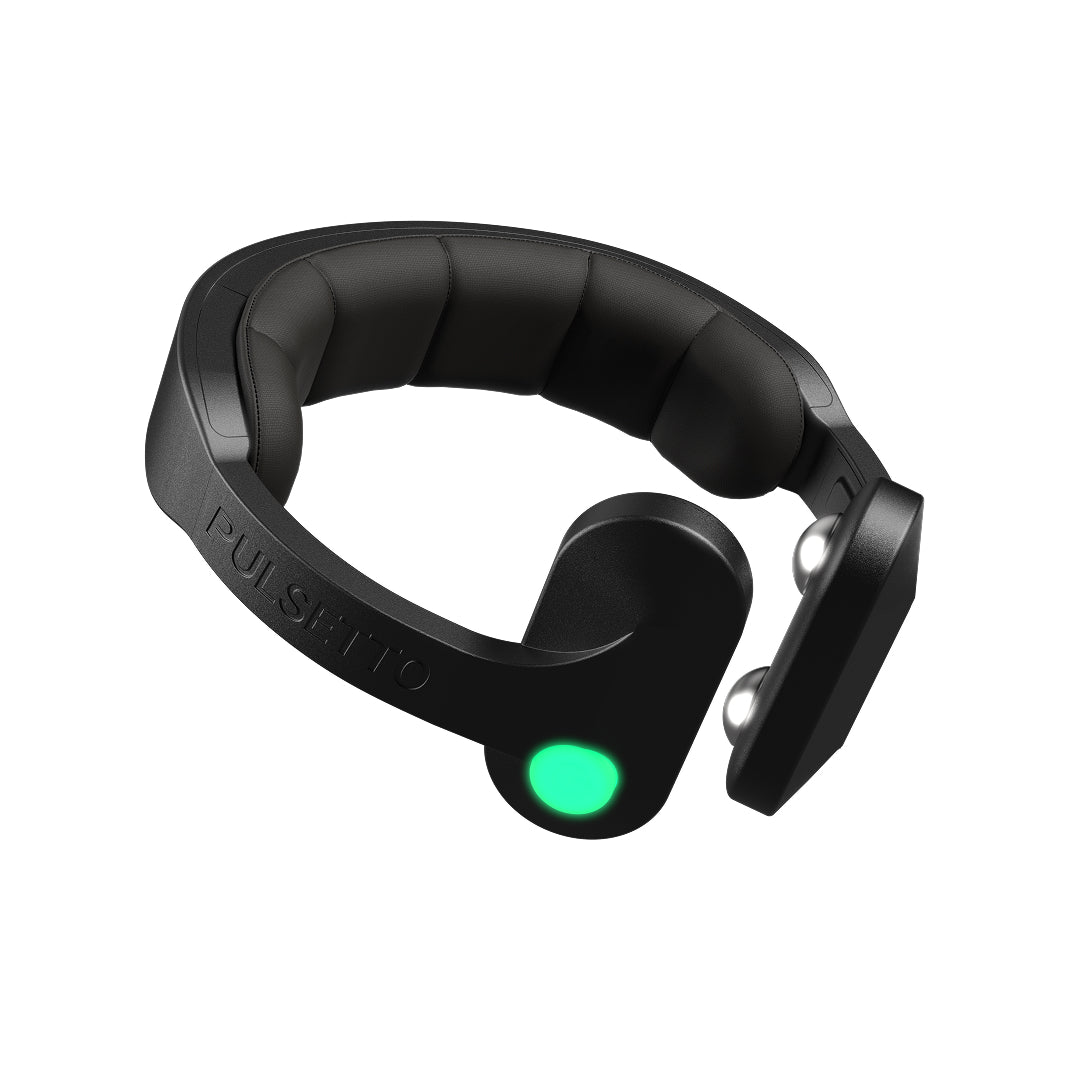
The applied parts of the Pulsetto device include the stainless steel electrodes and the surrounding plastic surface that contacts the skin.
The device is not intended to supply heat to the patient.
However, during normal operation, the surface of the applied part may warm slightly as a result of electrical stimulation and contact with the skin.
-
The maximum surface temperature of the applied part may reach up to 45 °C under standard operating conditions.
-
The temperature rise is transient and localized, and is not expected to cause discomfort or injury when used as instructed, but may cause mild warmth or temporary redness in sensitive users.
Safe Use Conditions
To ensure safe use and minimize potential thermal effects:
-
Use the device only as described in these instructions.
-
If the applied part feels hot to the touch, discontinue use and allow the device to cool to room temperature before re-use.
-
Ensure that the electrodes are placed flat and evenly against the skin, without excessive pressure.
-
Apply only on intact, healthy skin.
-
Avoid use if you have reduced skin sensation, impaired thermoregulation, or are taking medications that affect skin sensitivity or blood circulation (for example, corticosteroids, vasodilators, or anticoagulants).
-
Do not use the device on infants, young children, or frail elderly patients without medical supervision.
5. DEVICE DESCRIPTION
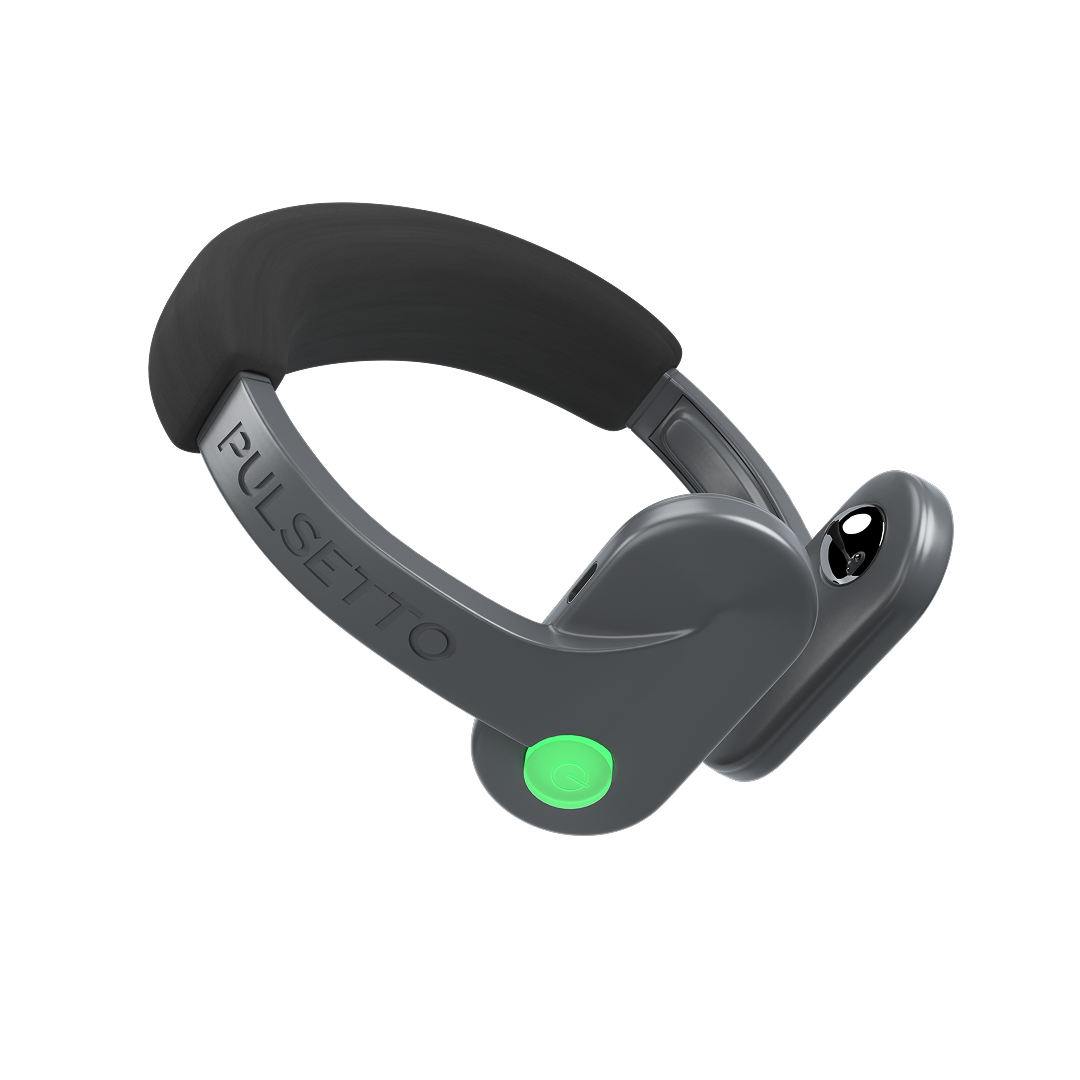
Pulsetto is a wearable, non-invasive bilateral vagus nerve stimulator (nVNS) designed for transcutaneous electrical stimulation of the cervical vagus nerve. The device delivers mild, controlled pulses through skin-contact electrodes placed on both sides of the neck.
In the Pulsetto medical box you will find:
-
Pulsetto medical device;
-
power supply;
-
conductive electrogel.

Pulsetto medical provides a mild pulsation to the vagus nerve, which runs through the neck and carries information to the central nervous system.
According to your selected program, each pulsation with Pulsetto lasts 10 minutes depending on the program of your choosing.
Power Button
-
Turn ON: Press the power button once. The LED test sequence will start: the blue, red, and green LEDs will blink in sequence.
-
Turn OFF: Press and hold the power button for 3 seconds.
-
Device ready for pairing: Glowing white light
-
Device ready to operate: Glowing green light
-
Session started: Glowing yellow light
-
Charging: Blinking purple light
-
Charging complete: Glowing purple light
CAUTION! Do not use the device if the LED color test sequence is incomplete or incorrect. Contact Customer Service.
Cleaning:
-
Clean the device after each use by gently wiping the pulsation surfaces with a soft, dry cloth to remove the leftover gel.
6. HOW TO USE – DEFINED PROGRAMS
Using your smartphone, search for "Pulsetto" in the App Store (iOS) or Google Play (Android) and install the app.
-
Scan code to download the app.
-
After downloading, open the app and follow the instructions to complete your setup.
-
Sign up to the application. If it is your first time, you will have to sign up to the Pulsetto application.
-
Make sure that Bluetooth and location services are enabled on your phone, and the phone is near the Pulsetto device.
-
Please view the tutorial and follow the instructions in the application.
-
When you first log in, you will see the tutorial messages. Later, you can find them on the “Settings” page under “Tutorial.”
-
Remove any jewelry that may touch the session location.
-
Make sure the session location is clean and dry.
-
Find a comfortable sitting position. (A place where you can see your neck in the mirror may be helpful.)
-
Apply electrogel to the neck region. Apply on both sides.
-
Put the Pulsetto device on your neck and check if electrodes are on the site where you applied the gel. Not applying the gel as described may cause the stimulation to be uncomfortable or less effective.
-
Position the device in the correct place on the neck over the session location. Adjust the collar dimension to feel mild to moderate pressure, so the device makes good contact with the skin; however, do not apply excessive pressure to the neck.
-
Turn on the Pulsetto device by pressing its power button. A white LED around the button will light up. After two seconds, the LED color test will begin. The LED will cycle through the following colors for half a second each: blue, red and green. If any of these colors fails to appear, the device may be faulty, and you should discontinue use.
-
You will see the available programs on the home screen. You can read more on the “Settings” page.
-
The Pulsetto app also has a sound library – the soundscapes are engineered solely for Pulsetto, using frequency harmonics with auditory stimuli and frequency following responses. Pulsetto continually adds new features and functionality directly to the app without the need to buy new hardware.
-
Select the program. You will see more instructions on the program screen.
-
Increase the intensity level in the application to a comfortable level you can tolerate. Once you have found your preferred intensity level, just enjoy your remaining session. You will likely feel muscle contractions at the session location. These muscle contractions are normal and should stop after the pulsation is complete. The appropriate intensity level differs for every person and may vary from pulsation to pulsation.
-
Following the session, you have the ability to rate your session and view session details. Your profile has all of this information. This will also help us create a better user experience.
PROGRAMS USAGE
-
Program: Migraine. For Episodic and Chronic Migraine
Purpose:
Supporting the acute treatment of pain associated with migraine headache in adults.
Timing:
Use at the first sign of an impending migraine (early warning/prodrome) or
Use at the onset of migraine pain (whichever comes first).
How to use:
-
Select the Migraine program.
-
Complete one full 10-minute session.
-
Increase intensity gradually to a strong but comfortable level.
Stimulation level:
1 to 13 (adjusted to start at low level, increase gradually to the most comfortable level)
Duration:
10 minutes per session.
Repeat sessions (per attack):
-
If symptoms persist, a second session may be used 20 minutes after the start of the first session.
-
If symptoms persist, a third session may be used 2 hours after the start of the first session.
Daily limits (per 24 hours):
-
Minimum: 1 session (at onset/early warning).
-
Maximum: up to 6 sessions per 24 hours.
Spacing:
-
Keep at least 20 minutes between sessions.
-
Follow the repeat pattern above, up to the daily maximum.
-
Program: Stress. For Psychological Stress & Anxiety.
Purpose:
Supporting the reduction of stress-related anxiety symptoms in adults.
Timing:
Use 2 sessions per day: morning and evening.
Additional sessions may be used during periods of acute stress (e.g., heightened nervousness, physiological stress response).
How to use:
-
Select the STRESS program.
-
Complete one full 8-minute session.
-
Increase intensity gradually to a strong but comfortable level.
Stimulation level:
1 to 13 (adjusted to start at low level, increase gradually to the most comfortable level)
Duration:
8 minutes per session
Daily limits (per 24 hours):
Minimum: 2 sessions per day (morning + evening).
Maximum: up to 6 sessions per 24 hours (2 routine + up to 4 additional acute-stress sessions).
Spacing:
Keep at least 20 minutes between sessions.
7. BATTERY CHARGE
The Pulsetto device contains an internal rechargeable lithium-polymer (Li-Po) battery, capacity 350 mAh, 3.7 V. Typical charging time is less than 1.5 hours.
To charge the device:
-
Insert the USB Type-C cable of the power adapter into the charging port on the device.
-
Connect the power adapter to the power outlet.
-
The device LED will blink pink while charging. After charging is complete, the purple color LED will glow continuously.
CAUTION! Never charge the device while it is placed on your body. Use only the supplied power supply together with the Pulsetto device.
|
|
WARNING Never charge the device while it is placed on your body. |
-
Low Battery Warning:
When the battery is low, the device will emit a LED purple signal to alert the user.
|
|
WARNING
|
|
|
INFORMATION Always dispose of batteries according to local hazardous waste policies. |
8. DEVICE CLEANING
Clean the device after each use by gently wiping the case and the pulsation surfaces with a soft, dry cloth to remove the leftover gel.
Put the cap back on the device after use to protect the stimulation surfaces from dirt, debris, and damage.
9. EMC ENVIRONMENT DESCRIPTION
9.1 General Electromagnetic Environment
The Pulsetto device is intended for use in a typical electromagnetic environment found in home healthcare settings and non-professional medical environments. The device is battery-powered and does not rely on the mains supply during operation, which reduces susceptibility to power-line disturbances. Users should follow the EMC instructions and recommended separation distances described in this section.
The Pulsetto device includes a Bluetooth® Low Energy module used for communication with a mobile application. The wireless communication complies with applicable radio standards and has been integrated into the EMC assessment of the device.
9.2 Electromagnetic Emissions
Pulsetto device uses only low levels of RF energy and is considered unlikely to cause interference with nearby electronic equipment:
-
Emissions Standard: CISPR 11, Group 1, Class B.
-
Intended environment: Home healthcare, residential, and general commercial environments.
-
Radio module: Bluetooth Low Energy, operating in the 2.4 GHz ISM band.
|
|
INFORMATION Pulsetto generates, uses and radiates RF energy only for its internal Bluetooth communication function and is suitable for use in all locations, including residential environments and premises directly connected to the public low-voltage power grid. |
9.3 Electromagnetic Immunity
Pulsetto has been tested for immunity according to EN 60601-1-2 (4th edition) and meets the requirements for medical electrical equipment intended for use in the home healthcare environment. The device includes an electrical stimulation module generating pulsed electrical signals. These pulses do not produce intentional radiated emissions beyond normal limits and have been evaluated during EMC testing.
Pulsetto device is immune to the following disturbances at the specified test levels:
-
electrostatic discharge (ESD): ±8 kV contact, ±15 kV air;
-
radiated RF electromagnetic fields (80 MHz – 2.7 GHz): 10 V/m;
-
proximity fields from RF wireless communications equipment: as required by Table 9 of EN 60601-1-2;
-
magnetic fields at 50/60 Hz: 30 A/m;
-
conducted RF disturbances (150 kHz – 80 MHz): not applicable (battery powered);
-
voltage dips, dropouts, and interruptions: not applicable (battery powered).
|
|
INFORMATION Typical electromagnetic disturbances present in residential or home healthcare environments - such as mobile phones, Wi-Fi routers, Bluetooth devices, and broadcast radio signals - are not expected to affect the performance of the Pulsetto device. |
9.4 Electromagnetic Environment Guidance
Strong electromagnetic fields may interfere with the operation of the device if they are very close. If abnormal operation is observed, increase the distance between the Pulsetto device and the source of electromagnetic disturbance. Examples of equipment that may cause interference if placed too close include:
-
high-power radio transmitters;
-
two-way radios;
-
microwave ovens;
-
high-current industrial equipment;
-
induction cookers;
-
medical RF diathermy equipment.
The Pulsetto device should not be used in environments with high-intensity RF sources unless appropriate electromagnetic compatibility measures have been implemented by the operator.
9.5 Recommended Separation Distances
To ensure proper operation, portable and mobile RF communication equipment should be kept at a safe distance from the Pulsetto device. The recommended minimum separation distance d (in meters) between a transmitter and the Pulsetto device is calculated according to EN 60601-1-2:
-
for transmitters operating in 80 MHz – 800 MHz: d = 1.2 × √P;
-
for transmitters operating in 800 MHz – 2.7 GHz: d = 2.3 × √P;
Where P is the maximum output power of the transmitter in watts (W).
Example:
A mobile phone transmitting at 0.1 W (100 mW) should be kept at least:
-
0.38 m away (80–800 MHz);
-
0.73 m away (800 MHz–2.7 GHz).
If interference is observed, increasing the separation distance is recommended.
9.6 Wireless Coexistence
The Pulsetto device includes a Bluetooth Low Energy module operating at 2.4 GHz. To ensure reliable operation:
-
avoid placing the device directly adjacent (<10 cm) to high-power Wi-Fi routers or Bluetooth transmitters;
-
avoid environments with excessive RF congestion (multiple high-power Wi-Fi access points).
Maintain a stable wireless connection between Pulsetto and the controlling smartphone.
9.7 Installation and Use Guidance
No special EMC installation procedures are required. The device should be operated only in environments consistent with typical household electromagnetic conditions. Do not use the device during active RF therapy or in the immediate vicinity of equipment intentionally generating high RF fields.
10. EMC, TECHNICAL SAFETY
10.1 Operation
Operation is subject to the following two conditions:
-
this device may not cause harmful interference, and
-
this device must accept any interference received, including interference that may cause undesired operation.
NOTICE:
Changes or modifications made to this equipment not expressly approved by Pulsetto may void the FCC authorization to operate this equipment.
NOTICE:
8 kV or higher contact discharges, applied to the patient coupling point, or the USB charger shell, may cause the Pulsetto device to restart. If therapy is in progress, the device automatically reconnects and continues after the restart.
10.2 Safety Information
The following warnings describe residual risks that may occur if the equipment is not used in accordance with these instructions. Users shall read and follow all precautions carefully.
10.3 Small Parts Hazard
-
Nature of hazard: Certain parts of the equipment may be small or detachable.
-
Possible consequences: Small parts may be swallowed or inhaled, leading to choking or internal injury.
-
Precautions:
-
Do not allow children to handle the equipment.
-
Inspect equipment regularly for loose or damaged parts.
-
If a part detaches, remove it from the environment immediately and contact the manufacturer for replacement.
10.4 Flexible charging cable leads forming a loop around the neck hazard
-
Nature of hazard: User or child plays with or wears charging cable, cable wraps around neck, traction or tightening, airway obstruction.
-
Possible consequences: Cable or accessory lead encircles the user’s or child’s neck while tension is applied.
-
Precautions:
-
keep cable out of reach of children;
-
never wrap cable around neck or body;
-
store power supply with cable safely when not in use.
10.5 Allergic Reactions
-
Nature of hazard: Some components may contain materials (e.g., latex, nickel, silicone, adhesives) that can cause allergic reactions.
-
Possible consequences: Reactions may include rash, itching, swelling, respiratory difficulty.
-
Precautions:
-
Before use, confirm whether the user has known sensitivities to materials used in the equipment.
-
Discontinue use immediately if symptoms of an allergic reaction occur and seek medical advice.
-
Contact the manufacturer for information on material composition.
10.6 Contact Injuries
-
Nature of hazard: Surfaces may become hot during operation
-
Possible consequences: Minor burns or abrasions
-
Precautions:
-
Avoid prolonged direct skin contact with warm surfaces.
-
Handle equipment only as described in this manual.
11. DEVICE UTILISATION
11.1 Disposal

In accordance with European Union Directive 2012/19/EU, electrical or electronic devices should not be treated as waste and cannot be disposed of as regular garbage.
Regulations require that the disposal of electrical and electronic equipment, including used and unused medical devices, is handled in a controlled manner. A product that may be contaminated after use or contain chemicals or elements that may present hazards to people or the environment must be disposed of according to the applicable government regulations. Contact Customer Service if you have questions about the appropriate disposal of this device.
NOTE: Pulsetto contains a lithium battery that cannot be removed by the user.
11.2 Environmental Conditioning Before Use
If the device has been stored at temperatures outside the normal operating range, it requires a period of conditioning before use.
-
Warm-up from minimum storage temperature:
If the device has been stored below its operating temperature of +5°C, allow the device to warm up at an ambient temperature of +20 °C for 30 minutes before use. -
Cool-down from maximum storage temperature:
If the device has been stored above the maximum operating temperature of +35°C, allow the device to cool at an ambient temperature of +20 °C for 30 minutes before use.
|
|
WARNING Do not operate the device until it has reached the recommended conditioning time. During this stabilization period keep the device switched off and remove it from any charging cable.Using the device before it has acclimated may result in malfunction, inaccurate therapy delivery, or reduced battery performance. |
11.3 Home Healthcare Environment
The Pulsetto device might be used by lay operators in a home healthcare environment. Certain environmental conditions and user-related factors can affect the device’s safety and performance. Users should follow these instructions to identify and mitigate such risks:
11.3.1 Environmental Factors
-
Lint, dust, and debris: Keep the device, electrodes, and charging port clean. Accumulation of dust or lint can interfere with connections and affect therapy performance. Clean the device using a soft, dry cloth.
-
Light exposure: Avoid direct sunlight or intense artificial light on the device and electrodes. Excessive heat or UV exposure can degrade materials or cause sensor errors.
11.3.2 Electromagnetic / Device Interference
-
Known sources of interference: Certain household devices (e.g., Wi-Fi routers, cordless phones, microwave ovens) may cause temporary interference.
-
Precaution: If the device behaves unexpectedly during therapy, move it away from potential sources of interference or temporarily power off other devices.
11.3.3 Device / Consumable Integrity
-
Electrodes and sensors: Dirty electrodes may reduce therapy effectiveness or trigger errors.
-
Precaution: Always inspect electrodes before each session. Ensure electrodes are cleaned and correctly placed on the skin according to instructions.
11.3.4 Household Activity and Pets
-
Pets, pests, and children: Ensure the device and cables are kept out of reach of children and pets. Chewing, pulling, or interference can damage the device or cause unsafe operation.
-
Precaution: Never leave the device unattended during operation or charging, especially in environments with pets or young children.
|
|
WARNING Adherence to these recommendations helps maintain basic safety and essential performance of Pulsetto device in the home environment. Failure to follow these precautions may reduce therapy effectiveness or pose a safety risk. |
12. DEVICE LIFE TIME
Expected device lifetime: 3 years, limited primarily by internal battery performance.
12.1 SERVICE LIFE AND SHELF LIFE
The following table provides the expected service life or shelf life of the Pulsetto device, accessories, and consumables. These values are valid when the equipment is stored, maintained, and used in accordance with this Instructions for Use.
|
Component / Part |
Type of Lifetime |
Expected Duration |
Notes / Precautions |
|
Pulsetto Device (Main Unit) |
Service life |
3 years (from first use) |
Do not use it beyond service life. Contact manufacturer for replacement or disposal. |
|
Conductive Electrogel |
Shelf life |
5years (from date of manufacture, see packaging) |
Do not use beyond expiry date. Expired gel may reduce conductivity or cause skin irritation. |
|
|
WARNING Continued use of the device or consumables beyond their specified service life or shelf life may result in degraded performance, ineffective therapy, or increased risk of malfunction or adverse effects. |
13. GUARANTEE
Pulsetto guarantee time is 2 years.
14. TROUBLESHOOTING
Pusetto does not turn on:
-
Charge Pulsetto. When the device is charging, the button LED will blink purple. Charging takes about 1,5 hours. After charging is complete, the purple color LED will glow continuously.
-
Restart Pulsetto - turn it off and on again.
Pulsetto does not charge:
-
Ensure the USB-C power cord is plugged in correctly.
15. RETURNS POLICY & WARRANTY
lf, for any reason, you are not happy with your purchase, you can return your order within 14 days from the date of delivery for a full refund. Please note that the item price and applicable taxes will be refunded. Shipping will not be refunded unless an error occurs on our part or the merchandise is deemed defective.
Returns will not be accepted if any of the following conditions apply:
1. The product is missing parts or has been damaged due to improper use.
2. The product has been damaged or modified from its original form in a manner not consistent with typical use.
3. The product is not returned with all hardware and accessories.
4. No refunds will be given after fourteen (14) days from the date of delivery.
5. All returns must be in their original unaltered packaging.
16. SYMBOLS USED ON LABEL
|
|
It means that the electrical device has BF type insulated parts. It provides a degree of protection against electric shock and has conductive contact with the end user. |
|
|
This symbol means: "Check this in the user manual." |
|
|
Determination of the optimal storage and transportation temperature of a medical device. |
|
|
Indication of the product batch number. |
|
|
Device serial number. Indicates the manufacturer's serial number so that a specific medical device can be identified. |
|
|
The recycling symbol applies to devices that should not be disposed of as household waste. They require proper disposal to protect the environment. Follow local waste management regulations or contact a waste collection company or dealer. |
|
|
The catalog number that identifies the product from the manufacturer. |
|
|
Medical device |
|
|
Manufacturer's marking. This symbol and the accompanying name and address identifies the manufacturer of the device as defined in Regulation MDR 2017/745 |
|
|
Indication of the production date. |
|
|
CE mark |
|
|
Water protection level. This device is not waterproof. First digit 2: protection against access by fingers to hazardous parts and protection against solid foreign objects with a diameter of 12.5 mm and larger. Second digit 2: protection against falling water drops when the housing is tilted at any angle up to 15° from the vertical in each direction. |


17. CLASSIFICATION AND REGULATORY CERTIFICATION
The Pulsetto device is certified as a Class IIa medical device.

The CE Mark indicates the device complies with the applicable requirements of the Regulation MDR 2017/745.