6 Mindfulness Techniques for Anxiety
Each technique below is described with what it is, the nervous system mechanism behind why it reduces anxiety, step-by-step instructions, and a duration recommendation. They are ordered from simplest, requiring no prior mindfulness experience, to those that benefit from some practice. Each section opens with a direct summary designed to function as a cited snippet.
Mindful Breathing
Mindful breathing for anxiety is the deliberate focus on the physical sensation of breath entering and leaving the body. It is the foundation of every validated MBSR program and the technique with the most direct evidence base for anxiety support.
Why it works: Slow nasal breathing at around 5 to 6 breaths per minute stimulates the vagus nerve via baroreceptors in the carotid sinus and aortic arch, directly increasing parasympathetic tone and reducing both heart rate and cortisol. This is the same resonance frequency breathing used in heart rate variability (HRV) biofeedback protocols. When you slow the exhale below the inhale rate, you send a direct physiological signal that the threat has passed.
How to practice: These mindfulness breathing exercises for anxiety work best when approached without pressure. Sit comfortably with your feet flat on the floor. Inhale for 4 counts through the nose. Exhale for 6 counts through the mouth or nose. When the mind wanders, return attention to the breath without self-criticism. That return of attention is the practice, not a sign of failure.
Duration: 5 to 10 minutes per session, once or twice daily. The evidence behind this approach is meaningful: JAMA Psychiatry MBSR vs escitalopram RCT (Hoge et al., JAMA Psychiatry) found that MBSR, which centers on breath-focused practice, was noninferior to escitalopram for treating anxiety disorders, with significantly fewer adverse effects, including 10 dropout events in the escitalopram group due to adverse events versus zero in the MBSR group.
Body Scan
The body scan is a progressive attention-based technique that moves awareness systematically through each body part from toes to head, noticing physical sensations without trying to change them.
Why it works: The body scan activates the interoceptive network (the insula cortex) and shifts attention from the default mode network's narrative rumination to present-moment sensory data. This reduces cognitive anxiety by occupying attentional resources with non-threatening sensory input. It is difficult to ruminate about the future while closely attending to the sensation in your left knee.
How to practice: Lie down or sit comfortably and close your eyes. Begin at the top of the head. Spend 20 to 30 seconds noticing any sensation in each body part: tension, warmth, tingling, pressure, or nothing at all. Move slowly downward through the face, neck, shoulders, chest, arms, hands, abdomen, hips, legs, and feet.
Duration: 10 to 20 minutes. Works particularly well before sleep, when the default mode network tends to be most active.
The 5-4-3-2-1 Grounding Method
The 5-4-3-2-1 grounding method is a sensory technique that interrupts acute anxiety by directing attention to concrete environmental details: 5 things you can see, 4 you can touch, 3 you can hear, 2 you can smell, and 1 you can taste.
Why it works: Sensory grounding redirects the prefrontal cortex's processing resources from threat-anticipation loops to concrete environmental data, reducing amygdala activation. The brain cannot simultaneously process a vividly imagined future threat and vivid present-moment sensory detail with equal intensity. One displaces the other.
When to use it: This technique works best for acute anxiety spikes rather than chronic background anxiety. It requires no prior practice and can be used immediately in any setting: a meeting, a waiting room, or a crowded commute.
How to practice: Pause wherever you are. Silently name 5 things you can see. Touch 4 objects and notice their texture or temperature. Identify 3 sounds. Note 2 smells. Find 1 thing you can taste or notice the current sensation in your mouth.
Duration: 2 to 5 minutes, on demand when anxiety spikes.
Mindful Walking
Mindful walking is walking performed with deliberate attention to the physical sensations of movement: the feeling of feet contacting the ground, the rhythm of breathing, the sway of the arms, and peripheral visual and auditory input.
Why it works: Mindful walking combines two separate anxiety-reducing mechanisms. Low-intensity aerobic movement drives BDNF release and endorphin response, both of which reduce stress hormone levels. Simultaneously, deliberate attention to movement engages present-moment sensory awareness, reducing activity in the default mode network. Harvard Health (August 2025) confirms that slow, mindful walking helps center and relax the nervous system through this dual mechanism, making it one of the more accessible entry points for people who find seated meditation difficult to sustain.
How to practice: Walk slowly and deliberately for 10 to 15 minutes. Focus entirely on the physical sensations of movement: the pressure of each footfall, the shift of weight from heel to toe, the rhythm of your breathing. No phone. No podcast. When attention drifts, return it to the sensation of walking.
Duration: 10 to 20 minutes daily.
Open Awareness Meditation (Noting Practice)
Open awareness meditation, sometimes called noting practice, is a technique where you sit quietly, allow thoughts, feelings, and sensations to arise without engaging or suppressing them, and silently label each one with a simple word: "thinking," "feeling," or "sensation."
Why it works: Noting builds metacognitive awareness: the ability to observe mental events from a distance rather than fusing with their content. When you can notice the thought "something will go wrong" and label it "thinking" rather than treating it as fact, the emotional charge diminishes. The observer perspective creates space between you and the anxious thought, which is the core mechanism behind mindfulness reducing anxiety over time. A randomized controlled trial by Vollestad et al. (2011, Behaviour Research and Therapy) supports this directly: mediation analyses found that mindfulness fully mediated changes in acute anxiety symptoms, with medium to large effect sizes (Cohen's d = 0.55 to 0.97 in treatment completers) maintained at 6-month follow-up.
How to practice: Sit comfortably and close your eyes. Allow whatever arises to arise. When a thought appears, silently note: "thinking." When a feeling appears, note: "feeling." When a body sensation arises, note: "sensation." Do not engage with the content. Simply label and release.
Duration: 10 to 20 minutes, builds with practice.
Mindful Seeing and Listening
Mindful seeing and listening is the practice of deliberately directing full sensory attention to visual and auditory input in the immediate environment, as if experiencing it for the first time. Practitioners sometimes call this approach "beginner's mind."
Why it works: Focused sensory attention engages the visual and auditory cortex and reduces activity in the default mode network's self-referential rumination loops. Because the sensory content is non-threatening (the texture of a windowsill, the sound of traffic or birds), the attentional engagement reduces amygdala activation without requiring any internal focus. This makes it particularly useful for people who feel more anxious when turning attention inward, as breathwork and body scans sometimes require.
How to practice: Sit near a window or outdoors. Spend 5 minutes observing visual detail with full attention: texture, movement, light, and shadow. Then spend 5 minutes purely listening to ambient sound without labelling or judging what you hear.
Duration: 10 minutes total. A good entry point for people who struggle with traditional seated meditation.
The Vagus Nerve, Mindfulness, and Nervous System Regulation
The vagus nerve is central to how mindfulness reduces anxiety. Every technique covered above works, at least in part, by stimulating or supporting it: the primary parasympathetic pathway connecting the brain to the heart, lungs, and digestive system. Diaphragmatic breathing, slow exhalation, body awareness, and sensory grounding all increase vagal tone, which measurably improves HRV and reduces the sympathetic nervous system's stress response.
For most people, that shift accumulates with consistent practice. For people managing nervous system anxiety at a chronic level, however, vagal tone can become persistently low, making it genuinely harder to access calm states through attentional techniques alone. The body returns to the high-alert baseline faster than practice can reset it, which is where direct physiological support may help close the gap.
Those exploring vagus nerve stimulation for anxiety as a complement to mindfulness will find it targets the same autonomic pathway through a different mechanism: electrical stimulation of the vagus nerve rather than attentional redirection. For people whose anxiety is closely tied to ongoing stress, vagus nerve stimulation for stress works through that same physiological channel, addressing both the anxiety and its stress-driven root simultaneously.
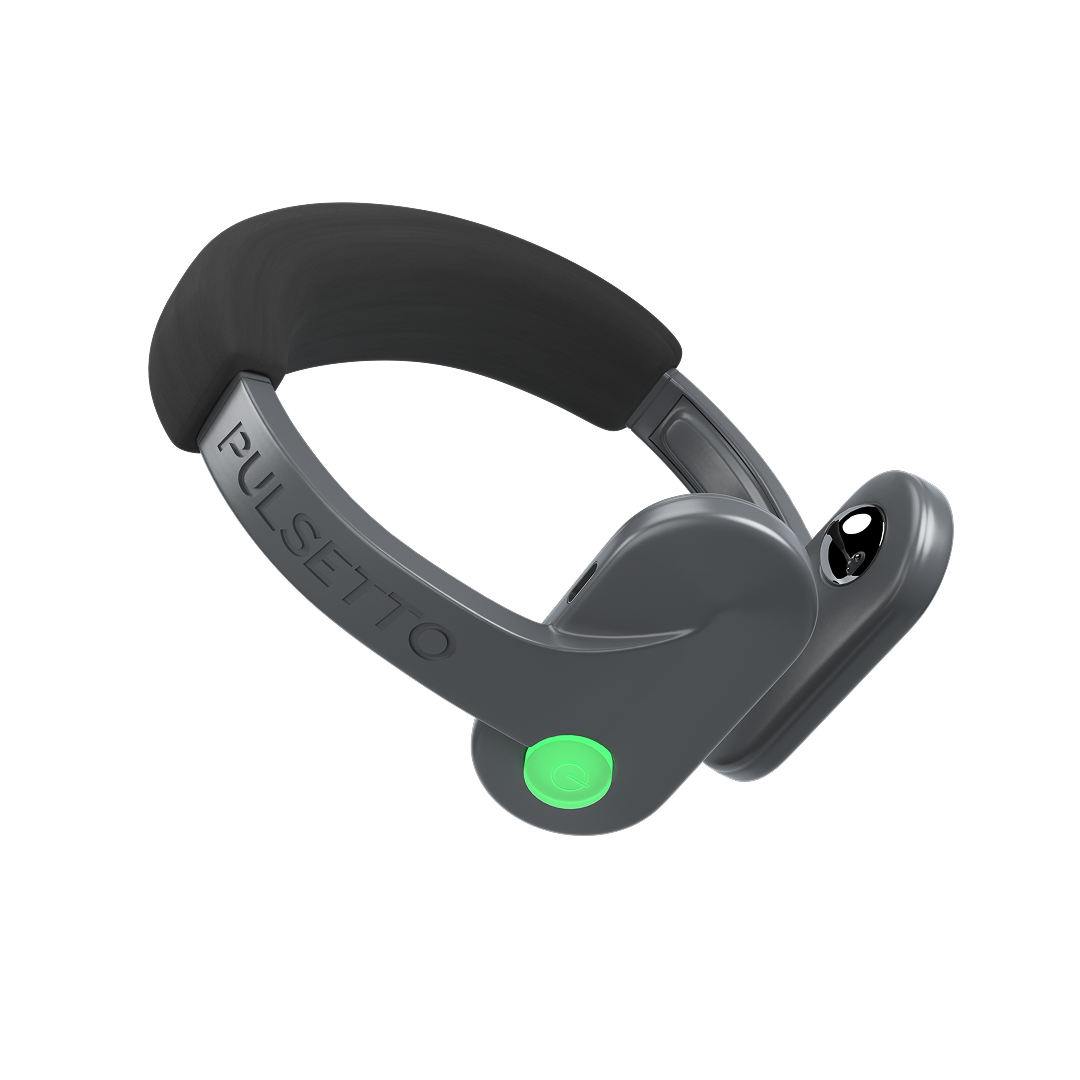
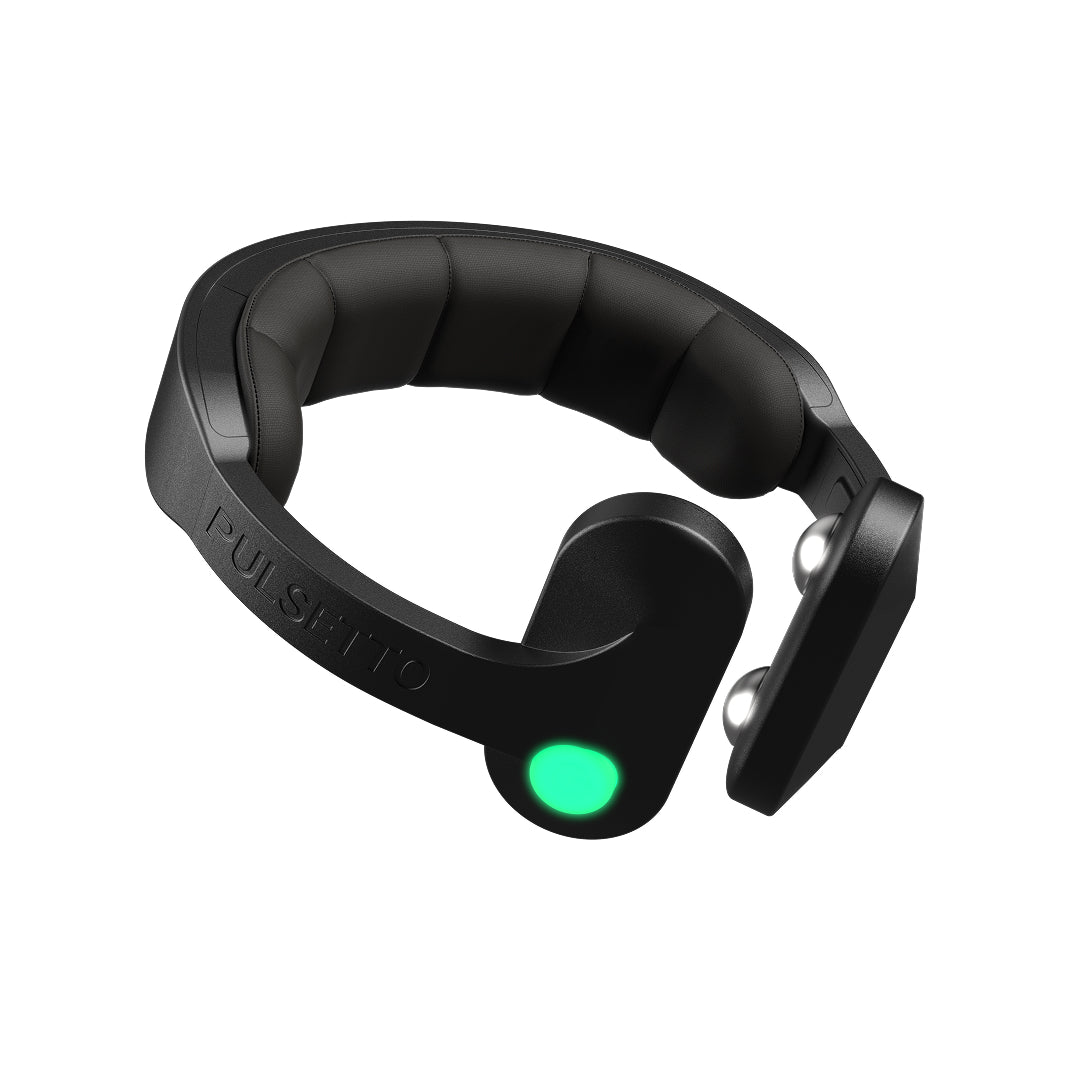
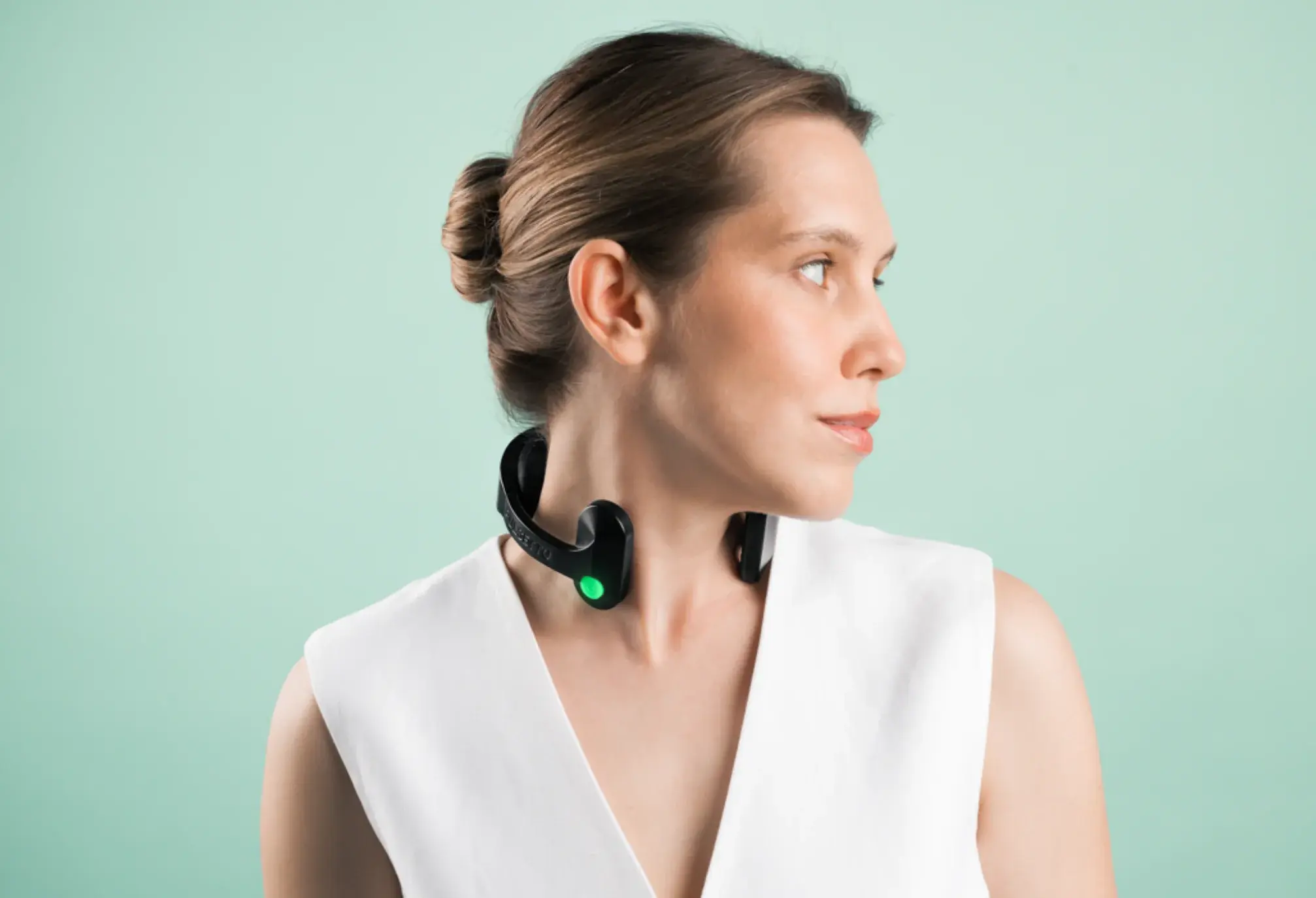
That physiological basis is documented in peer-reviewed research. A study by Clancy et al. (2014, Brain Stimulation) established that non-invasive vagus nerve stimulation significantly increases HRV and reduces sympathetic nerve activity in healthy adults, producing the same autonomic shift that mindfulness targets through breath and awareness. Pulsetto applies that mechanism through a bilateral cervical vagus nerve stimulation device, CE certified for general wellness use, delivering 4-minute sessions via neck electrodes and designed to sit alongside mindfulness and behavioral practices rather than replace them. In Pulsetto's own randomized open-label pilot study (n=40, 4 weeks), applying that same VNS mechanism produced a 45.3% improvement in GAD-7 anxiety scores in the bilateral group.
Pulsetto is a general wellness product and is not intended to diagnose, treat, cure, or prevent any disease or medical condition. Used alongside mindfulness, therapy, or professional care rather than in place of them, it is best understood as a physiological complement to the attentional work the techniques above already do.
If you want to support your nervous system alongside your mindfulness practice, Pulsetto's 4-minute cervical VNS sessions are designed to activate the parasympathetic system directly. CE certified, used by 100,000+ people. Try Pulsetto today.
How to Build a Daily Mindfulness Practice for Anxiety
Mindfulness practices for anxiety are most effective when they are consistent rather than occasional. The research evidence is built almost entirely on sustained practice over weeks, not single sessions, and these three principles help translate that research into a habit that sticks.
Start with 5 minutes, not 20. Research consistently shows that consistency across shorter sessions outperforms sporadic longer ones for building both the habit and its neurological effects. Five minutes daily is worth more than thirty minutes twice a week.
Anchor the practice to an existing behavior. Mindful breathing while the coffee brews, a body scan before sleep, a 10-minute mindful walk after lunch. Anchoring removes the decision overhead that causes new habits to fail before they start.
Expect resistance and mental wandering without interpreting them as failure. The mind wandering during meditation is not a sign that you are doing it wrong. Each return of attention to the breath or body is a mental repetition, the equivalent of a bicep curl. The wandering creates the training.
A suggested beginner sequence for building mindfulness exercises for anxiety into daily life: Weeks 1 to 2, Mindful Breathing for 5 minutes once daily. Weeks 3 to 4, add a Body Scan before bed for 10 minutes. From Week 5 onward, introduce Open Awareness or Mindful Walking as a second daily session.
The 8-week duration matters. The evidence base for MBSR is built on 8-week structured programs with approximately 2.5 hours of practice per week. Vollestad et al. (2011) found that gains were maintained at 6-month follow-up, suggesting the practice builds durable neural changes rather than temporary relief.
For chronic or clinical anxiety, the most responsible step is working with a qualified mental health professional alongside any self-directed practice.
Frequently Asked Questions
Does mindfulness actually help anxiety?
Research supports mindfulness for anxiety with meaningful effect sizes. A 2022 RCT in JAMA Psychiatry (Hoge et al., 143 citations) found MBSR noninferior to escitalopram (Lexapro) for anxiety disorders. A 2021 meta-analysis (Galante et al., PLOS Medicine) across 136 RCTs and 11,605 participants found mindfulness-based programs significantly improved anxiety with an effect size of SMD -0.56. Effects accumulate over weeks of consistent practice rather than appearing after a single session.
How long does it take for mindfulness to help with anxiety?
Most research-based MBSR programs run 8 weeks, and most RCTs show measurable anxiety reduction at post-intervention with gains maintained at 6-month follow-up. Acute techniques like the 5-4-3-2-1 grounding method can reduce anxiety in minutes by redirecting attentional resources away from the threat loop. For lasting nervous system changes, consistent daily practice over 6 to 8 weeks is the evidence-backed minimum.
What is the best mindfulness technique for anxiety?
Mindful breathing has the strongest research base because it directly modulates the vagus nerve and forms the core of every validated MBSR program. For acute anxiety spikes, the 5-4-3-2-1 grounding method provides immediate relief without any prior practice. For people who find internal focus uncomfortable, mindful walking or mindful seeing combines movement or sensory attention with present-moment awareness and is often easier to sustain at the start.
Can mindfulness replace medication for anxiety?
This is a clinical decision that belongs with a qualified healthcare provider. The research shows that a 2022 JAMA Psychiatry randomized trial (Hoge et al.) found MBSR noninferior to escitalopram for anxiety disorders, with fewer adverse effects. Mindfulness is not a replacement for professional diagnosis or treatment. For moderate to severe anxiety, it works best as a complement to, not a substitute for, professional care.
Is vagus nerve stimulation a type of mindfulness?
Not exactly. Mindfulness is an attentional practice; vagus nerve stimulation is a physiological intervention. Both target the same system: parasympathetic activation and improved HRV, which is why many use them together. Pulsetto and similar devices are general wellness tools, not medical devices, and do not replace mindfulness practice or professional care. Contraindications include pacemakers, implantable devices, epilepsy, and pregnancy. In what Pulsetto users report, pairing VNS with breathwork and mindfulness is a common theme.
Building a daily mindfulness practice is one of the most evidence-backed ways to support anxiety management over time. For people who want to support their parasympathetic nervous system alongside that practice, Pulsetto's 4-minute cervical vagus nerve stimulation is designed to complement the same nervous system pathway that mindfulness activates.
CE certified, hands-free, 100,000+ users. Shop Pulsetto today to try it yourself.
Scientific Research
-
Mindfulness-Based Stress Reduction vs Escitalopram for the Treatment of Adults With Anxiety Disorders: A Randomized Clinical Trial (Hoge et al., 2022, JAMA Psychiatry, 143 citations)
-
Mindfulness-Based Interventions for Anxiety and Depression (Hofmann et al., 2017, PMC/Psychiatric Clinics of North America, 1,380 citations)
-
Mindfulness-based stress reduction for patients with anxiety disorders: evaluation in a randomized controlled trial (Vollestad et al., 2011, Behaviour Research and Therapy, 385 citations)
-
Mindfulness-based programmes for mental health promotion in adults in nonclinical settings: A systematic review and meta-analysis (Galante et al., 2021, PLOS Medicine, 234 citations)
-
Non-invasive vagus nerve stimulation in healthy humans reduces sympathetic nerve activity (Clancy et al., 2014, Brain Stimulation, 459 citations)
-
Randomized Controlled Trial of Mindfulness Meditation for Generalized Anxiety Disorder (Hoge et al., 2013, Journal of Clinical Psychiatry, 468 citations)