Quick Reference
|
Exercise
|
Time per session
|
Frequency
|
Best for
|
|
Vagus nerve stimulation
|
4-10 minutes
|
Daily
|
Direct nervous-system down-regulation, no technique required
|
|
Paced, slow breathing
|
5-10 minutes
|
Daily or as needed
|
Fast, in-the-moment calm
|
|
Progressive muscle relaxation
|
10-15 minutes
|
3-5x per week
|
Learning to notice physical tension early
|
|
Cold exposure
|
1-3 minutes
|
3-4x per week
|
Training the body's acute stress response to habituate
|
|
Aerobic exercise
|
30 minutes
|
3x per week, 12 weeks to see change
|
Cardiovascular stress reactivity and recovery
|
|
Cognitive reappraisal
|
A few seconds, in the moment
|
As needed
|
Reframing physical stress sensations before they escalate
|
|
Mindfulness meditation
|
10-20 minutes
|
Daily
|
Broad physiological stress-marker reduction
|
|
Gratitude journaling
|
5 minutes
|
Daily or 3x per week
|
Building perceived social support over weeks
|
|
Expressive writing
|
15-20 minutes
|
3-4 consecutive days
|
Processing a specific stressful event
|
|
Social connection
|
Varies
|
Weekly, consistently
|
Long-term stress buffering
|
|
Self-compassion practice
|
5-10 minutes
|
Daily or as needed
|
Reducing self-criticism during setbacks
|
|
Time in nature
|
20+ minutes
|
2-3x per week
|
Attention restoration and recovery from mental fatigue
|
1. Vagus Nerve Stimulation

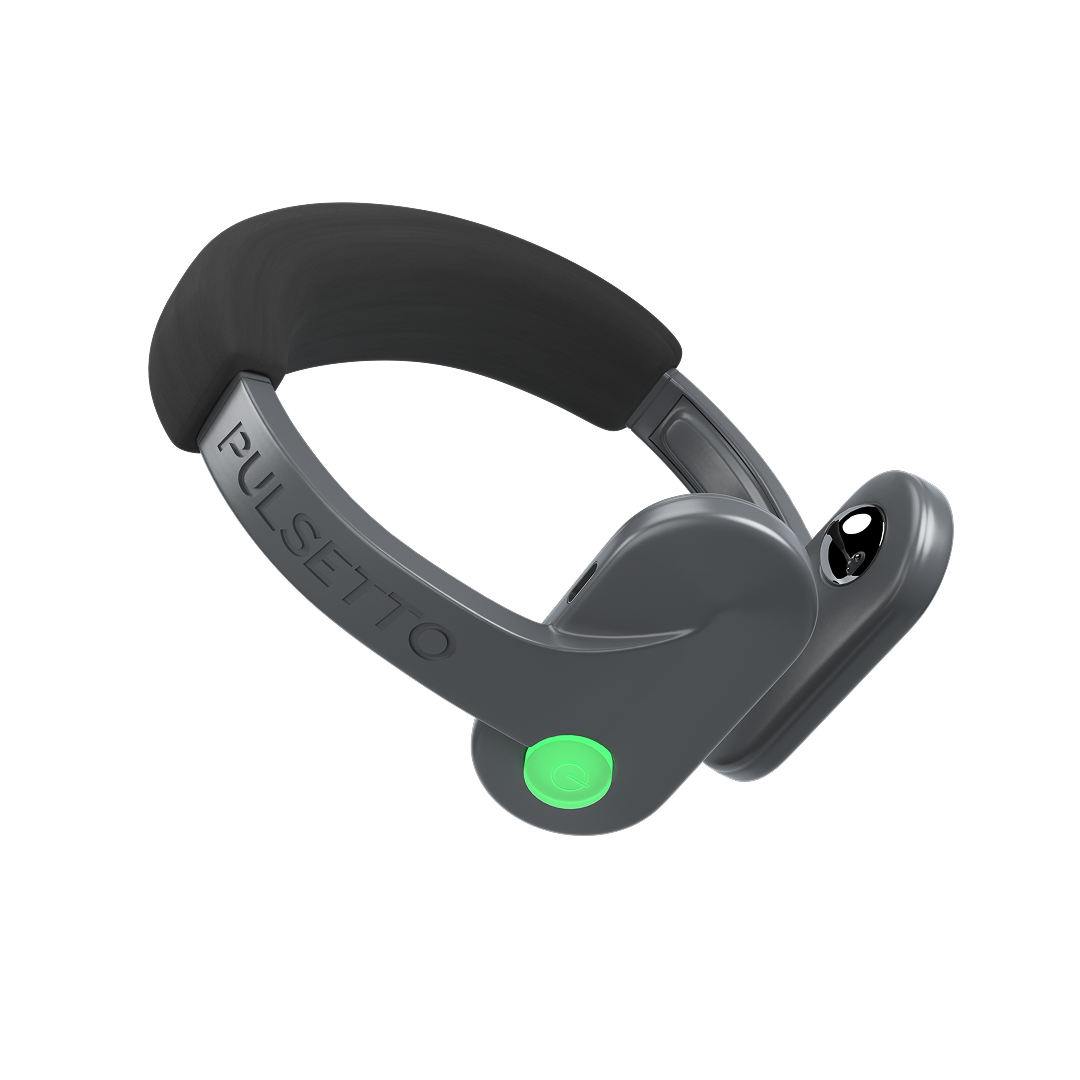
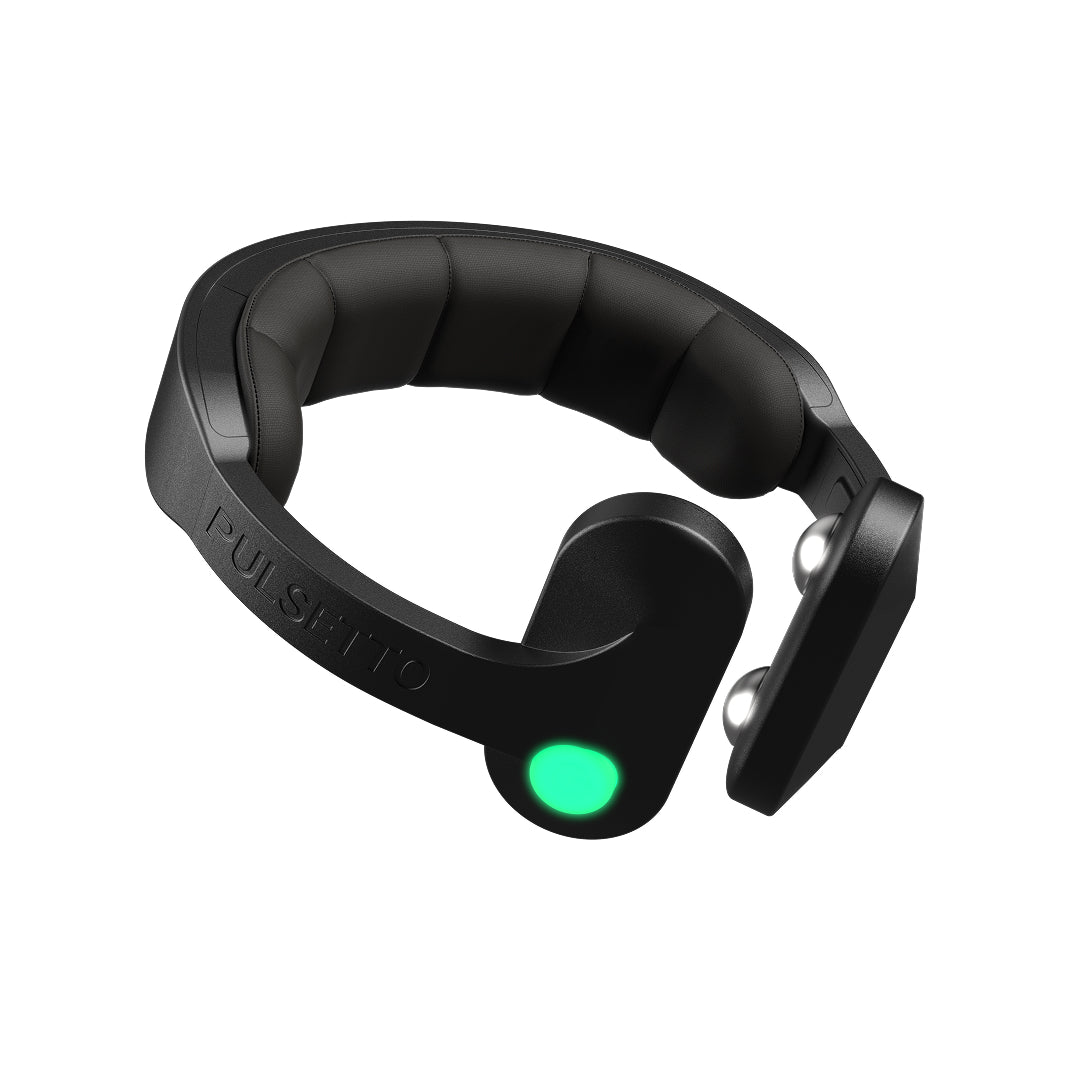
Most of the exercises on this list ask you to actively do something: breathe a certain way, think a certain way, move your body a certain way. Vagus nerve stimulation is the one exception. A device like Pulsetto clips around the neck and delivers bilateral cervical stimulation, both sides at once, in sessions that run 4 to 10 minutes while you do essentially nothing else, which makes it the most direct nervous-system-level entry on this list rather than a technique you have to learn and get right.
Pulsetto tested that bilateral approach in a randomized, open-label pilot study of 40 adults over 4 weeks, comparing bilateral against unilateral cervical stimulation. Participants reported a 55.9% reduction in depressive symptoms (PHQ-9) and a 45.3% reduction in anxiety symptoms (GAD-7) from baseline at the 4-week mark. On the biomarker side, hair cortisone, a marker of chronic stress exposure, fell 63.2% in the bilateral group compared with 36.2% in the unilateral group, the empirical basis for building the device around both sides of the neck rather than one.
Because it's hands-free and doesn't depend on getting a breathing pattern or a mental reframe right, vagus nerve stimulation tends to work as the exercise people actually stick with on days when the others feel like too much effort, a fixed, repeatable input rather than a skill with a learning curve. That makes it a reasonable anchor exercise to pair with one or two of the more active practices further down this list, rather than a replacement for them.
Disclaimer: Pulsetto is a general wellness product and is not intended to diagnose, treat, cure, or prevent any disease or medical condition.
2. Paced, Slow Breathing
Breathing slower than about 10 breaths per minute reliably shifts the body toward parasympathetic, rest-and-digest activity, and a systematic review of the physiological effects of slow breathing found consistent downstream effects across autonomic, central nervous system, and psychological measures [1]. In practice, that means counting a slow inhale, a longer exhale, and repeating for five to ten minutes, no app or device required, and no minimum skill level to get some benefit from the first attempt.
3. Progressive Muscle Relaxation
Progressive muscle relaxation works by systematically tensing and then releasing each major muscle group, feet, calves, thighs, all the way up to the face, teaching the body to recognize the physical difference between holding tension and letting it go. That recognition is the actual skill: once you know what tension feels like early, you can catch it building during an ordinary stressful afternoon rather than only noticing it once it's turned into a headache or a clenched jaw. It requires no equipment and can be learned from a scripted audio guide in under fifteen minutes.
4. Cold Exposure

Brief, repeated exposure to cold water trains the body's acute stress response to habituate rather than fire at full intensity every time. A study using repeated cold-pressor exposure found measurable habituation in heart rate, blood pressure, and cardiac output reactivity across repeated cold exposures, evidence that the stress response itself, not just your tolerance for discomfort, is trainable through deliberate exposure to a controlled stressor [2]. A short cold shower finish or a few minutes with cold water on the hands and forearms is enough to start.
5. Aerobic Exercise
Aerobic training changes how the cardiovascular system responds to psychological stress, though it's worth being precise about which parts. In a randomized controlled trial, twelve weeks of endurance training improved cardiovascular reactivity and heart-rate recovery after a standardized psychosocial stress test, but the same study found no matching improvement in HRV or cortisol recovery specifically [3]. That's a real, useful effect, just not a blanket one: aerobic exercise trains some parts of the stress response more reliably than others, and pairing it with a technique that targets HRV or cortisol more directly, breathing or mindfulness, covers the gap.
6. Cognitive Reappraisal
The physical sensations of stress, a racing heart, quicker breathing, a jittery feeling, can be interpreted two ways: as a sign something is wrong, or as your body mobilizing resources to meet a challenge. Research on arousal reappraisal has shown that consciously choosing the second interpretation changes the cardiovascular stress response itself, not just how it feels: participants coached to reframe arousal this way showed a more efficient cardiac output pattern and lower vascular resistance under an acute stress test than participants who received no reframing instruction [4]. The exercise itself takes seconds: naming the physical sensation and relabeling it before it escalates.
7. Mindfulness Meditation

Meditation's physiological effects on stress are some of the best-studied of any exercise on this list. A meta-analysis of 45 randomized controlled trials found that meditation practice reduced cortisol, C-reactive protein, blood pressure, heart rate, and other physiological stress markers compared with active control groups, with focused-attention styles of meditation showing the clearest cortisol effect specifically [5]. Ten to twenty minutes a day, guided or unguided, is enough to see the effects this research describes; consistency matters more than session length.
8. Gratitude Journaling
Writing down a few specific things you're grateful for isn't just a mood exercise, it changes the social and stress trajectory over time. Two longitudinal studies tracking college students across their first semester found that trait gratitude directly predicted higher perceived social support and lower stress and depression by the end of the term, and that the reverse model didn't hold: stress and depression at the start didn't predict a later drop in gratitude, suggesting gratitude is doing real protective work rather than just tracking alongside how someone already feels [6]. Five minutes, three specific items, a few times a week, is enough to start.
9. Expressive Writing
Expressive writing means setting a timer for 15 to 20 minutes and writing continuously about a specific stressful event, including how it made you feel, without worrying about grammar or structure, usually repeated over three or four consecutive days. The exercise works by giving a stressful experience a coherent narrative instead of leaving it as a loose collection of intrusive thoughts, which tends to reduce how much mental bandwidth it keeps occupying afterward. It costs nothing and needs nothing but a notebook or a blank document.
10. Social Connection
Reaching out, a call, a coffee, a standing weekly commitment, is one of the exercises on this list that's easiest to let slide during a stressful stretch, which is exactly when it matters most. Consistent social contact functions as a buffer that blunts how hard a given stressor actually lands, not because it removes the stressor but because it changes how much of the load a person carries alone. The exercise here isn't complicated: pick one relationship and protect a standing, recurring point of contact with it, rather than leaving connection to whenever there's spare time left over.
11. Self-Compassion Practice
Self-compassion means responding to your own setbacks the way you'd respond to a friend's, with a moment of acknowledgment rather than immediate self-criticism, before moving on to whatever comes next. In practice it's a short, specific script: naming what happened, noting that struggling is a normal part of being under stress rather than a personal failure, and then redirecting attention to the next useful action. It takes five to ten minutes to learn as a habit and seconds to apply once it's familiar, and it's most useful in the moments right after something goes wrong, not as a scheduled daily session.
12. Time in Nature
Spending unstructured time outdoors, a walk without headphones, sitting somewhere green, gives the kind of directed attention that most of a stressful day demands a chance to rest, which is part of why it tends to leave people feeling mentally recovered rather than just physically tired. Twenty minutes a few times a week, away from screens and to-do lists, is the rough target; the specific setting matters less than the absence of the usual demands on attention.
Who Should Get Medical Guidance First
Of the 12 exercises on this list, only vagus nerve stimulation with a device involves electrical stimulation, so it's the one that carries specific contraindications: anyone with a pacemaker or other implantable device, epilepsy or a seizure disorder, or who is pregnant should get medical guidance before using it, along with anyone with an active cardiac arrhythmia, a recent neck or throat injury or surgery, or a carotid artery condition [7]. The other 11 exercises, breathing, physical conditioning, cognitive and writing exercises, and social and restorative practices, don't carry that same electrical-stimulation risk profile, though cold exposure specifically warrants caution for anyone with a cardiovascular condition, and aerobic exercise should be cleared with a physician first for anyone new to exercise or managing an existing heart condition.
How to Combine These Exercises
Start with what's actually missing from your week, not with all 12 at once. If you have no consistent way to interrupt a stress response in the moment, paced breathing, cognitive reappraisal, or vagus nerve stimulation are the fastest to deploy; they work in minutes and need no build-up period. If the gap is more chronic, the kind of stress that's built up over months, aerobic exercise, mindfulness meditation, and gratitude journaling are the ones with research behind slower, cumulative change, and they need weeks of consistency before the effect shows up.
Then think about effort versus consistency. Vagus nerve stimulation and time in nature ask for very little active skill, just showing up for the session. Cognitive reappraisal and self-compassion practice ask for almost no time but do ask you to catch yourself in the moment, which is its own kind of practice. Cold exposure and progressive muscle relaxation sit in between: a few minutes, a bit of discomfort or unfamiliarity at first, then it gets easier. Picking one exercise from the low-effort group and one from the higher-effort group tends to build a more durable routine than choosing three exercises that all ask for the same kind of willpower.
Try Pulsetto

Twelve exercises is a lot to hold in your head at once. If you want to start with the one that takes the least effort to actually stick with, the vagus nerve stimulator built around bilateral cervical stimulation runs in a session you can sit through while doing almost anything else. Curious what it's actually like day to day? Read real user reviews first.
Frequently Asked Questions
Do I need to do all 12 of these exercises?
No. Most people get real, measurable benefit from combining two or three that target different parts of the stress response, one immediate technique for in-the-moment spikes and one or two slower practices for the cumulative, weeks-long kind of change. Adding more than that usually produces more to keep track of than anyone actually sustains.
Which of these exercises works the fastest?
Paced breathing, cognitive reappraisal, and vagus nerve stimulation all produce a noticeable shift within the same session, since they act on the acute stress response directly. Aerobic exercise, mindfulness meditation, and gratitude journaling are built for cumulative change and typically need consistent practice over several weeks before the effect is clearly measurable.
Can vagus nerve stimulation replace the other exercises on this list?
It can replace the need to learn a specific technique, since it doesn't require getting a breathing pattern or a reframe right, but it targets one part of the stress response, direct nervous-system down-regulation, rather than the cardiovascular conditioning, cognitive habits, or social buffering that other exercises on this list build. Most people get more out of pairing it with one or two of the other categories than relying on it alone.
Is it safe to combine several of these exercises in the same week?
For most healthy adults, yes. The exception is vagus nerve stimulation, where anyone with a pacemaker or other implantable device, epilepsy, or who is pregnant should get medical guidance first, along with anyone with an active cardiac arrhythmia, a recent neck or throat injury or surgery, or a carotid artery condition. Cold exposure and aerobic exercise both warrant a quick check with a physician for anyone with an existing cardiovascular condition.
Scientific Research
[1] How Breath-Control Can Change Your Life: A Systematic Review on Psycho-Physiological Correlates of Slow Breathing (Zaccaro et al., 2018, Frontiers in Human Neuroscience, 679 citations)
[2] Habituation of the stress response multiplex to repeated cold pressor exposure (Bullock et al., 2023, Frontiers in Physiology, 19 citations)
[3] Effects of a 12-week endurance training program on the physiological response to psychosocial stress in men: a randomized controlled trial (Klaperski, von Dawans, Heinrichs & Fuchs, 2014, Journal of Behavioral Medicine, 156 citations)
[4] Mind over matter: Reappraising arousal improves cardiovascular and cognitive responses to stress (Jamieson, Nock & Mendes, 2012, Journal of Experimental Psychology: General, 413 citations)
[5] Mindfulness mediates the physiological markers of stress: Systematic review and meta-analysis (Pascoe et al., 2017, Journal of Psychiatric Research, 439 citations)
[6] The role of gratitude in the development of social support, stress, and depression: two longitudinal studies (Wood et al., 2008, Journal of Research in Personality, 818 citations)
[7] Safety and tolerability of transcutaneous vagus nerve stimulation in humans: a systematic review (Redgrave et al., 2018, Brain Stimulation, 215 citations)