Heart rate variability: the window into vagal balance
If the vagus nerve is the brake, heart rate variability (HRV) is the clearest non-invasive way to see how well that brake is working. HRV is the beat-to-beat variation in the time between heartbeats. A healthy heart does not tick like a metronome. It speeds up slightly on the inhale and slows on the exhale, and higher variability generally reflects stronger vagal influence and a more adaptable autonomic system. Shaffer and Ginsberg's widely cited overview of HRV metrics and norms lays out why HRV is treated as a practical proxy for vagal tone and autonomic flexibility [2].
The stress link is well documented. A meta-analysis by Kim and colleagues found that stress is reliably associated with lower HRV, consistent with the idea that sympathetic dominance and reduced vagal activity go hand in hand [1]. When you are calm and regulated, HRV tends to be higher. When you are stressed, depleted, or poorly rested, it tends to fall. That makes HRV a useful, measurable signal of the same autonomic balance that underlies a focused, composed state of mind. The primer on why we should care about HRV expands on how to interpret the number in everyday terms.
HRV is not a fixed trait. It responds to sleep, exercise, breathing, and stress management. Slow breathing and HRV biofeedback in particular can raise vagally mediated HRV, and heart rate variability biofeedback has been studied as a way to improve emotional regulation and performance [17, 18]. Practical ways to move the number are covered in the guide to increasing your HRV score with exercise, diet, and sleep. Wearables have made this kind of tracking accessible, and low-cost devices can now estimate HRV and even sleep stages with reasonable accuracy [23].
Vagus nerve reset exercises for a calmer, more focused state

You do not need any device to start engaging the vagus nerve. A set of simple, well-established practices can shift you toward parasympathetic activation, and they form the foundation of most vagus nerve reset routines. Used consistently, these exercises help build a calmer daily baseline, which is the state most compatible with steady attention. Think of them as training the brake so it engages more readily when you need it.
Slow, extended-exhale breathing
Slow breathing is the most direct and best-supported vagal exercise. Breathing at roughly five to six breaths per minute, with the exhale longer than the inhale, stimulates vagal afferent signaling and raises HRV. The exhale is where the vagus nerve exerts its braking effect on the heart, so lengthening it amplifies the calming signal. Research combining deep breathing with stimulation has shown that paced breathing meaningfully modulates HRV [15], and a broader meta-analysis found that breathwork can reduce stress and support mental health [22].
A simple starting pattern is to inhale for a count of four and exhale for a count of six, repeated for a few minutes. Cedars-Sinai and other clinical centers highlight slow, deep belly breathing precisely because it shifts focus away from a racing mind and toward a settled body. It is free, portable, and a reasonable first step before any device.
Humming, chanting, and gargling
The vagus nerve connects to the muscles at the back of the throat and the larynx, so activities that vibrate and engage that area can stimulate it. Humming, chanting a sustained "om," singing, and even vigorous gargling with water all create gentle mechanical and vibratory stimulation of vagal territory. Many people find that a minute or two of humming before a demanding task helps them feel more grounded and present.
These practices are low effort and easy to weave into a day. Hum in the shower, chant during a short breathing session, or gargle for thirty seconds after brushing your teeth. The point is consistent, gentle engagement rather than intensity.
Cold exposure
Brief cold exposure is another classic vagal reset. Splashing cold water on your face, ending a shower with thirty seconds of cold, or applying a cold pack to the neck and upper chest can trigger a parasympathetic response and slow the heart. The face-cooling response in particular is a reliable way to nudge the body toward the brake. Start gently and keep exposures short, especially if you are new to it.
Movement, connection, and rest
Gentle movement such as walking, yoga, and stretching supports autonomic balance, as do positive social connection and laughter, which naturally engage vagal pathways. Underpinning all of it is sleep. Poor sleep lowers HRV and pushes the system toward sympathetic dominance, while good sleep restores the balance that makes focus feel effortless. Mindfulness and meditation belong here too. A well-known JAMA Internal Medicine review found that meditation programs can produce modest but meaningful improvements in psychological stress and well-being [21], and reducing stress is one of the most direct routes to a steadier attentional baseline.
For a structured walkthrough of these hands-on approaches, the broader vagus nerve stimulation ultimate guide puts the exercises alongside device-based options.
Try Pulsetto. Breathing and humming build the habit. A hands-free nVNS session can sit alongside them as a consistent daily anchor for parasympathetic activation. See how the Pulsetto device delivers gentle bilateral cervical stimulation in about four minutes.
What research shows about taVNS, arousal, and attention
Beyond manual exercises, researchers have studied transcutaneous vagus nerve stimulation (tVNS), which delivers gentle electrical pulses to vagal territory through the skin, either at the ear (auricular taVNS) or the neck (cervical nVNS). This is distinct from implanted, surgical vagus nerve stimulation, which is an established medical therapy for drug-resistant epilepsy and treatment-resistant depression and has nothing to do with consumer wellness devices [28, 29]. The non-invasive versions engage the same vagal pathways without surgery, and a critical review by Yap and colleagues gives a balanced picture of both the promise and the translational challenges of the approach [3].
The arousal and attention signal
One of the most cited findings on stimulation and attention comes from Sharon and colleagues. In a controlled study, short bursts of transcutaneous vagus nerve stimulation induced pupil dilation and attenuated alpha oscillations in the brain [24]. Both of those are markers of heightened arousal and readiness to engage. Pupil size tracks activity in the brain's noradrenergic arousal system, and a reduction in alpha activity is associated with a more alert, attentive cortical state. In plain terms, the stimulation nudged the brain toward a configuration linked with paying attention. That is a mechanistic clue, not proof of better real-world focus, but it is a genuine and interesting signal about how vagal stimulation touches arousal and attention systems.
The honest counterweight
The counterweight matters just as much. A 2025 study by Drost and colleagues tested taVNS during a mental stressor and measured both physiological responses and cognitive performance [25]. The stimulation was associated with improved autonomic regulation, which fits the broader HRV story. But cognitive performance on the task was unchanged. In other words, the body's regulation improved while the score on that particular cognitive test did not.
That result is exactly why the responsible framing is one of support for a calmer baseline rather than a promise of cognitive enhancement. The physiological effects of taVNS on arousal and autonomic balance are real and repeatable in many studies. The leap from those effects to reliably better performance on a given attention task is not yet established, and honest coverage has to say so. Effects also appear to build with consistent use rather than arriving as a single dramatic dose, and individual responses vary.
The HRV evidence base
Where the evidence is stronger is on HRV and autonomic markers. Several studies and reviews have examined whether auricular taVNS raises vagally mediated HRV in healthy people. Geng and colleagues reported HRV effects in healthy young participants [7], Forte and colleagues examined auricular stimulation and heart rate variability [8], and a systematic review by Soltani and colleagues looked at baroreflex sensitivity and HRV across healthy subjects [9]. The picture is nuanced rather than uniform. A living Bayesian meta-analysis by Wolf and colleagues found that the evidence for taVNS affecting vagally mediated HRV is real but variable across studies and protocols [10], and Gianlorenco and colleagues showed that age can modify how much taVNS influences HRV [16]. Acute stress-reduction effects have also been reported. Sanchez-Perez and colleagues found that auricular stimulation reduced acute stress in young healthy adults [6], and work on cervical stimulation has documented measurable physiological biomarkers during psychological stress [4]. A community trial by Jackowska and colleagues even reported effects on subthreshold affective symptoms and perceived stress in everyday adults [15].
Taken together, the literature supports a measured conclusion. Non-invasive vagus nerve stimulation can shift arousal and autonomic markers in directions associated with calm and alertness, and it can support HRV, though the size and consistency of the effect depend on the protocol, the person, and how the stimulation is applied. For a plain-language explainer on the mechanism, see non-invasive vagus nerve stimulation explained.
Where Pulsetto fits: a tool for a calmer, more focused baseline

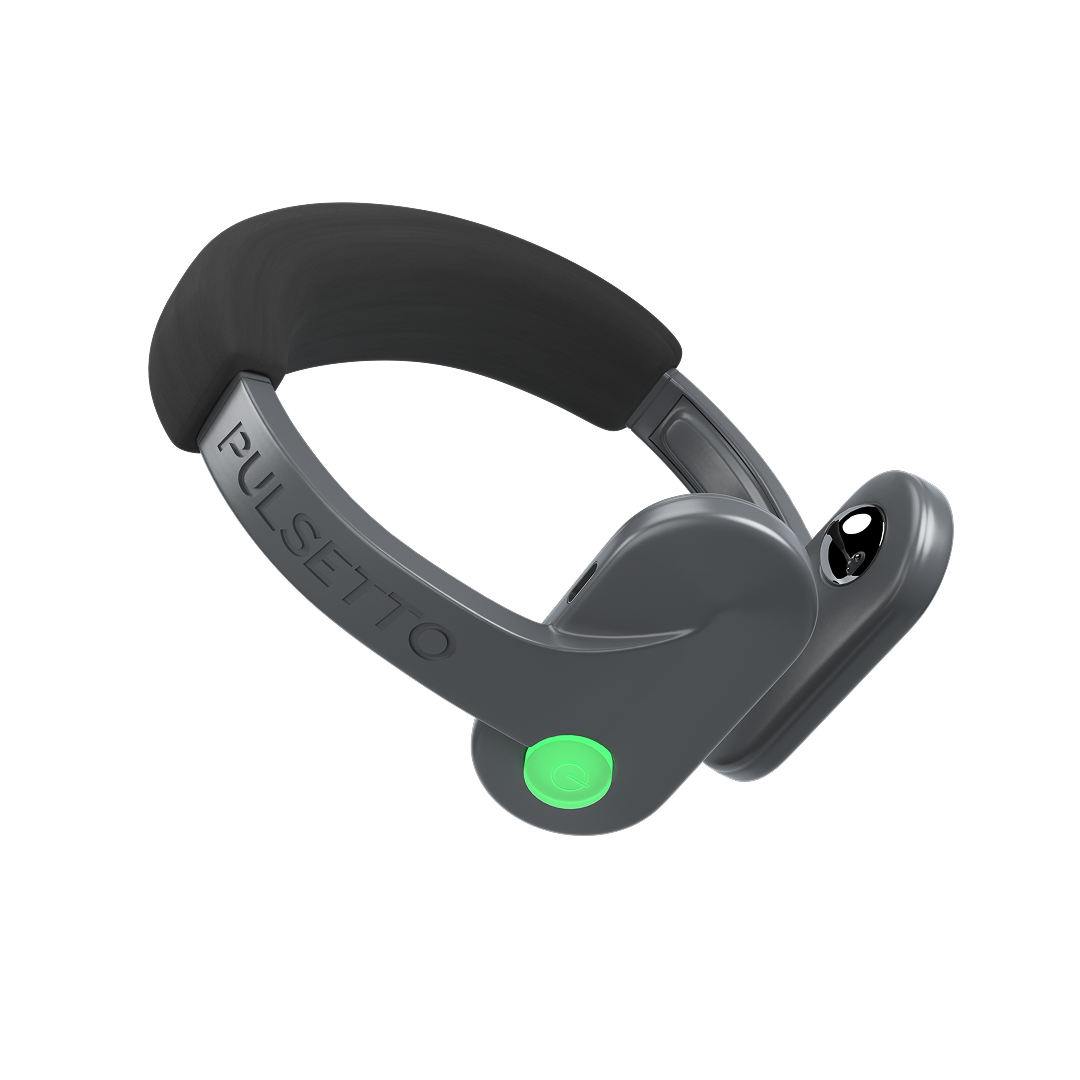
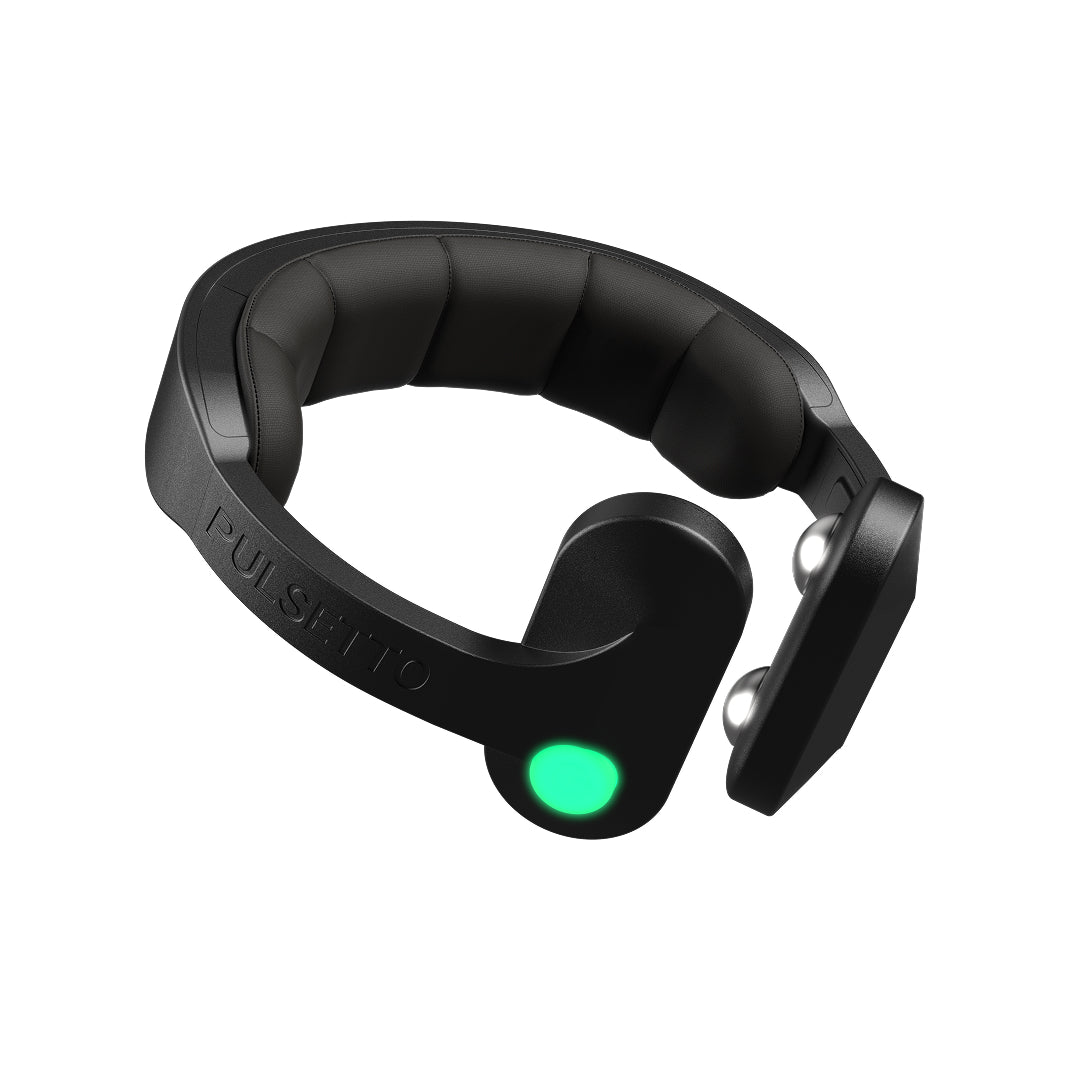
Pulsetto is a hands-free wearable that delivers gentle bilateral cervical vagus nerve stimulation in sessions of about four minutes. It sits on the neck rather than being held in place, so you can use it while reading, working, or winding down. It is a general wellness device, CE certified and FCC certified, and it is designed to support parasympathetic activation and a calmer nervous system baseline. It is not a cognitive-enhancement product, a nootropic, or a treatment for any attention condition, and it is not a TENS unit, which is a separate category of device intended mainly for pain by targeting muscles and peripheral nerves rather than supporting autonomic balance.
The way to think about Pulsetto in the focus conversation is as a consistency tool. Slow breathing and humming work, but they rely on you remembering to do them. A short, guided, hands-free session gives you a repeatable daily anchor for the same parasympathetic activation, paired with a free lifetime app that includes programs for stress, sleep, burnout, pain, and anxiety, plus HRV and sleep tracking and guided breathing. Core use does not require a subscription. The science behind Pulsetto and the roster of ongoing studies and trials lay out the evidence base and the research still underway.
In Pulsetto's own randomized open-label pilot study (n=40, 4 weeks), participants reported a 55.9% reduction in depressive symptoms (PHQ-9), a 45.3% reduction in anxiety symptoms (GAD-7), and a 41.0% improvement in sleep quality (PSQI). Bilateral stimulation reduced the chronic-stress biomarker hair cortisol by 47.5%, compared with 31.4% for unilateral stimulation. Those outcomes speak to stress, mood, and sleep rather than to focus directly, and they come from a single open-label pilot, so they are best read as early, encouraging signals about the calmer baseline that stimulation is meant to support. Better sleep and lower perceived stress are themselves among the most reliable foundations for steady attention.
Bilateral cervical placement is what most distinguishes Pulsetto from other consumer options. Handheld cervical devices such as Truvaga and Hoolest stimulate one side and must be held in place, auricular devices such as Nurosym and Neuvana Xen target the ear, and calming wearables such as Apollo Neuro and Sensate use haptic or infrasonic methods rather than electrical vagal stimulation. Each can be a reasonable fit for different preferences. Pulsetto's particular combination is bilateral, hands-free, app-guided, and short. If you are comparing options, the roundup of the best vagus nerve stimulation devices walks through the landscape, and the Pulsetto FIT vs Pulsetto Lite comparison covers the two models.
A calmer, more focused baseline is not built in a single session. Like breathing practice or exercise, vagal stimulation is something you do consistently, and the benefits accrue over weeks. Used that way, alongside good sleep, movement, and slow breathing, it becomes one supportive input into how regulated and clear-headed you feel day to day.
How to build a simple daily routine
A practical routine does not need to be elaborate. Start with two or three minutes of slow, extended-exhale breathing in the morning to set a calmer tone for the day. Add a short humming or gentle cold-exposure practice when you feel your attention fraying. If you use a device such as Pulsetto, anchor a four-minute session to an existing habit, such as before you start deep work or as part of your wind-down before sleep, so it becomes automatic.
Track how you feel rather than chasing a perfect number. Many people find that HRV, sleep quality, and a subjective sense of steadiness move together over a few weeks of consistent practice. If you track HRV with a wearable or the Pulsetto app, use it as a gentle trend line, not a daily verdict. The goal is a more regulated baseline, and from that baseline, focus tends to come more easily. For a fast orientation to device use, the quick start guide covers the basics.
Frequently asked questions
Can vagus nerve stimulation improve focus?
The honest answer is nuanced. Vagus nerve stimulation can shift arousal and autonomic markers in directions associated with alertness and calm. Sharon and colleagues showed that transcutaneous stimulation induced pupil dilation and attenuated alpha oscillations, both linked to an attentive brain state [24]. But direct evidence that stimulation improves performance on cognitive tasks is mixed. Drost and colleagues found improved autonomic regulation with taVNS while cognitive performance on a task was unchanged [25]. The fair conclusion is that stimulation may support a calmer, more regulated baseline that is compatible with focus, rather than acting as a proven cognitive enhancer. Pulsetto is a general wellness device and is not a treatment for any attention condition.
Is Pulsetto a TENS unit?
No. A TENS (transcutaneous electrical nerve stimulation) unit is designed mainly to interfere with pain signals by stimulating muscles and peripheral nerves, usually with electrode pads placed over a sore area. Pulsetto is a vagus nerve stimulator. It delivers gentle bilateral cervical stimulation to support parasympathetic activation and a calmer nervous system baseline, which is a different purpose and a different target. The two are not interchangeable.
How often can you use Pulsetto?
Pulsetto sessions run about four minutes, and the device is designed for regular daily use as part of a wellness routine. Many people use it once or twice a day, often in the morning to set a calm tone or in the evening to wind down. Benefits from vagal practices tend to build with consistency rather than from a single long session. For specific guidance, see how often you can use Pulsetto.
How does Pulsetto work?
Pulsetto sits on the neck and delivers gentle electrical pulses to vagal territory on both sides, a non-invasive approach known as bilateral cervical vagus nerve stimulation. The aim is to engage vagal afferent signaling, support parasympathetic activation, and help the nervous system settle toward a calmer, more balanced state. Sessions are hands-free and last about four minutes, guided by the companion app. The overview of what effects to expect from vagus nerve stimulation explains the felt experience in more detail.
Do I need a subscription to use Pulsetto?
No. Core use is covered by the free lifetime app, which includes stimulation programs for stress, sleep, burnout, pain, and anxiety, along with HRV and sleep tracking and guided breathing. A Premium tier adds more content, but it is optional, and the essentials work without any subscription.
Who should not use a vagus nerve stimulator?
Vagus nerve stimulation is not suitable for everyone. Do not use Pulsetto if you have any of the following, and consult a doctor first where noted:
-
A pacemaker
-
Any implanted electrical medical device
-
Epilepsy or a seizure disorder
-
Pregnancy
-
Cardiac arrhythmia or a serious cardiovascular condition (consult a doctor first)
-
Recent neck or throat surgery (consult a doctor first)
-
Carotid artery conditions
If you are unsure whether stimulation is appropriate for you, speak with a healthcare professional before starting. More detail is available in the notes on Pulsetto contraindications.
Scientific research
Pulsetto is a general wellness product and is not intended to diagnose, treat, cure, or prevent any disease or medical condition. The studies below were identified via the Consensus and PubMed databases, are linked directly by DOI, and are indexed in PubMed. They are provided for educational context on the vagus nerve, autonomic balance, HRV, and non-invasive vagus nerve stimulation, and do not constitute medical advice or claims about Pulsetto.
[1] Stress and Heart Rate Variability: A Meta-Analysis and Review of the Literature (Kim et al., 2018, Psychiatry Investigation. PMID: 29486547)
[2] An Overview of Heart Rate Variability Metrics and Norms (Shaffer et al., 2017, Frontiers in Public Health. PMID: 29034226)
[3] Critical Review of Transcutaneous Vagus Nerve Stimulation: Challenges for Translation to Clinical Practice (Yap et al., 2020, Frontiers in Neuroscience. PMID: 32410932)
[4] Quantifying acute physiological biomarkers of transcutaneous cervical vagal nerve stimulation in the context of psychological stress (Gurel et al., 2019, Brain Stimulation. PMID: 31439323)
[5] Transcutaneous cervical vagal nerve stimulation reduces sympathetic responses to stress in posttraumatic stress disorder: A double-blind, randomized, sham-controlled trial (Gurel et al., 2020, Neurobiology of Stress. PMID: 33344717)
[6] Transcutaneous auricular Vagus Nerve Stimulation and Median Nerve Stimulation reduce acute stress in young healthy adults (Sanchez-Perez et al., 2023, Frontiers in Neuroscience. PMID: 37746156)
[7] The effect of transcutaneous auricular vagus nerve stimulation on HRV in healthy young people (Geng et al., 2022, PLoS ONE. PMID: 35143576)
[8] Ear your heart: transcutaneous auricular vagus nerve stimulation on heart rate variability in healthy young participants (Forte et al., 2022, PeerJ. PMID: 36438582)
[9] A systematic review of the effects of transcutaneous auricular vagus nerve stimulation on baroreflex sensitivity and heart rate variability in healthy subjects (Soltani et al., 2023, Clinical Autonomic Research. PMID: 37119426)
[10] Does transcutaneous auricular vagus nerve stimulation affect vagally mediated heart rate variability? A living and interactive Bayesian meta-analysis (Wolf et al., 2021, Psychophysiology. PMID: 34473846)
[15] Effects of transcutaneous vagus nerve stimulation on subthreshold affective symptoms and perceived stress: a single-blinded randomized trial in community-dwelling adults (Jackowska et al., 2025, Biological Psychology. PMID: 41290087)
[16] Age as an Effect Modifier of the Effects of taVNS on Heart Rate Variability in Healthy Subjects (Gianlorenco et al., 2024, Journal of Clinical Medicine. PMID: 39064307)
[17] Heart Rate Variability Biofeedback Improves Emotional and Physical Health and Performance: A Systematic Review and Meta Analysis (Lehrer et al., 2020, Applied Psychophysiology and Biofeedback. PMID: 32385728)
[18] The effect of heart rate variability biofeedback training on stress and anxiety: a meta-analysis (Goessl et al., 2017, Psychological Medicine. PMID: 28478782)
[21] Meditation programs for psychological stress and well-being: a systematic review and meta-analysis (Goyal et al., 2014, JAMA Internal Medicine. PMID: 24395196)
[22] Effect of breathwork on stress and mental health: A meta-analysis of randomised-controlled trials (Fincham et al., 2023, Scientific Reports. PMID: 36624160)
[23] The Virtual Sleep Lab: Accurate Four-Class Sleep Staging Using Heart-Rate Variability from Low-Cost Wearables (Topalidis et al., 2023, Sensors. PMID: 36904595)
[24] Transcutaneous Vagus Nerve Stimulation in Humans Induces Pupil Dilation and Attenuates Alpha Oscillations (Sharon et al., 2020, Journal of Neuroscience. PMID: 33214317)
[25] Effects of taVNS on physiological responses and cognitive performance during a mental stressor (Drost et al., 2025, Cognitive, Affective and Behavioral Neuroscience. PMID: 40908377)
[28] Neurostimulation in people with drug-resistant epilepsy: Systematic review and meta-analysis from the ILAE Surgical Therapies Commission (Touma et al., 2022, Epilepsia. PMID: 35352349)
[29] Significant reduction of seizure frequency in patients with drug-resistant epilepsy by vagus nerve stimulation: Systematic review and meta-analysis (Muniyandi et al., 2025, Epilepsy Research. PMID: 39809131)