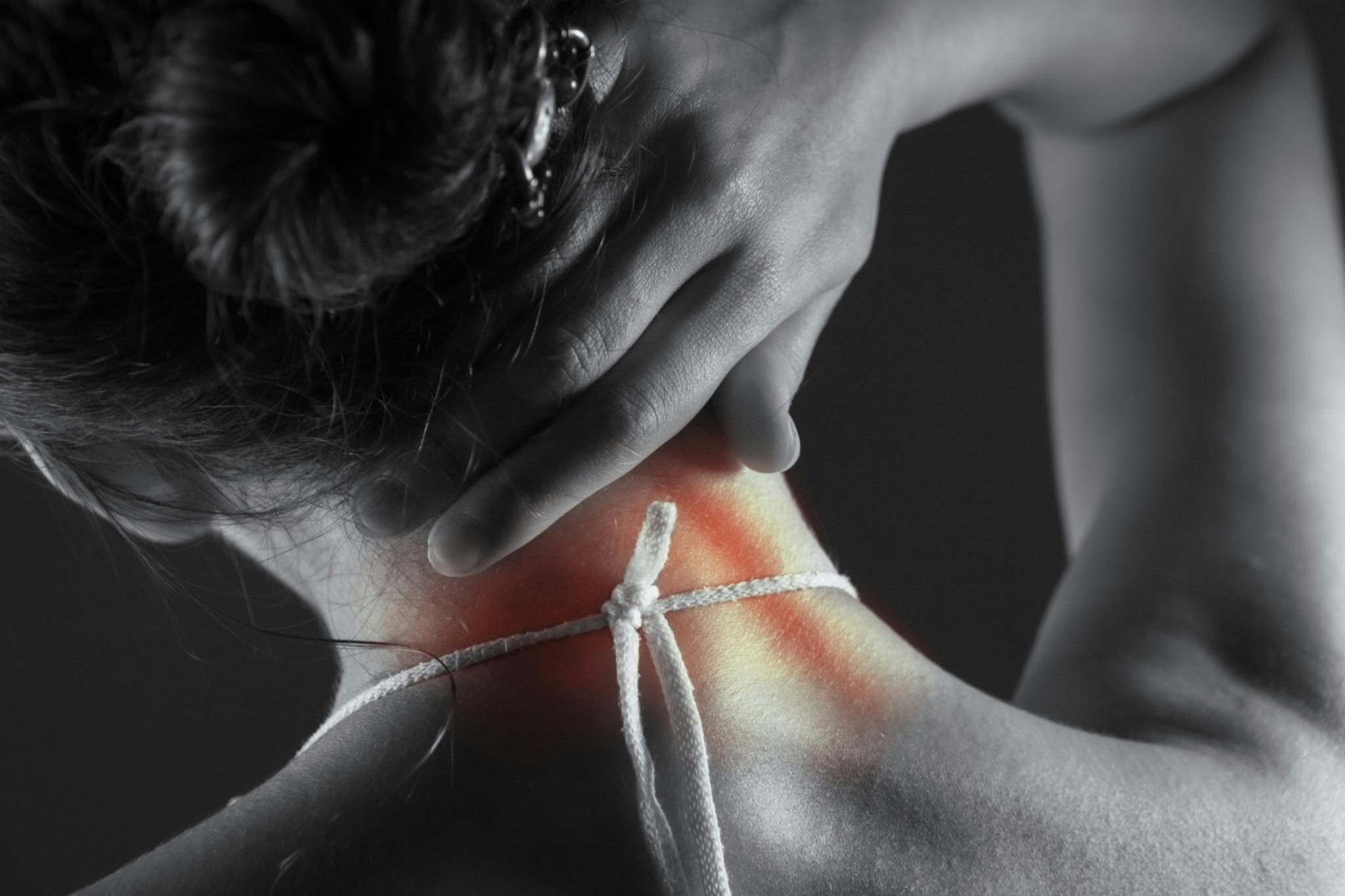
Symptoms: what compression looks like at each location
There is no single pinched-vagus-nerve symptom set. The nerve sends branches to the throat, the voice box and the heart, and the branch under pressure decides the picture. The patterns described in the research are below.
|
Where the pressure is
|
Symptoms described in the research
|
Typical first step
|
|
Brainstem (a blood vessel)
|
Spasm on one side of the throat and voice box, or a persistent cough
|
A specialist's diagnostic work-up with imaging
|
|
Neck (a mass beside the nerve)
|
Dysfunction of the vagus or voice-box nerves, traced to a mass on ultrasound
|
Neck ultrasound
|
|
After neck surgery
|
A fast heart rate at rest, in one reported case
|
Ultrasound and a cardiac work-up
|
The symptom lists that rank for this topic add dizziness, anxiety, digestive upset and brain fog. None of the compression studies cited here links those to a pinched vagus nerve. The closest is the posture proposal below, which started from patients who already had one of nine unexplained symptoms and then looked for a neck cause.
The posture theory, and what backs it

A common explanation for a "pinched vagus nerve" is forward head posture and a stiff neck. The idea has a published form. A 2025 paper proposes "cervicovagopathy," in which years of leaning over a phone or laptop slowly stretch the ligaments at the back of the neck, and the authors suggest this then stretches and compresses the vagus nerve until its signals fail [5].
The paper draws on a retrospective review of 234 patients with an unexplained symptom, such as anxiety, dizziness, fatigue or neck pain. It describes cervicovagopathy as a hypothesis and says that symptom improvement alongside changes in the nerve on ultrasound would be needed to prove it [5].
As it stands, the idea is an interesting proposal and not an established diagnosis. The symptom list overlaps heavily with stress, poor sleep and long screen hours, so a sore neck and an anxious week can easily look like cause and effect. Neck position is still worth looking after for the neck's sake, and what your pillow does to your neck overnight and how your screen sits during the day are the two easiest places to start.
What most people mean by a pinched nerve in the neck
The nerve behind that phrase is usually a cervical nerve root. Cervical radiculopathy is pain or sensory and motor change caused by compression of a nerve root as it leaves the spine, most often from facet joint spondylosis (age-related wear) or a herniated disc. Its typical result is arm pain or tingling that follows the pattern of the affected root, with or without neck pain and weakness. Most patients improve with non-surgical treatment [6].
The vagus nerve is a different structure on a different route, which is why the pictures differ.
|
Cervical nerve root
|
Vagus nerve
|
|
What it is
|
A spinal nerve root leaving the spine beside the vertebrae
|
A cranial nerve running from the brainstem through the carotid sheath
|
|
Usual cause of compression
|
A herniated disc or age-related wear of the spine
|
A blood vessel at the brainstem, a mass beside the nerve, or surgery
|
|
Where it shows up
|
Neck and arm, in the pattern of one nerve root
|
Throat, voice, cough or heart rate, depending on the branch
|
|
Outlook in the research
|
Most patients improve with non-surgical care
|
Depends on the cause, and usually needs a specialist
|
When to get it checked
Arm pain, numbness or weakness that changes with neck movement points toward the nerve roots, and primary care is the place to start. A change in voice, difficulty swallowing or a cough that will not clear points toward the throat branches of the vagus nerve, and an ear, nose and throat specialist can examine them directly.
Other conditions can mimic or coexist with radiculopathy [7], so the examination is the step that sorts these out. Sudden weakness, trouble speaking, a drooping face, or chest pain with fainting need emergency care.
Where Pulsetto fits
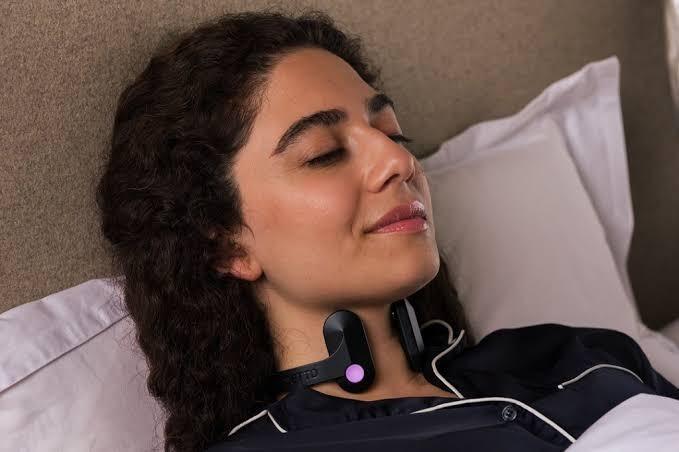
Pulsetto is a wireless, hands-free vagus nerve stimulator worn on the neck, where the vagus nerve runs closest to the skin. With electrode gel on the contact points, it delivers gentle stimulation to both sides of the neck, and you run each session from the app. The vagus nerve carries signals to the brainstem, which uses them, among other inputs, to help set heart rate and the balance between alertness and rest. Pulsetto is designed to give that system a calm, steady input so the body leans toward its parasympathetic, rest-and-digest side. The stress program runs for 4 minutes, and the sleep program runs for 10 minutes, about 30 minutes before bed.
It is a general wellness product for everyday stress and sleep, and it has no role in diagnosing or treating compression, a pinched nerve root or any other condition. Because it sits on the neck, anyone with a neck injury, recent neck or throat surgery, carotid artery problems or an unexplained lump in the neck should speak to a physician first. Anyone with a pacemaker, an implantable device or epilepsy should not use it.
Describe where it is before you describe what it is
Before you read another list online, write down where the symptom sits (neck, arm or throat), what sets it off and when it began. Location tells a clinician which nerve to look at, and a note like that makes a short appointment much more useful. For the everyday side of the picture, such as a tense week or restless nights, see what Pulsetto offers once a clinician has seen anything structural.
Pinched Vagus Nerve FAQs
How long does a pinched nerve in the neck take to get better?
For a nerve root pressed by a herniated disc, recovery is usually counted in months. A systematic review of the natural history found that symptoms improved within about 4 to 6 months and that roughly 83% of patients had recovered completely within 24 to 36 months [8]. Those figures describe disc herniation with radiculopathy. The vagus nerve causes above follow their own cause, so a timeline for them has to come from the clinician who finds it.
What helps a pinched nerve in the neck without surgery?
The evidence for any single treatment is mixed. In a randomized trial of 205 patients with recent-onset cervical radiculopathy, a cervical collar or physiotherapy gave more pain reduction in the short term than a wait-and-see policy [9]. A systematic review of conservative treatments found no single intervention that was consistently superior, found that patients tended to improve over time, and described collar and physiotherapy as promising for short-term relief [10]. Which option fits is a decision for your clinician or physiotherapist.
My neck MRI shows a bulging disc. Is that what is causing my symptoms?
Possibly, though scan findings alone cannot say. In a study of 63 volunteers with no neck symptoms, the scans were read as abnormal in 19% of them, 14% of those under 40 and 28% of those over 40 [11]. In a later set of 1,211 healthy volunteers, spinal cord compression appeared in 5.3% and a signal change in the cord in 2.3% [12]. The authors of both studies caution that scan findings have to be matched to the symptoms and the examination before they guide decisions, which is why a report that says "bulging disc" is a starting point for the conversation with your clinician.
Who should not use Pulsetto?
Do not use Pulsetto if you have a pacemaker, an implantable medical device, or epilepsy, and do not use it while pregnant unless a healthcare provider has cleared you. Talk to a doctor first if you have a cardiovascular condition, recent neck or throat surgery or injury, or carotid artery problems.
Scientific research
-
The vagal rhizopathies (Honey, 2025, Frontiers in Neurology)
-
Prevalence and characteristics of vagus nerve variations on neck ultrasonography (Ahn et al., 2021, Ultrasonography)
-
Sonography of the cervical vagus nerve: normal appearance and abnormal findings (Giovagnorio et al., 2001, American Journal of Roentgenology)
-
Chronic intermittent tachycardia as a consequence of vagus nerve injury after anterior cervical discectomy and fusion: case report of a previously unreported complication (Werheim et al., 2023, North American Spine Society Journal)
-
Cervicovagopathy: ligamentous cervical instability and dysstructure as a potential etiology for vagus nerve dysfunction in the cause of human symptoms and diseases (Hauser et al., 2025, Frontiers in Neurology)
-
Cervical radiculopathy: a review (Caridi et al., 2011, HSS Journal)
-
Cervical radiculopathy: pathophysiology, presentation, and clinical evaluation (Abbed et al., 2007, Neurosurgery)
-
The course and prognostic factors of symptomatic cervical disc herniation with radiculopathy: a systematic review of the literature (Wong et al., 2014, The Spine Journal)
-
Cervical collar or physiotherapy versus wait and see policy for recent onset cervical radiculopathy: randomised trial(Kuijper et al., 2009, BMJ)
-
The effectiveness of conservative treatment for patients with cervical radiculopathy: a systematic review (Thoomes et al., 2013, The Clinical Journal of Pain)
-
Abnormal magnetic-resonance scans of the cervical spine in asymptomatic subjects. A prospective investigation (Boden et al., 1990, The Journal of Bone and Joint Surgery. American Volume)
-
Normal morphology, age-related changes and abnormal findings of the cervical spine. Part II: magnetic resonance imaging of over 1,200 asymptomatic subjects (Kato et al., 2012, European Spine Journal)