Why people look for alternatives to cold plunges
Cold plunging asks a lot before it gives anything back. A few real barriers show up again and again among people who try it and then stop:
-
The discomfort is not mild. Full-body immersion in water below 15°C triggers a genuine cold shock response, including gasping and a spike in both heart rate and stress hormones, which is the opposite of relaxing in the moment.
-
It carries real contraindications. Uncontrolled hypertension, certain heart arrhythmias, or Raynaud's phenomenon are reasons a clinician might advise against it, and that rules out a meaningful slice of the audience searching for how to build stress resilience in the first place.
-
It needs equipment or a body of cold water, which makes daily consistency hard while traveling, in an apartment without space for a tub, or through a hot summer.
-
The evidence for an immediate calming effect is thinner than the wellness-culture version of cold plunging suggests. A 2025 systematic review and meta-analysis of cold-water immersion research found no significant change in stress markers immediately after exposure, at one hour, at 24 hours, or at 48 hours [1]. A reduction only showed up at the 12-hour mark, driven by delayed parasympathetic rebound rather than anything that happens in the tub itself.
None of that makes cold plunging useless. It's good stress in the classic sense: short and self-imposed, something your body recovers from quickly instead of getting stuck in. The point is that this same eustress-and-recovery pattern is available through methods that skip the ice water, and some of them get you a faster, steadier result.
What's actually calming your nervous system
Every method on this list, cold plunging included, is aiming at the same physiological lever: vagal tone, meaning how quickly and how strongly your vagus nerve can pull your body out of a stress response and back into rest-and-digest mode.
|
Alternative
|
Time per session
|
Hands-free?
|
Evidence base
|
|
Bilateral vagus nerve stimulation
|
~4 minutes
|
Yes
|
Peer-reviewed taVNS research + Pulsetto's own pilot study
|
|
Slow, paced breathing
|
5-20 minutes
|
No
|
Meta-analysis of 223 studies
|
|
Humming or chanting
|
3-10 minutes
|
No
|
Narrative review of 30 studies
|
|
Progressive muscle relaxation
|
10-20 minutes
|
No
|
Randomized controlled trials
|
|
Moderate-heat sauna sessions
|
15-20 minutes
|
Semi (passive)
|
Controlled crossover study
|
|
HRV biofeedback training
|
10-15 minutes
|
No
|
Scoping review
|
|
Structured aerobic exercise
|
20-30 minutes, 3x weekly
|
No
|
Systematic review and meta-analysis
|
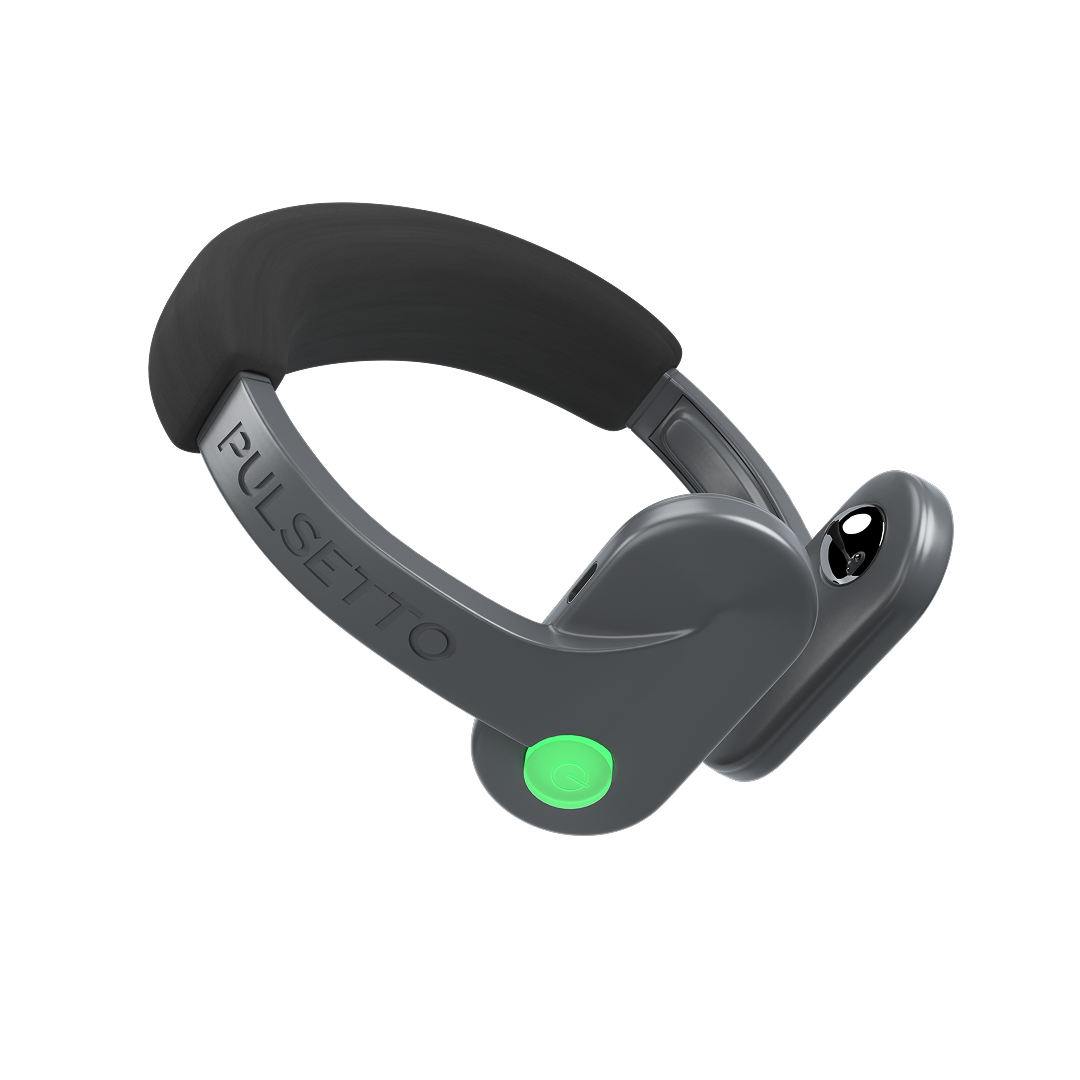
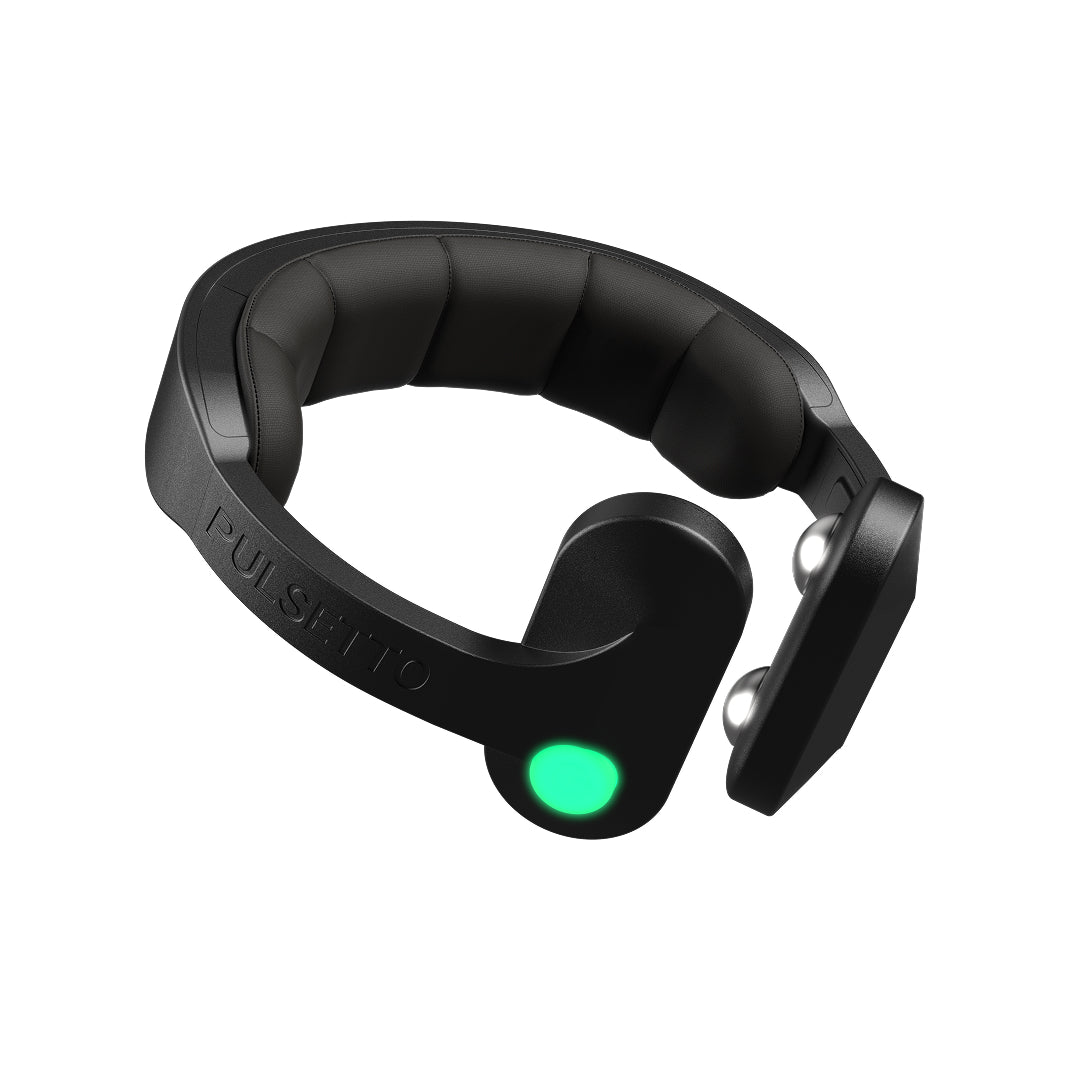
Ready to try the hands-free option before you compare the rest? Pulsetto's vagus nerve stimulator delivers bilateral cervical stimulation in about four minutes, no cold water and no discomfort required.
7 alternatives to cold plunges for stress resilience
1. Bilateral vagus nerve stimulation

Electrical vagus nerve stimulation works on the same nerve cold exposure indirectly recruits, but it goes at it directly instead of routing through a shock to the whole body. A 2025 randomized study comparing a single session of auricular vagus nerve stimulation against a deep breathing exercise found both increased parasympathetic activity and reduced perceived stress in healthy adults within one session [2]. Neither method needed the discomfort a cold plunge relies on to get there.
Pulsetto's version stimulates both sides of the neck at once instead of one ear or one side, which is the same bilateral approach used in several of the broader vagus nerve stimulation studies. A session runs about four minutes and requires nothing more than clipping the device on, which is a meaningfully lower barrier to daily consistency than filling a tub with ice. If you want a fuller rundown of how devices in this category stack up, the best devices for stress resilience is worth a look.
2. Slow, paced breathing
Breathing at roughly five to seven breaths per minute, with the exhale stretched longer than the inhale, is one of the most studied ways to raise vagally-mediated heart rate variability. A systematic review and meta-analysis covering 223 separate studies found consistent increases in vagally-mediated HRV both during the breathing itself and immediately after a single session, with similar gains showing up after multi-session training too [3].
It costs nothing and needs no equipment, which makes it the lowest-barrier option on this list. The tradeoff is that it takes sustained attention to do correctly. A wandering mind during a five-minute breathing session tends to drift back toward normal breathing rate within a minute or two, undoing much of the benefit.
3. Humming or chanting

Humming and sustained vocal chanting stimulate the vagus nerve through its connections to the vocal cords and throat, a pathway sometimes called the laryngeal branch. A narrative review of 30 studies on Om chanting specifically found measurable increases in parasympathetic activity and heart rate variability, along with reductions in cortisol among people with high baseline stress reactivity [4].
Sessions are short, typically three to ten minutes of sustained humming or a repeated chant, and can be done anywhere private enough not to feel self-conscious. That privacy requirement is the main practical limit: it doesn't fit neatly into an open office or a commute the way some of the other options do.
4. Progressive muscle relaxation

Progressive muscle relaxation involves systematically tensing and then releasing each major muscle group, moving through the body in sequence. In a controlled study, a single session of abbreviated progressive muscle relaxation produced significantly lower post-session salivary cortisol compared with a control group that simply sat quietly for the same amount of time [5].
It runs ten to twenty minutes depending on how many muscle groups are included, and it's one of the few methods on this list backed by decades of clinical use in hospital and therapy settings. The length is also its main drawback for anyone trying to fit stress resilience work into a lunch break.
5. Moderate-heat sauna sessions
If cold exposure isn't the fit, heat exposure is the more comfortable end of the same idea: a controlled physical stressor the body adapts to and recovers from. A controlled study comparing sauna sessions at 80°C and 120°C found the moderate-heat session improved mood and reduced tension, while the more extreme session had the opposite effect [6].
That finding cuts both ways. Sauna use can genuinely help, but more heat is not automatically better, and the same study found real downsides at the higher temperature. Anyone with a cardiovascular condition or who is pregnant should get medical clearance before regular sauna use, the same caution that applies to cold plunging.
6. HRV biofeedback training

Biofeedback devices display a live readout of heart rate variability while a person practices slow breathing, letting them see in real time whether a given breathing pattern is actually increasing vagal activity. A scoping review of six studies on slow breathing combined with HRV biofeedback found consistent improvements in the high-frequency HRV band associated with parasympathetic activity, along with better baroreflex sensitivity when the two were combined [7].
The visual feedback loop is the appeal here. It turns a skill that's easy to do wrong (slow breathing) into something with a clear, immediate signal of whether it's working.
7. Structured aerobic exercise
Regular aerobic training changes the baseline of the whole stress-response system instead of acting as a single-session reset. A systematic review and meta-analysis of physical activity interventions found that regular exercise was associated with lower cortisol levels and better sleep quality across the studies reviewed [8].
Three sessions a week of twenty to thirty minutes is a reasonable target based on the studies included in that review. The catch is the time horizon: the cortisol and sleep benefits showed up over weeks of consistent training, not after a single workout, which makes this the slowest-acting option on the list even though it may be the most durable one.
How to choose the right alternative for you
A few questions narrow this list down fast:
-
How much time do you actually have? Four minutes of vagus nerve stimulation and a five-minute breathing session fit into a schedule that twenty minutes of sauna time or exercise won't.
-
Do you want hands-free or hands-on? Only vagus nerve stimulation runs in the background of something else you're doing. Everything else on this list needs your full attention for the duration.
-
Do you want to see your own numbers, or just feel the effect? HRV biofeedback is built around visible data. Humming, breathing, and progressive muscle relaxation skip the numbers entirely, and plenty of people find that absence more relaxing.
-
What does your body actually tolerate? Sauna and cold exposure both carry cardiovascular contraindications that breathing, humming, or vagus nerve stimulation don't.
Most people end up combining two or three of these instead of picking just one. A five-minute breathing practice paired with four minutes of vagus nerve stimulation on a different part of the day covers a lot of ground without demanding much time from either.
How Pulsetto fits into a cold-plunge-free stress resilience routine

The pattern across every method above is the same: consistency beats intensity. A single cold plunge, sauna session, or hard workout spikes stress hormones before rebounding, while the durable results here came from repeated sessions over weeks. Pulsetto applies that logic through four-minute daily sessions using bilateral cervical stimulation, the same two-sided design the taVNS research found most effective, unlike most consumer nVNS devices that stimulate only one ear or side of the neck. Clipping it on during a commute, a work break, or before bed skips the dedicated quiet block that breathing practice or progressive muscle relaxation both require.
Pulsetto's own pilot study found reductions in self-reported anxiety and depressive symptoms, plus a measurable drop in hair cortisol, after four weeks of regular bilateral use, a timescale that lines up with the aerobic exercise research above. In Pulsetto's own in-app wellbeing check-ins, 73% of users reported lower stress within their first two weeks of consistent use.
None of this requires giving up cold plunging if it already works. The two aren't in competition: someone who likes cold exposure can keep it and add bilateral stimulation on days the tub isn't practical, which is closer to how most people on this list end up using more than one method at once.
Recovering quickly comes down to which method you'll actually use most days rather than which one looks best on paper. If the discomfort, the equipment, or the time cold plunging eats out of a morning has been the barrier, try Pulsetto for a few weeks and see whether four hands-free minutes gets you closer to the same steadiness you were chasing in the tub.
Frequently asked questions
Can I use vagus nerve stimulation and cold plunging together?
Yes. They work through overlapping but not identical pathways, and nothing about using one interferes with the other. Some people use cold exposure a few times a week for the mental-toughness aspect and add a daily four-minute vagus nerve stimulation session for the days that don't include a plunge.
How long before I notice a difference from any of these alternatives?
The studies above generally showed measurable changes within four to eight weeks of consistent use, whether that was breathing practice, progressive muscle relaxation, or bilateral vagus nerve stimulation. A single session of most of these methods produces some immediate effect on heart rate or perceived relaxation, but the resilience-building effect, meaning a nervous system that recovers faster from the next stressor, takes repeated use to show up.
How much does Pulsetto cost?
Pulsetto Lite currently runs $269 and Pulsetto FIT runs $296. Both include free worldwide shipping. Both also come with a 30-day money-back guarantee backed by a two-year warranty.
Is Pulsetto FDA approved?
No. Pulsetto is FCC certified, meaning it's approved for well-being use and compliant with Federal Communication Commission regulations. It is not FDA-cleared as a medical device. Pulsetto is a general wellness product and is not intended to diagnose, treat, cure, or prevent any disease or medical condition.
What are the contraindications for vagus nerve stimulation devices?
Vagus nerve stimulation is not recommended for people with active implantable medical devices such as pacemakers, hearing aid implants, or other electronic implants. It's also generally not recommended during pregnancy or for people with epilepsy, and anyone with an existing medical condition should consult a healthcare provider before starting use.
Do any of these alternatives work as well as cold plunging for mental toughness specifically?
Not directly. The "mental toughness" appeal of cold plunging comes partly from voluntarily doing something uncomfortable, which is a different psychological mechanism than the physiological vagal-tone target most of these seven alternatives are working toward. If the goal is specifically the discipline-building aspect of doing something hard on purpose, none of these fully substitutes for that. If the goal is the underlying stress-resilience physiology, several of them get there with less discomfort.
Scientific research
[1] Effects of cold-water immersion on health and wellbeing: A systematic review and meta-analysis (Cain et al., 2025, PLOS ONE)
[2] Comparison of the Acute Effects of Auricular Vagus Nerve Stimulation and Deep Breathing Exercise on the Autonomic Nervous System Activity and Biomechanical Properties of the Muscle in Healthy People (Ertürk & Özden, 2025, Journal of Clinical Medicine)
[3] Effects of voluntary slow breathing on heart rate and heart rate variability: A systematic review and a meta-analysis(Laborde et al., 2022, Neuroscience and Biobehavioral Reviews)
[4] Om (Aum) Chanting As A Physiological Approach For Managing Type D Personality: A Narrative Review of Cognitive, Autonomic, Psychological, and Biochemical Outcomes in Adults (Jose et al., 2025, Journal of Clinical and Diagnostic Research)
[5] The Impact of Abbreviated Progressive Muscle Relaxation on Salivary Cortisol and Salivary Immunoglobulin A (sIgA) (Pawlow & Jones, 2005, Applied Psychophysiology and Biofeedback)
[6] The influence of extreme thermal stress on the physiological and psychological characteristics of young women who sporadically use the sauna (Podstawski et al., 2024, Frontiers in Public Health)
[7] Breathe better, live better: the science of slow breathing and heart rate variability (Giorgi & Tedeschi, 2025, Acta Neurologica Belgica)
[8] The effects of physical activity on cortisol and sleep: A systematic review and meta-analysis (De Nys et al., 2022, Psychoneuroendocrinology)