Why Most Beginners Quit by Week Two
The most common failure mode in stress fitness is overcommitment. A 12-week exercise-prescription study found that participants who stuck with the program had set more modest expectations at the start than those who dropped out, and that people who expected fast, large changes were more likely to be disappointed and quit once week two or three didn't deliver on that expectation [1]. A separate year-long study of 250 people brand new to exercise found that only 37% ended up exercising regularly across the full year, and the strongest predictors of who did weren't fitness level or motivation to change, they were enjoyment of the activity itself and a simple belief in one's own ability to stick with it [2]. The plan below is built around both findings: start with something small enough to actually enjoy and believably repeat, and don't add the next layer until the current one is boring rather than difficult.
Week 1: Build the Minimum Viable Habit
Pick one thing: a 10 to 15 minute walk, a short bodyweight routine, a bike ride, whatever you'd actually choose to repeat five times this week without needing to talk yourself into it. Resist the urge to also fix your sleep, your diet, and your breathing in the same week. A single short bout of movement reliably improves mood and lowers anxiety within about 30 minutes, an effect documented across a meta-analysis of over 4,600 people [3], which means week one is designed to give you a felt result almost immediately, evidence the habit is worth keeping, not a leap of faith. The only goal this week is five sessions, done at roughly the same time each day so it starts attaching itself to an existing part of your schedule.
Week 2: Add a Deliberate Recovery Practice

Once the week-one habit doesn't require willpower to start, add a second layer: a few minutes of slow, paced breathing or a nervous-system-recovery practice at the opposite end of the day from your movement session. A meta-analysis of 24 controlled studies found this kind of direct nervous-system training produces a large reduction in self-reported stress and anxiety, among the largest effect sizes of any non-drug intervention reviewed [5]. This is a genuinely different lever from week one's movement, it works on the parasympathetic side of the stress response directly rather than through mood or exertion, which is why the two stack rather than compete for the same benefit.
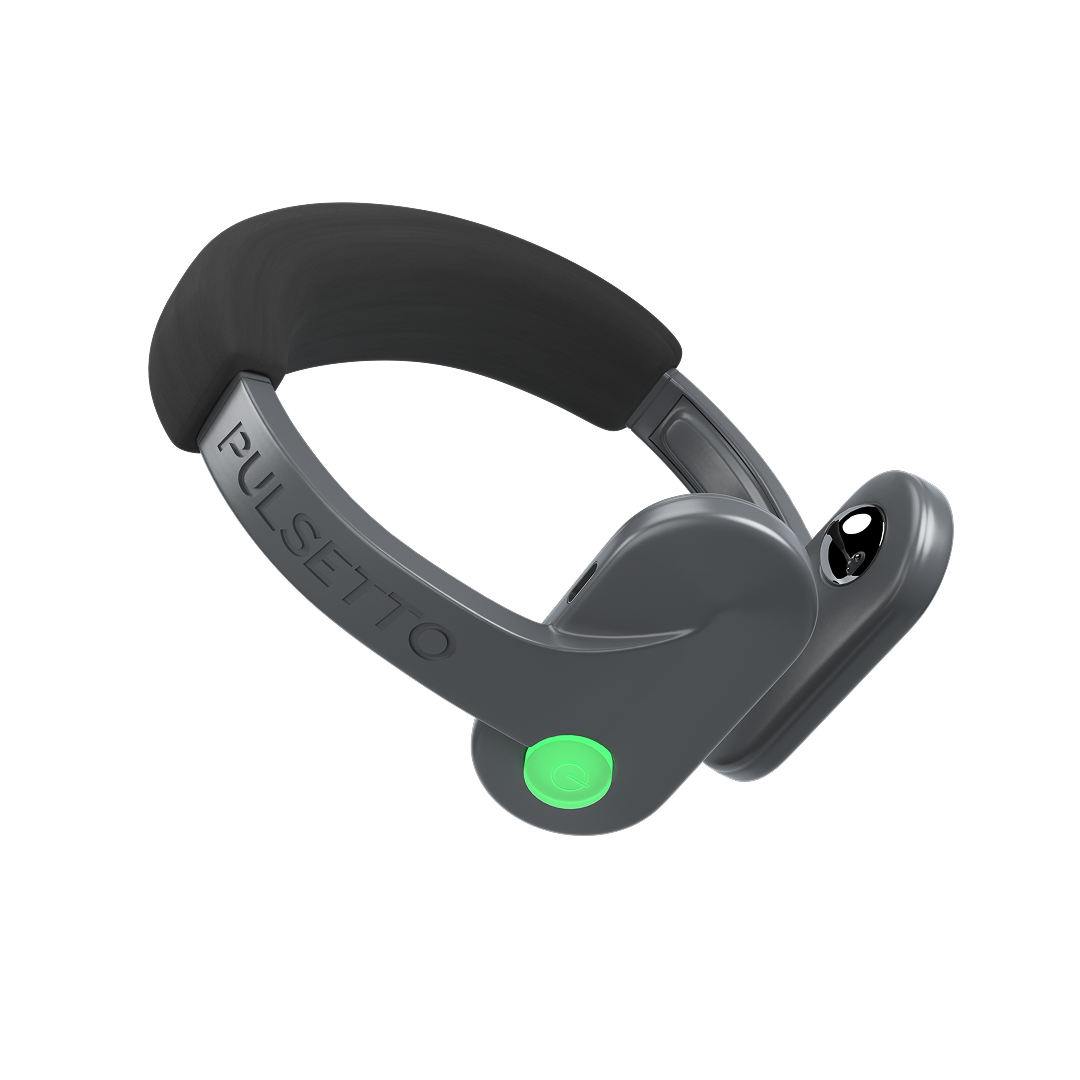
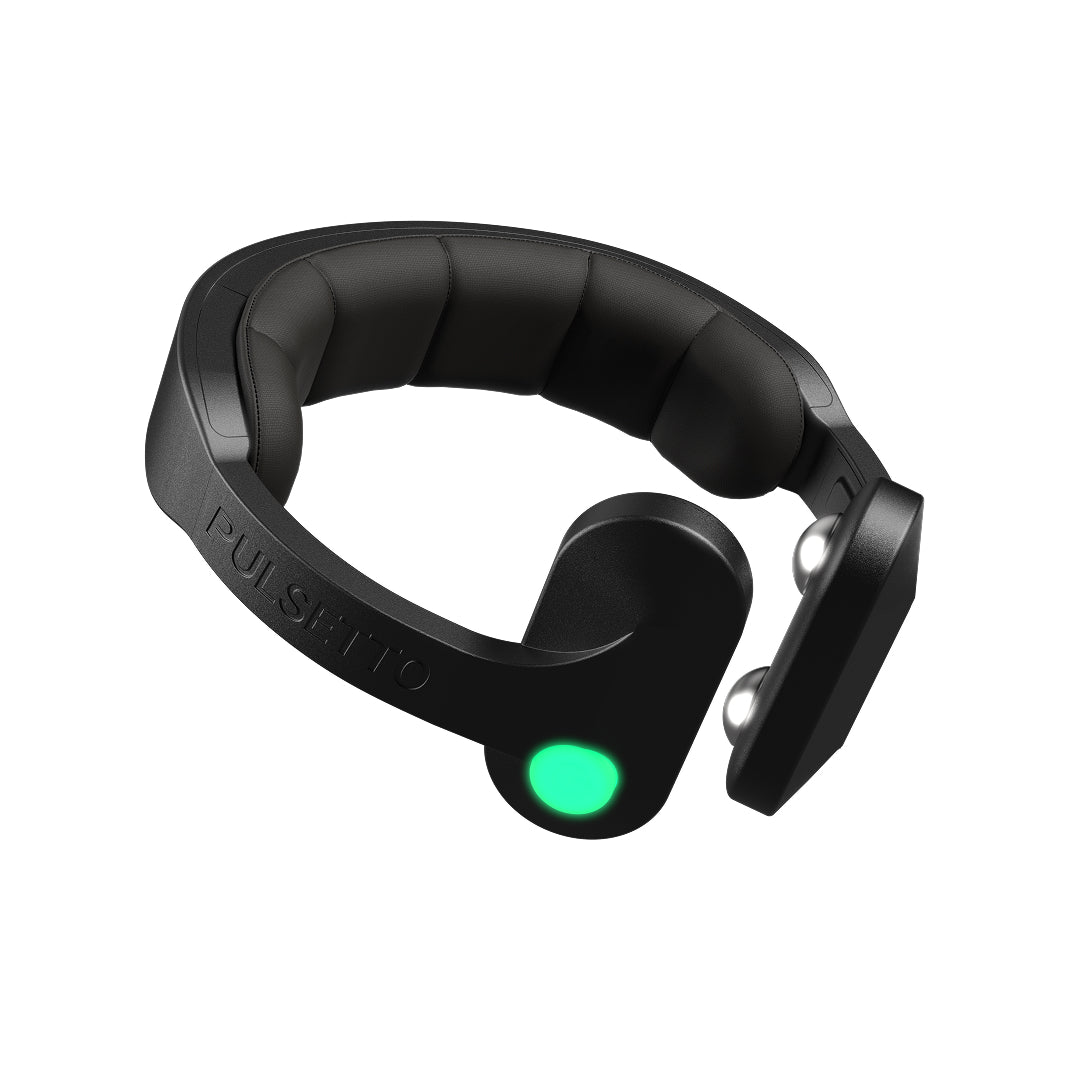
Pulsetto is one way to apply this lever without learning a breathing technique from scratch: a hands-free device worn around the neck that delivers bilateral cervical vagus nerve stimulation, both sides at once, in 4-minute sessions short enough to fit into a beginner's already-full week two. In Pulsetto's own randomized open-label pilot study of 40 adults over 4 weeks, the bilateral approach reduced hair cortisol, a marker of accumulated chronic stress rather than a single day's spike, by 47.5%, against 31.4% for unilateral stimulation, alongside a 45.3% drop in GAD-7 anxiety scores and a 41.0% improvement in PSQI sleep-quality scores.
The app also displays HRV and sleep trends from whatever tracker is already part of your routine, so week one's movement and week two's recovery practice show up on the same dashboard instead of two separate habits with no shared thread.
Disclaimer: Pulsetto is a general wellness product and is not intended to diagnose, treat, cure, or prevent any disease or medical condition.
Week 3: Add the Social Layer
By week three, the habit itself should feel close to automatic, which makes it the right time to add the layer beginners skip most often: telling someone. Social support changes the body's actual stress response, not just how a stressful day feels afterward. A placebo-controlled study found that having a supportive person present before a standardized stress test suppressed the cortisol response compared with facing the same stressor alone [6]. In practice, this can be as small as texting a friend about your weekly sessions or asking someone to check in, it doesn't need to be a workout partner. This also lines up with what predicted long-term adherence in the novice-exerciser study above: social support from friends and family was one of the three strongest predictors of who was still exercising regularly a year later [2].
Week 4: Consolidate, Then Look Past 30 Days

Week four is for protecting the first three well enough to reach the point where they actually become durable. A study tracking new gym members found that those who kept a habit going for roughly six weeks were substantially more likely to still be doing it months later than those who started harder and quit sooner [4]. Thirty days is real progress, but it's not the finish line, it's roughly the halfway point to where the habit stops requiring active effort. Plan week four around repetition, not expansion: same movement session, same recovery practice, same check-in, with the only change being how automatic it's starting to feel.
Your First 30 Days at a Glance
-
Week 1: one movement habit, five sessions, same time each day.
-
Week 2: add a few minutes of breathing or nervous-system-recovery practice at the opposite end of the day.
-
Week 3: tell one person and ask them to check in.
-
Week 4: change nothing, just keep repeating, and expect the six-week mark, not day 30, to be where it stops feeling like effort.
When to Get Professional Guidance First
This plan is safe for essentially everyone in its basic form, walking, breathing, and telling a friend all carry minimal risk. The exception is the week-two recovery layer if it involves an electrical vagus nerve stimulation device: anyone with a pacemaker or other implantable device, epilepsy or a seizure disorder, or who is pregnant should get medical guidance before using one, along with anyone with an active cardiac arrhythmia, a recent neck or throat injury or surgery, or a carotid artery condition. More broadly, if stress or anxiety is severe enough to be interfering with daily life, or comes with persistent low mood, hopelessness, or thoughts of self-harm, that's a signal to talk to a doctor or mental health professional before or alongside starting this plan, not a sign the plan isn't for you.
Start Today
Pick one small movement habit from week one, small enough that you'd genuinely do it five times without arguing yourself out of it, and do the first session today.
If you’d like to add a deliberate recovery practice, Pulsetto is a hands-free vagus nerve stimulator built for the week-two recovery layer: 4-minute sessions, with an app that displays HRV and sleep data pulled from whatever tracker you already use. Try the Pulsetto vagus nerve stimulator, or see what real users say first.
Frequently Asked Questions
What if I miss a day in the first 30 days?
Pick back up the next day rather than restarting the count. A single missed session isn't evidence the plan isn't working, consistency over the full four weeks matters more than a perfect streak.
Do I need to follow the weeks in this exact order?
The order matters more than it might seem: starting with movement gives you a felt result fast enough to stay motivated, and adding recovery and social layers only after the first habit is automatic keeps you from overcommitting in week one, which is the most common reason beginners quit.
Is it safe to add a vagus nerve stimulation device in week two?
For most healthy adults, yes, but anyone with a pacemaker or other implantable device, epilepsy, or who is pregnant should get medical guidance first, along with anyone with an active cardiac arrhythmia, a recent neck or throat injury or surgery, or a carotid artery condition.
What if 30 days isn't enough and I still feel like it's an effort?
That's expected and not a failure. The research behind this plan points to roughly six weeks, not 30 days, as the point habits typically stop requiring active willpower. Keep repeating weeks one through three past day 30 rather than judging the plan at the one-month mark.
Scientific Research
[1] Adherence to an exercise prescription scheme: the role of expectations, self-efficacy, stage of change and psychological well-being (Jones et al., 2005, British Journal of Health Psychology, 191 citations)
[2] What Makes Individuals Stick to Their Exercise Regime? A One-Year Follow-Up Study Among Novice Exercisers in a Fitness Club Setting (Gjestvang et al., 2021, Frontiers in Psychology, 29 citations)
[3] Affective Responses to Acute Exercise: A Meta-Analysis of the Potential Beneficial Effects of a Single Bout of Exercise on General Mood, Anxiety, and Depressive Symptoms (Weinstein et al., 2024, Psychosomatic Medicine, 21 citations)
[4] Exercise habit formation in new gym members: a longitudinal study (Kaushal & Rhodes, 2015, Journal of Behavioral Medicine, 256 citations)
[5] The effect of heart rate variability biofeedback training on stress and anxiety: a meta-analysis (Goessl et al., 2017, Psychological Medicine, 497 citations)
[6] Social support and oxytocin interact to suppress cortisol and subjective responses to psychosocial stress (Heinrichs et al., 2003, Biological Psychiatry, 1985 citations)