"Natural" Doesn't Mean "Do Nothing"
There's a version of "build resilience naturally" that amounts to vague advice: get more sleep, think positive, take a walk sometime. That advice isn't wrong, it's just too thin to act on. The version below is built from controlled studies and meta-analyses, each one measuring something specific enough to actually try this week: how much light, how many minutes, how many weeks. Natural, here, means non-pharmacological, not unstructured. Every lever below has a real dose, a real mechanism, and a real body of evidence behind it.
A Quick, Honest Word About Medication
This guide is for people looking for non-drug tools, whether that's a personal preference, a first step before considering anything else, or something to run alongside medication that's already part of the picture. It is not an argument against medication, and it shouldn't be read as one. For many people with a diagnosed anxiety or mood disorder, medication is an appropriate, evidence-based, sometimes necessary part of treatment, and choosing it isn't a failure of willpower or a sign that the levers below didn't work.
The honest picture from the research: for mild-to-moderate everyday stress, non-drug approaches like exercise perform well and, in some studies, approach the effect sizes seen with medication. For diagnosed, more severe conditions, several trials have found medication produces larger and more consistent improvements than exercise alone. The two aren't in competition. The goal of this guide is to give the natural side of that picture the same rigor the pharmaceutical side already gets, not to talk anyone out of a treatment that's working.
The Five Levers That Actually Move the Needle
1. Move Your Body
An overview of 97 systematic reviews, covering more than 1,000 trials and over 128,000 participants, found that physical activity produces a moderate reduction in depression, anxiety, and psychological distress compared with usual care, with higher-intensity activity generally producing larger effects [1]. This isn't a niche finding, it's one of the most consistently replicated results in the entire mental-health literature. It doesn't require a gym membership or a training plan: a brisk 20 to 30 minute walk most days clears the evidence bar used in the studies behind this finding.
2. Regulate Your Nervous System Directly

Most stress advice works indirectly, changing your environment or your thinking in the hope that your physiology eventually follows. Slow, paced breathing and heart rate variability biofeedback work the other way: they act on the parasympathetic nervous system directly, giving the body's own brake pedal a deliberate nudge instead of waiting for it to catch up. A meta-analysis of 24 controlled studies found this training produced a large reduction in self-reported stress and anxiety, both compared with baseline and compared with control conditions, an effect size of similar magnitude to well-established talk-therapy interventions [3].
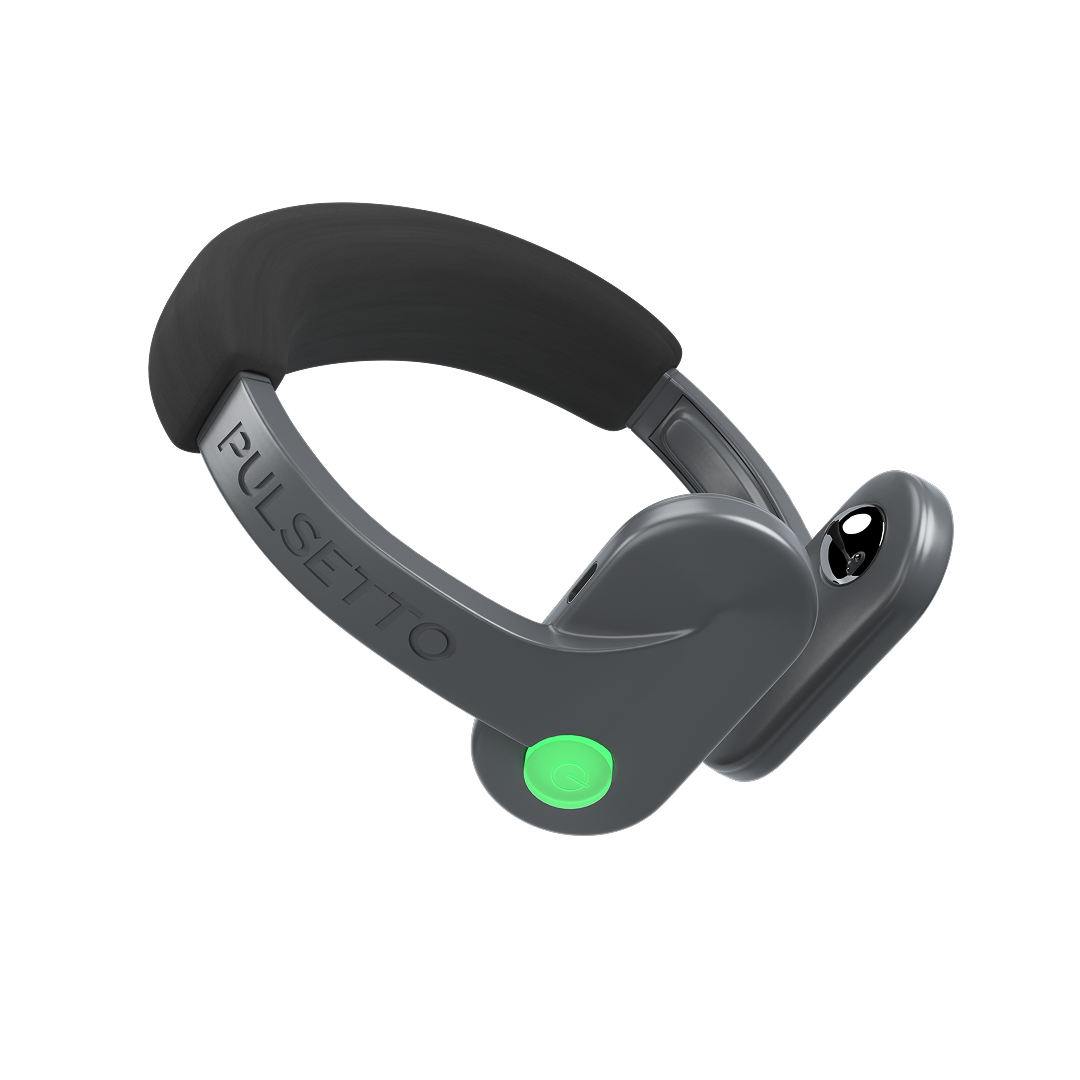
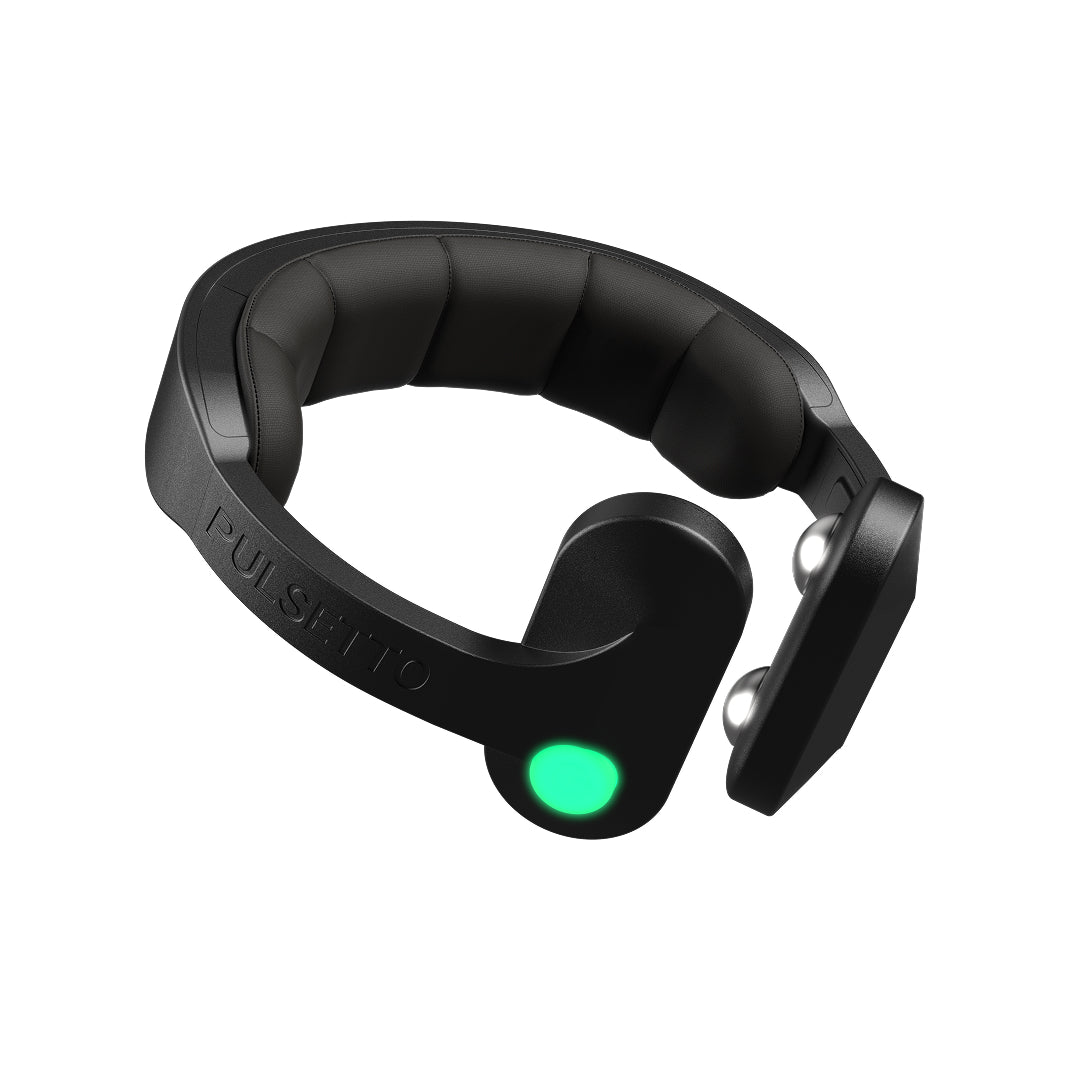
Pulsetto is one way to apply this lever without needing to learn a breathing technique from scratch: a hands-free device worn around the neck that delivers bilateral cervical vagus nerve stimulation, both sides at once, in 4-minute sessions. In Pulsetto's own randomized open-label pilot study of 40 adults over 4 weeks, the bilateral approach reduced hair cortisol, a marker of accumulated chronic stress rather than a single day's spike, by 47.5%, against 31.4% for unilateral stimulation, alongside a 45.3% drop in GAD-7 anxiety scores and a 41.0% improvement in PSQI sleep-quality scores.
For people who'd rather breathe on their own without a device, the same nervous-system target applies: roughly 5 to 6 breaths per minute, a few minutes at a time, is the pattern most of the underlying research used..
3. Get Outside

A meta-analysis pooling more than 140 studies on greenspace exposure found a consistent, measurable association between time in natural environments and lower salivary cortisol, alongside reductions in blood pressure and improvements in heart rate variability [2]. The effect shows up with genuinely small doses, sitting or walking in a park for 10 to 20 minutes, not a weekend camping trip. If getting to a park regularly isn't realistic, even a view of trees or a walk through a tree-lined street has shown up as beneficial in some of the underlying research, though the effect is strongest with direct time spent in a natural setting.
4. Protect Real Connection
Social support doesn't just make a stressful day feel more bearable, it changes the body's actual hormonal response to stress. A placebo-controlled study found that having a supportive person present before a standardized stress test suppressed the cortisol response compared with facing the same stressor alone, with the effect strongest when the interaction was warm and trusted rather than transactional [4]. This is one of the easiest levers to apply and one of the most commonly skipped: a real conversation, in person or by call, with someone who knows you, done before a stressful stretch rather than only after.
5. Reframe the Story You're Telling Yourself
Cognitive reappraisal, catching a stressful interpretation of a situation and consciously reconsidering it, has one of the largest evidence bases of any resilience-building habit. A meta-analysis spanning nearly 30,000 people across 64 independent samples found a strong, consistent correlation between habitually using cognitive reappraisal and measured personal resilience, holding up across age groups and cultures [5]. In practice: pick one moment a day, a delay, a tense email, an unexpected setback, and deliberately ask "what's another way to read this" before reacting to the first interpretation that shows up.
Which Lever Should You Start With?
Five levers at once is a good way to start none of them. A faster path is matching the lever to what's actually happening for you right now, not picking the one that sounds most virtuous.
-
If your body feels physically wired, racing heart, tight chest, restless energy, start with Lever 1 (movement) or Lever 2 (direct nervous-system regulation). Both act on the physical side of stress first, before the thinking side.
-
If you feel foggy, flat, or stuck indoors more than usual, start with Lever 3 (getting outside). It's the lowest-effort of the five and tends to make the others easier to attempt afterward.
-
If you've noticed yourself pulling away from people, canceling plans, going quiet, start with Lever 4 (protecting real connection). It's the lever most likely to get skipped precisely when it matters most.
-
If your mind keeps circling the same worry or replaying the same scenario, start with Lever 5 (cognitive reappraisal). It targets the thought pattern directly rather than trying to out-exercise or out-breathe it.
There's no wrong lever to start with. The only mistake is treating this as a checklist to finish in one week rather than a habit to keep past the first one.
Give It Six Weeks, Not Six Days
Nearly all of the research behind these five levers measured change over weeks of consistent practice, not a single session. One study tracking new exercisers found that people who kept a habit going for four sessions a week across six weeks were substantially more likely to still be doing it months later than people who started harder and faster [6]. A single good day with any of these levers isn't proof they work, and a single bad day isn't proof they don't. The six-week mark, not the first week, is the more honest point to judge from.
When to Loop In Professional Support

These five levers are safe for essentially everyone in their basic form, walking, breathing, spending time outside, talking to someone you trust, and reframing a thought all carry minimal risk. The exception is layering in an electrical vagus nerve stimulation device: anyone with a pacemaker or other implantable device, epilepsy or a seizure disorder, or who is pregnant should get medical guidance before using one, along with anyone with an active cardiac arrhythmia, a recent neck or throat injury or surgery, or a carotid artery condition.
More importantly, these levers are a genuine starting point, not a ceiling. If stress or anxiety isn't easing despite weeks of consistent effort, if it's interfering with work, sleep, or relationships, or if it comes with persistent low mood, hopelessness, or thoughts of self-harm, that's a signal to talk to a doctor or mental health professional rather than pushing harder on a self-help list. Choosing that conversation, and choosing medication if that's what comes out of it, isn't the natural approach failing. It's the natural approach doing its job: getting you far enough to recognize when more support is the right next step.
Start Today
Pick the one lever from the decision guide above that matches how you actually feel right now, not the one that sounds best on paper, and do a single small version of it today. Start your first session with the Pulsetto vagus nerve stimulator if the nervous-system-regulation lever is where you want to begin, or just take the walk, make the call, or catch the one thought.
Frequently Asked Questions
Can natural methods really replace medication?
For some people with mild-to-moderate everyday stress, non-drug approaches produce meaningful, measurable improvement on their own. For diagnosed anxiety or mood disorders, research generally shows medication produces larger and more consistent results than lifestyle changes alone, and the two are commonly used together rather than as competing options. This isn't a decision to make from a blog post; it's one to make with a doctor or mental health professional.
Do I need to do all five levers?
No. Starting with one, matched to what's actually happening for you, works better than attempting all five and abandoning the list after a hard week. Add a second lever once the first one is a habit rather than an effort.
Is it safe to add a vagus nerve stimulation device to this?
For most healthy adults, yes, but anyone with a pacemaker or other implantable device, epilepsy, or who is pregnant should get medical guidance first, along with anyone with an active cardiac arrhythmia, a recent neck or throat injury or surgery, or a carotid artery condition.
How long before these levers actually build resilience?
Most of the underlying research measured effects over two to eight weeks of consistent practice. Give any single lever at least six weeks before deciding whether it's working for you.
Scientific Research Behind This Article
[1] Effectiveness of physical activity interventions for improving depression, anxiety and distress: an overview of systematic reviews (Singh et al., 2023, British Journal of Sports Medicine, 841 citations)
[2] The health benefits of the great outdoors: A systematic review and meta-analysis of greenspace exposure and health outcomes (Twohig-Bennett & Jones, 2018, Environmental Research, 1482 citations)
[3] The effect of heart rate variability biofeedback training on stress and anxiety: a meta-analysis (Goessl et al., 2017, Psychological Medicine, 497 citations)
[4] Social support and oxytocin interact to suppress cortisol and subjective responses to psychosocial stress (Heinrichs et al., 2003, Biological Psychiatry, 1985 citations)
[5] A meta-analysis of cognitive reappraisal and personal resilience (Stover et al., 2024, Clinical Psychology Review, 65 citations)
[6] Exercise habit formation in new gym members: a longitudinal study (Kaushal & Rhodes, 2015, Journal of Behavioral Medicine, 256 citations)