10 Best Wearable Sports Technologies
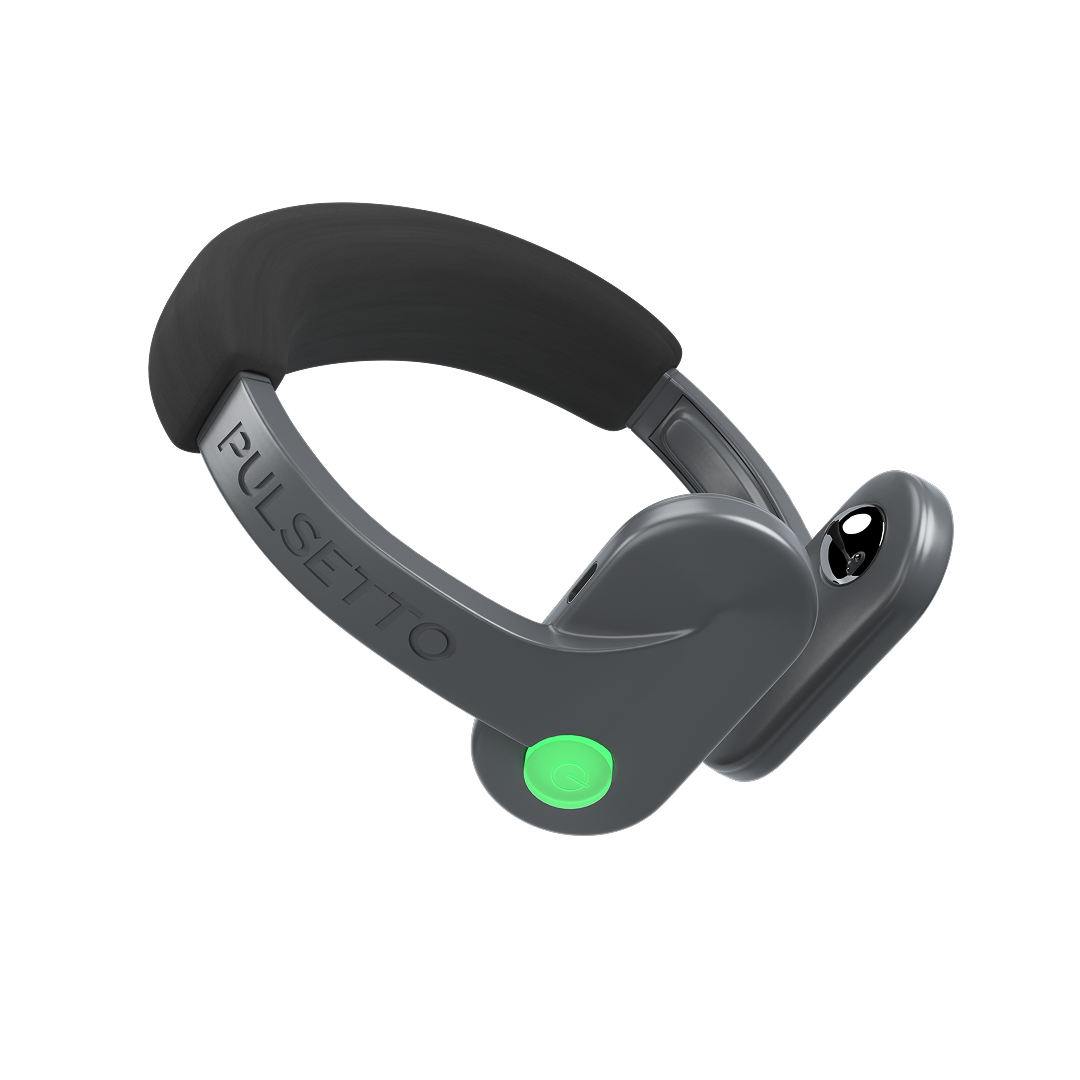
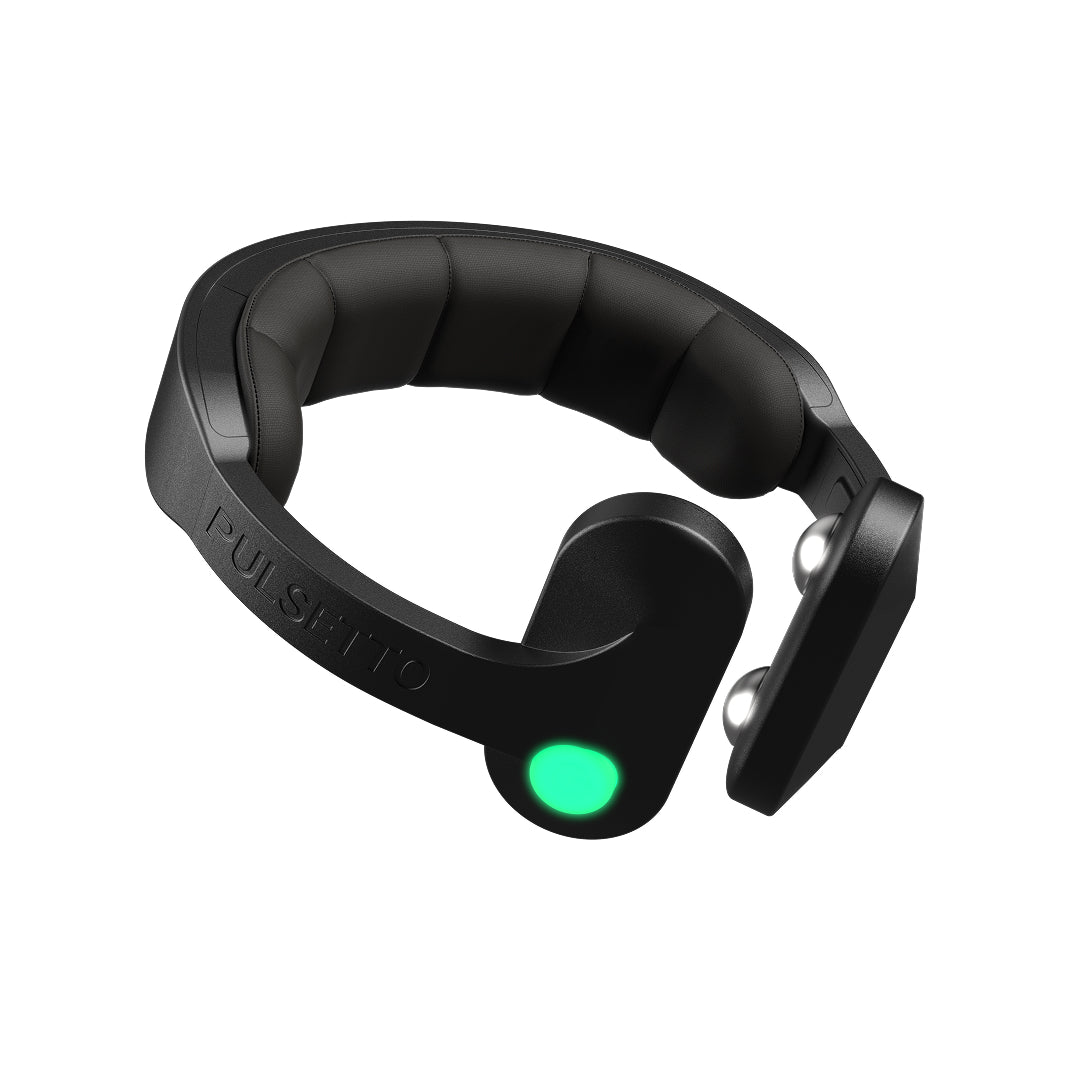
1. Pulsetto Vagus Nerve Stimulator
Best for: Nervous system recovery and stress regulation.
Pulsetto is a recovery-focused wearable that complements traditional fitness trackers. Most wearable technology for athletes focuses on measuring output. The Pulsetto Vagus Nerve Stimulator takes a different approach: it actively supports recovery by stimulating the vagus nerve to activate the parasympathetic nervous system. Where sports wearables typically tell you how recovered you are, Pulsetto helps you actually get there faster.
This non-invasive vagus nerve stimulation device fits around the neck and delivers app-controlled sessions of four to ten minutes. Programs target stress reduction, sleep improvement, and recovery between training sessions. Cortisol drops, heart rate lowers, and the conditions for genuine recovery improve. Consistent use improves sleep quality over time, which is where the most significant performance gains from recovery actually occur. In teams dealing with high training loads, we see athletes who add a Pulsetto session post-training report better readiness scores within two weeks. As wearable sports technology goes, it is the only device in this category that actively drives nervous system recovery rather than measuring it, a recovery-focused wearable that complements traditional fitness trackers by addressing what data alone cannot fix.
2. WHOOP 4.0
Best for: Advanced recovery tracking and training optimization.
WHOOP is the wearable most widely adopted by professional athletes for a reason. It tracks heart rate variability, sleep stages, respiratory rate, and daily strain continuously, then synthesizes everything into a recovery score and strain recommendation for the next day. The subscription-based analytics platform is where the real value sits: trend data over weeks reveals patterns that single-session numbers miss entirely.
Athletes use WHOOP to adjust training intensity in real time rather than guessing at readiness. A low recovery score before a planned hard session is a data-backed reason to pull back. What we see in high-performance environments is that athletes who follow WHOOP's strain recommendations consistently avoid the overtraining cycles that plateau performance. It runs without a screen, which removes distraction and keeps the focus on data collection. Battery charges while wearing via a slide-on pack.
3. Oura Ring 4
Best for: Sleep tracking and daily recovery monitoring.
The Oura Ring 4 is the most refined version of the most popular smart ring for athletes and health-focused individuals. Built entirely from titanium inside and out, it is lighter and more comfortable for 24/7 wear than its predecessor. The Smart Sensing system continuously adapts to your finger to find the best signal in any situation, which improves the accuracy of HRV monitoring, sleep stage tracking, body temperature sensing, and the daily readiness score.
Sleep stage tracking identifies how much deep and REM sleep the body is actually getting, which matters directly for muscle repair and hormonal recovery. The readiness score integrates sleep quality, HRV trends, and activity load into a single daily signal. We use it to identify which evening habits consistently push readiness scores lower. The membership unlocks the full feature set including daytime stress tracking, cardiovascular age, VO2 max estimation, and AI-powered Oura Advisor insights.
4. Garmin Forerunner 965
Best for: Multi-sport performance tracking.
The Garmin Forerunner 965 is the most comprehensive sports watch available for athletes who train across multiple disciplines. GPS tracking covers running, cycling, swimming, and over 30 activity profiles with sport-specific metrics for each. VO₂ max estimation, training readiness, and recovery time recommendations give athletes a complete picture of both current fitness and training capacity.
Battery life reaches up to 31 hours in GPS mode and over 20 days in smartwatch mode, which makes it practical for ultra-distance athletes and multi-day training blocks. The training load focus feature tracks whether current training is building fitness, maintaining it, or creating too much stress. Triathletes and runners we work with rely on the Forerunner 965 as their primary training hub, pulling all workout data into Garmin Connect for weekly analysis and periodization planning.
5. Polar Verity Sense
Best for: Accurate optical heart rate monitoring.
The Polar Verity Sense is a dedicated heart rate sensor in an armband format that delivers accuracy levels closer to chest straps than wrist-based optical sensors. It works as a standalone device or paired with any ANT+ or Bluetooth sports watch, which makes it versatile across training environments including the pool, where wrist watches often underperform.
Swimming, cycling, and running athletes use it when wrist placement is impractical or when wrist-based readings prove inconsistent. Compatibility with Polar Flow, Garmin Connect, Strava, and most major fitness platforms means it slots into existing training setups without friction. For cyclists using aerobars or swimmers who want clean wrist space, it solves a genuine practical problem. The battery lasts up to 20 hours per charge, covering even the longest training sessions.
6. Catapult Vector
Best for: Professional athlete performance analytics.
Catapult Vector is the wearable used by professional teams across soccer, rugby, AFL, and basketball to track movement quality, acceleration, deceleration, and workload in real time. A small pod worn between the shoulder blades captures 10Hz GPS positioning alongside inertial sensors that measure PlayerLoad, a composite metric of total physical demand across a session.
Coaching staff use the data to identify when individual athletes are approaching workload thresholds that predict injury, allowing session modifications before problems develop. We see teams that implement Catapult consistently report reductions in soft tissue injury rates within a season. It is not a consumer product (pricing and implementation require institutional setup), but it represents the current ceiling of wearable sports performance analytics and is increasingly influencing how amateur-level coaching thinks about load management.
7. Nadi X Smart Yoga Pants
Best for: Real-time posture feedback during yoga.
Nadi X embeds sensors directly into yoga pants that vibrate at the hips, knees, and ankles to guide posture corrections in real time during practice. A companion app provides session feedback and pose tracking without requiring a screen during the session itself. The vibration cues replace the need for a teacher to physically correct alignment, which makes solo practice more precise.
It demonstrates a direction for wearable sports technology that moves beyond wrist-worn data collection into clothing that actively coaches movement. Athletes using Nadi X for yoga recovery work tell us the postural feedback accelerates the quality of their practice in a way that self-monitoring alone does not achieve. It is one of the clearest examples of smart clothing becoming genuinely functional rather than conceptual.
8. FORM Smart Swim Goggles
Best for: Real-time swim performance metrics.
FORM Smart Swim Goggles display pace, distance, stroke rate, stroke count, and split times directly in the lens using an augmented reality overlay visible during each stroke. Swimmers get real-time performance data without stopping at the wall, which fundamentally changes how interval training in the pool works.
Competitive swimmers and triathletes use FORM to execute pace-controlled sets with the same precision road cyclists achieve with power meters. The goggles pair with a companion app for post-session analysis and integrate with Garmin and Apple Watch. Triathletes we work with consistently say the swim is their hardest discipline to pace accurately, and FORM closes that gap immediately. Prescription lens inserts are available, which makes it practical for athletes who normally train in contact lenses.
9. Hexoskin Smart Shirt
Best for: Advanced biometric monitoring during workouts.
The Hexoskin Smart Shirt embeds sensors into the fabric of a compression shirt to track heart rate, breathing rate, breathing volume, and activity levels simultaneously during exercise. The depth of physiological data it collects sits above what standard fitness trackers provide, making it popular among sports scientists, researchers, and elite athletes who need more than heart rate alone.
Breathing rate and volume data reveals respiratory fatigue patterns that standard wearables miss entirely. Coaches using Hexoskin with athletes in high-intensity training can see when respiratory load is limiting performance before the athlete reports it subjectively. The data exports to major sports science platforms and research databases. For athletes working with coaches or performance labs, the Hexoskin provides a level of physiological detail that makes training analysis significantly more precise.
10. Katalyst EMS Training Suit
Best for: Electrical muscle stimulation training.
The Katalyst EMS Training Suit sends electrical impulses through the major muscle groups simultaneously during a workout, activating up to 90 percent of muscle fibres compared to around 30 to 40 percent in conventional training. A 20-minute EMS session delivers the muscular stimulus of a much longer conventional session, which makes it valuable for athletes with limited training time or those in rehabilitation phases where joint loading needs to stay low.
Strength athletes and rehabilitation patients use EMS training to maintain or build muscular strength with reduced mechanical joint stress. Pairing it with best massage tools after EMS sessions supports the muscle recovery that follows high-activation training. The suit connects wirelessly to a controller and app that guides session intensity and muscle group targeting. It represents the frontier of wearable tech that augments training output rather than just measuring it.
Benefits of Wearable Technology for Athletes
The shift toward wearable technology in sports is driven by one core principle: data removes guesswork from training decisions. Wearable technology for athletes has made it possible to monitor recovery, readiness, and physiological load in real time rather than relying on subjective feel. Athletes who train based on objective data outperform those who train on feel alone, because they avoid both undertraining and the overtraining that stalls progress and causes injury. The recovery tools for athletes has expanded dramatically as wearables in sports make recovery measurable for the first time.
Data-driven training means adjusting intensity based on HRV, sleep quality, and strain scores rather than fixed schedules. Recovery optimization through devices like Pulsetto and WHOOP prevents the fatigue accumulation that limits performance gains. Injury prevention improves when load monitoring tools like Catapult flag when athletes are approaching risk thresholds. Performance insights from VO₂ max tracking and training load analysis let coaches build periodization plans grounded in real physiological data rather than approximations.
We see the biggest performance gains in athletes who combine output tracking with recovery wearables rather than relying on one category alone.
How Wearable Technology Is Changing Sports Training
Wearable technology for athletes now tracks the full physiological picture of training and recovery. Heart rate variability reveals nervous system readiness in a way that resting heart rate alone never could. Sleep tracking shows whether the body is actually repairing between sessions. Muscle load monitoring through devices like Catapult quantifies the mechanical stress placed on tissues during training, allowing load to be managed precisely. Oxygen saturation monitoring identifies altitude adaptation and respiratory efficiency. Training intensity zones tracked through power meters and GPS give coaches and athletes precise control over session stimulus. For those managing stress alongside training, pairing wearables with best stress relief products addresses the full recovery picture.
Professional teams now make substitution, rotation, and periodization decisions based on wearable data collected in real time. Amateur athletes increasingly apply the same principles. The gap between how professionals manage training and how serious amateurs manage it has narrowed significantly because the same data that informs elite decision-making is now accessible through consumer devices. The result is smarter training, fewer injuries, and more consistent long-term progression for athletes at every level.
The Future of Wearable Technology in Sports
The next generation of sports wearables will move from measurement to active intervention. AI-powered coaching will analyze biometric streams in real time and adjust training recommendations session by session rather than week by week. Real-time biometric feedback during competition will give athletes and coaches immediate physiological data to act on mid-performance. Injury prediction models trained on population-level wearable data will flag individual risk patterns before symptoms appear, shifting sports medicine from reactive to preventive. Integration with training apps will become seamless, with all device data feeding into unified performance dashboards that coaches and athletes share in real time.
Recovery wearables like Pulsetto represent the direction the category is heading: devices that do not just measure recovery but actively drive it. As the physiological understanding of performance deepens, tools that address nervous system regulation, sleep quality, and stress load will become as standard in an athlete's kit as a GPS watch is today. Athletes who start building their wearable stack now, combining tracking devices with active recovery tools, will be best positioned to benefit as the technology continues to advance.
FAQs: Wearable Sports Tech
What is wearable sports technology?
Wearable sports technology refers to devices athletes wear during training, competition, or recovery to monitor and improve physical performance. This includes fitness trackers, smart clothing, recovery wearables, and sport-specific sensors. These devices collect physiological data including heart rate, HRV, sleep stages, movement, and oxygen saturation to support data-driven training and recovery decisions.
How do athletes use wearable technology?
Athletes use wearable technology to monitor training load, track recovery quality, optimize sleep, and prevent overtraining. Devices like WHOOP and Oura Ring guide daily training intensity decisions based on readiness scores. GPS watches like Garmin track pace, distance, and VO₂ max during sessions. Recovery wearables like Pulsetto actively support nervous system recovery between training days. Data from all sources informs periodization and performance planning.
What are the benefits of sports wearables?
The main benefits of sports wearables are data-driven training, recovery optimization, injury prevention, and personalized performance insights. Wearables remove guesswork by making physiological state measurable. Athletes who train based on objective recovery and load data avoid overtraining, reduce injury risk, and accumulate fitness more consistently than those training on feel alone. The compounding benefit of consistent wearable use builds over months of tracked data.
Are wearable sports devices accurate?
Accuracy varies by device type and metric. Chest-based heart rate sensors and dedicated optical armbands like Polar Verity Sense deliver near-clinical accuracy. GPS watches are highly accurate for distance and pace in open conditions. HRV and sleep tracking show strong consistency within devices over time, making trend data reliable even if absolute values vary slightly between devices. For load management decisions, consistency matters more than absolute precision.
What wearable technology is used in professional sports?
Professional sports teams use Catapult Vector for GPS movement and workload tracking, WHOOP for individual athlete recovery monitoring, and Hexoskin for detailed biometric data during training. GPS vests are standard in soccer, rugby, and AFL. Many professional athletes also use Oura Ring and Garmin devices for personal performance tracking. EMS suits like Katalyst appear in strength and rehabilitation contexts across elite sport.
Which wearable devices help with recovery?
The most effective recovery wearables are Pulsetto for nervous system regulation through vagus nerve stimulation, WHOOP for tracking and guiding recovery between sessions, and the Oura Ring for sleep optimization and readiness scoring. Each addresses a different layer of recovery: Pulsetto works at the physiological level, WHOOP guides behavioral decisions, and Oura optimizes sleep quality. Used together, they cover the full recovery picture comprehensively.