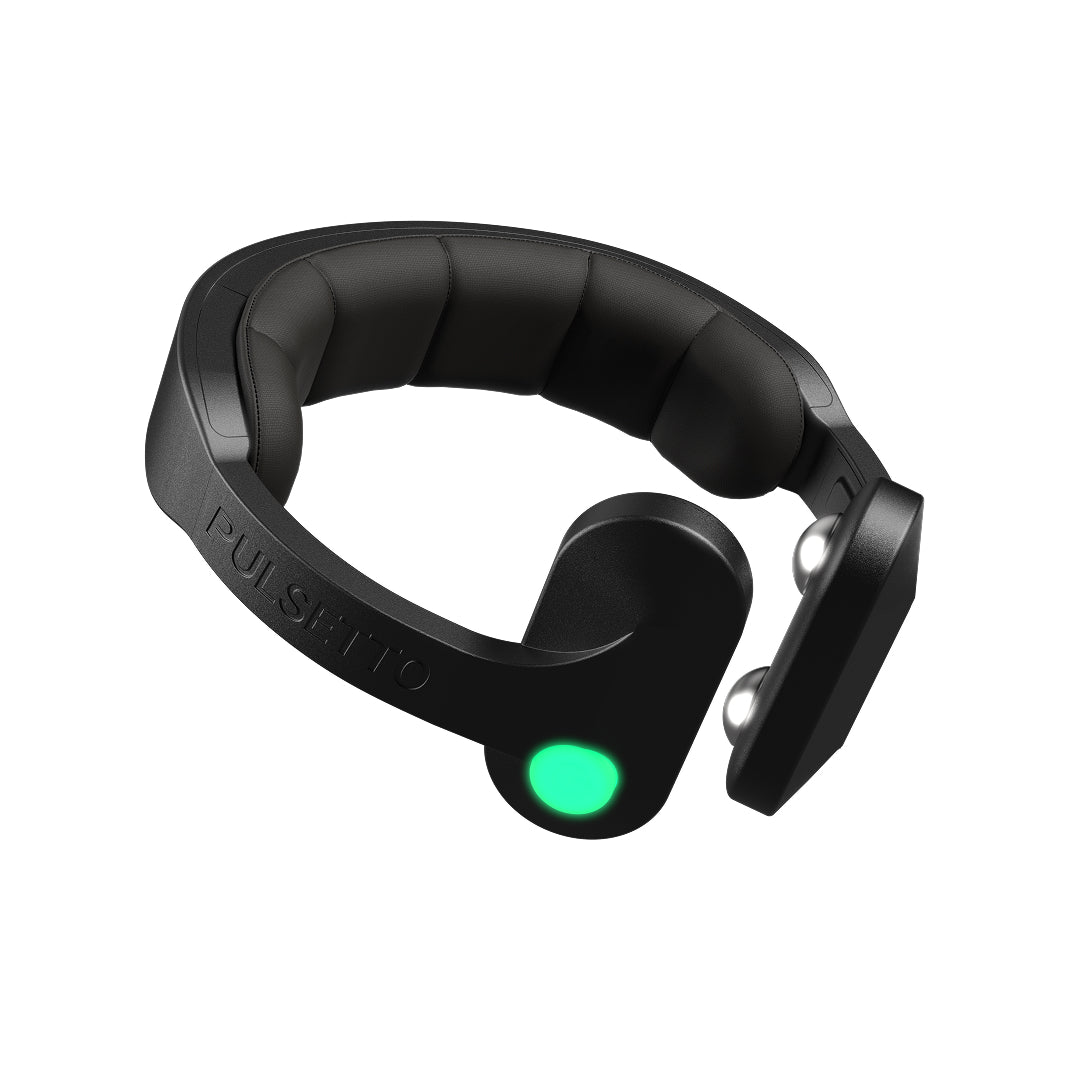
If you’re looking for a way to feel calmer, sleep better, and handle stress more easily, you’re not alone. Millions of people are searching for solutions that actually work. The good news? Science is making it easier than ever to regulate your nervous system with the latest devices. Discover the best nervous system regulation device in 2026!
Your nervous system controls everything from your heart rate to your mood. When it’s out of balance, you might feel anxious, tired, or just “off.” Chronic stress, poor sleep, and even digestive issues can all be linked to an overactive or underactive nervous system. The goal is to help your body find its natural rhythm, so you can feel your best every day.
Rated 4.5/5 by 20,137+ Customers
Pulsetto vagus nerve stimulator: feel calmer and sleep better in just 4 minutes a day
Experience immediate relaxation with the Pulsetto vagus nerve stimulator.
Sit back, close your eyes, and immerse yourself in the soothing Pulsetto experience, designed to gently promote a state of calmness and well-being.
Best Value Deal!
FREE WORLDWIDE SHIPPING
Select your device:
Pulsetto Lite vs Pulsetto FIT
Which one is right for you?
PULSETTO FIT
PULSETTO LITE
Dual-technology, hands-free stimulation
Yes
Yes
New wave-like stimulation (more engaging)
Yes
No
Battery life
Up to 12 days (20% longer)
Up to 10 days
Fits all necks for consistent stimulation
Yes
No
Stays secure no matter what you're doing
Yes
No
Great for sharing (adjusts to any neck size)
Yes
No
Free lifetime wireless updates
Yes
No
Premium all-black design with medical-grade materials
Best if you wear size S or smaller tops. Only with FIT
New stimulation that rises and falls, which feels more fun (coming July–Aug 2025). Only with FIT
20% longer battery life for fewer recharges. Only with FIT
Free lifetime Pulsetto App with 5 expert-designed programs for Stress, Anxiety, and More.
One 60g gel tube (can be used up to a month), USB-C charging cable, user guide included
Extra gift: Pulsetto Premium Free Trial. 3 extra stimulations, 11 unique guided meditations, 54 breathing exercises, 1200 positive affirmations, and more.
$296/$546
Best Nervous System Regulation Device in 2026
How Modern Devices Work
Today’s nervous system regulation devices use gentle, non-invasive stimulation to help your body reset. Many of these devices target the vagus nerve, which is a key player in your body’s ability to calm down and recover. By stimulating this nerve, you can activate your parasympathetic nervous system, the part that helps you relax and recover.
What to Look for in a Device
Ease of use: The best devices are simple to set up and use every day.
Scientific support: Look for devices backed by clinical research and real-world results.
Customization: The ability to adjust settings for your needs is a big plus.
Portability: Devices that you can use at home, work, or on the go are ideal.
How to Choose the Right Device
If you are searching for the best nervous system regulation device in 2026, you are really asking one thing: which wearable actually helps you shift out of a stressed, wired state and into a calmer, more balanced one. This guide compares the leading options across every major category, from cervical vagus nerve stimulators to HRV biofeedback trainers, haptic wearables, and infrasonic tools. Our top pick is Pulsetto's non-invasive vagus nerve stimulator, a bilateral cervical device designed to support nervous system regulation in about four minutes a day. Below, we explain what "nervous system regulation" means, how each category works, and which device may be the right fit for your goals.
What "nervous system regulation" actually means
Your autonomic nervous system runs on two branches. The sympathetic branch drives the "fight or flight" response: faster heart rate, shallow breathing, heightened alertness. The parasympathetic branch drives "rest and digest": slower heart rate, easier breathing, and a settled, recovery-oriented state. Nervous system regulation is the ability to move fluidly between the two, and to return to baseline calm after stress rather than staying stuck in high gear.
A few concepts come up again and again in this space:
Autonomic balance: the working relationship between the sympathetic and parasympathetic branches.
Parasympathetic activation: engaging the "rest and digest" side, often through the vagus nerve.
Vagal tone: a measure of how readily your vagus nerve helps you down-shift after stress.
Heart rate variability (HRV): the beat-to-beat variation in your heart rhythm, widely used as a proxy for autonomic balance and vagal activity. Higher vagally-mediated HRV generally reflects a more adaptable, resilient nervous system [1].
A nervous system regulation device is any wearable or tool designed to nudge this system toward the parasympathetic side, whether through gentle electrical stimulation, biofeedback, vibration, or sound. Vagus nerve stimulation is one of the most studied approaches in this category, with a growing body of research examining how it influences autonomic function [2]. Chronically elevated stress is associated with lower HRV, which is part of why so many people track and try to support it [3]. To go deeper on the science, Pulsetto's overview of how to activate the parasympathetic nervous system is a useful primer.
How we compared the devices
Nervous system regulation devices fall into a handful of distinct categories, and they are not interchangeable. To rank them, we looked at how each device works, the strength of the mechanism behind it, session length and ease of use, price and any subscription requirements, and the specific use case each one fits best. We also prioritized devices that are genuinely hands-free and simple enough to use daily, because consistency matters more than any single session.
Here is the shortlist at a glance.
Device
Category / how it works
Session
Price (approx.)
App
May be a good fit for
Pulsetto
Bilateral cervical non-invasive VNS (electrical)
About 4 min
$269 Lite / $296 FIT
Free, no mandatory subscription
Hands-free daily calm, stress reset, sleep support
Truvaga
Handheld cervical nVNS (electrical)
About 2 min
$199–$499
Companion app
People who prefer a handheld cervical wand
Hoolest
Handheld cervical stimulation (electrical)
A few min
Around $300
Optional
On-demand handheld cervical use
Nurosym
Single-ear auricular taVNS (electrical)
About 30 min
Around €699
App-free
Longer auricular sessions, deep evidence base
Vagustim
Bilateral auricular taVNS, both ears (electrical)
Varies
Around $390
App-tunable
Tinkerers who want adjustable ear stimulation
Neuvana Xen
Earbud auricular taVNS with music sync (electrical)
Varies
Around $449
Yes
Pairing stimulation with music listening
HeartMath Inner Balance
HRV biofeedback trainer (measures, not electrical)
1. Pulsetto: best overall nervous system regulation device
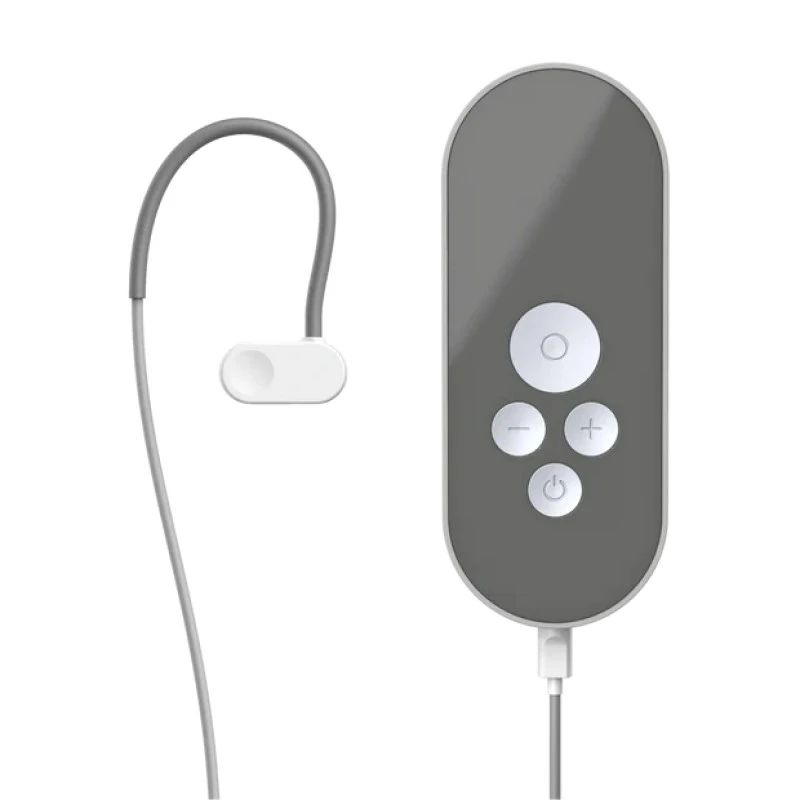
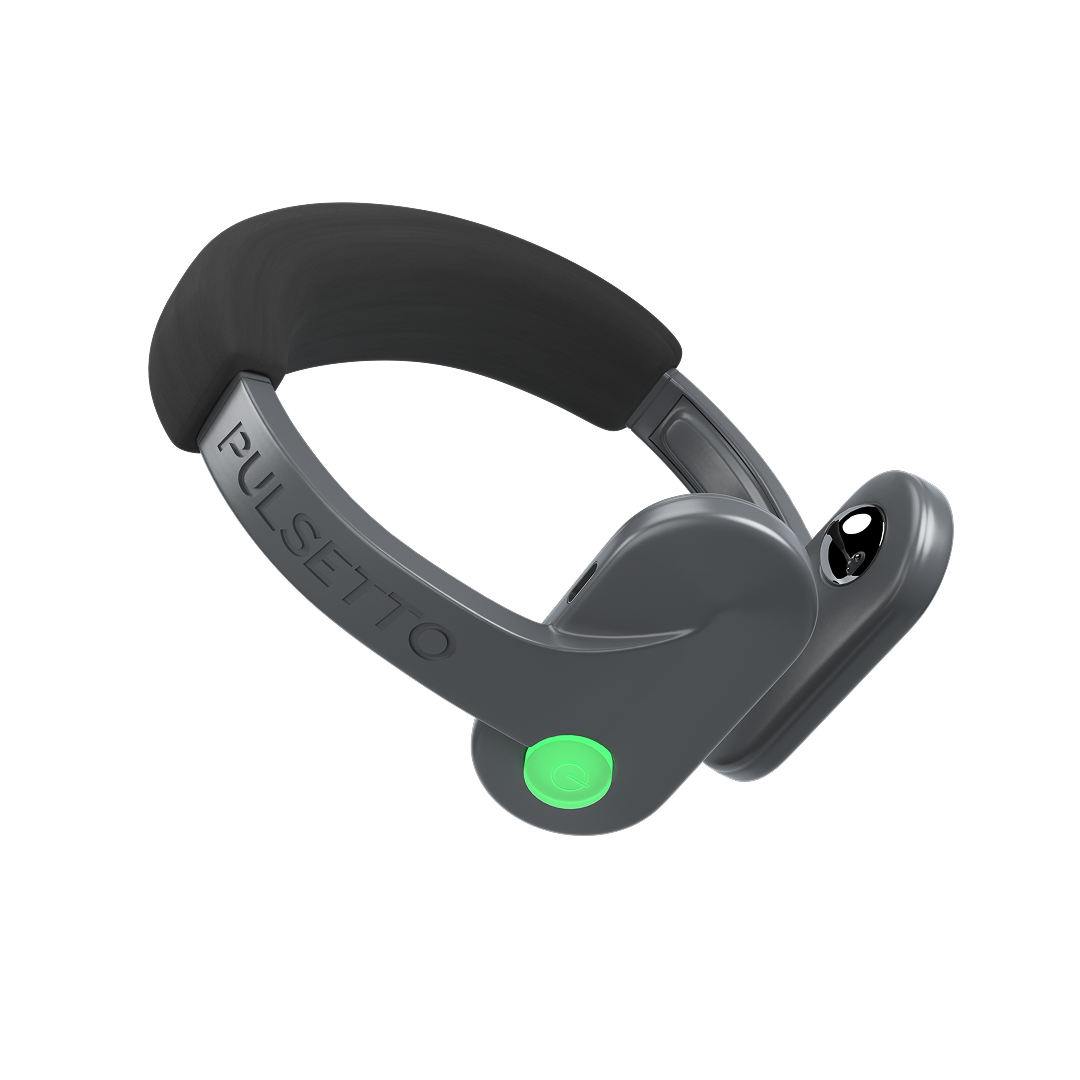
Pulsetto's vagus nerve stimulator earns the top spot for a simple reason: it combines a well-supported mechanism with a design built for daily, hands-free use. It is a bilateral cervical non-invasive vagus nerve stimulator, meaning it sends gentle electrical pulses to both sides of the neck at once, where major branches of the vagus nerve are accessible. You wear it around your neck, start a session in the free companion app, and let it run for about four minutes. There is no wand to hold and no subscription required to use the core device.
Why bilateral cervical stimulation matters: the vagus nerve is the main highway of the parasympathetic nervous system, and stimulating it non-invasively is designed to help shift you toward a calmer, more regulated state. Research on transcutaneous vagus nerve stimulation has shown it can raise vagally-mediated HRV and support autonomic balance in healthy participants [4][5][6][7], and cervical stimulation specifically has been studied for reducing sympathetic responses to stress [8]. You can read more about the mechanism in Pulsetto's guide to non-invasive vagus nerve stimulation, explained.
Pulsetto is CE certified and FCC certified, made in Lithuania, and backed by its own clinical work. In Pulsetto's own randomized open-label pilot study (n=40, 4 weeks), participants reported a 55.9% reduction in depressive symptoms (PHQ-9), a 45.3% reduction in anxiety symptoms (GAD-7), and a 41.0% improvement in sleep quality (PSQI). Bilateral stimulation reduced the chronic-stress biomarker hair cortisol by 47.5%, compared with 31.4% for unilateral stimulation. You can review the wider evidence on the science behind Pulsetto and its ongoing studies and trials.
Two models are available: the Lite at around $269 and the FIT at around $296. Both use the same free app with guided programs for calm, stress, sleep, and focus. If you are weighing them up, the comparison of the Pulsetto FIT versus Pulsetto Lite breaks down the differences.
May be a good fit for: anyone who wants a hands-free, science-informed device for daily calm, a quick stress reset, and better sleep quality, without a mandatory subscription.
2. Truvaga and Hoolest: handheld cervical stimulators
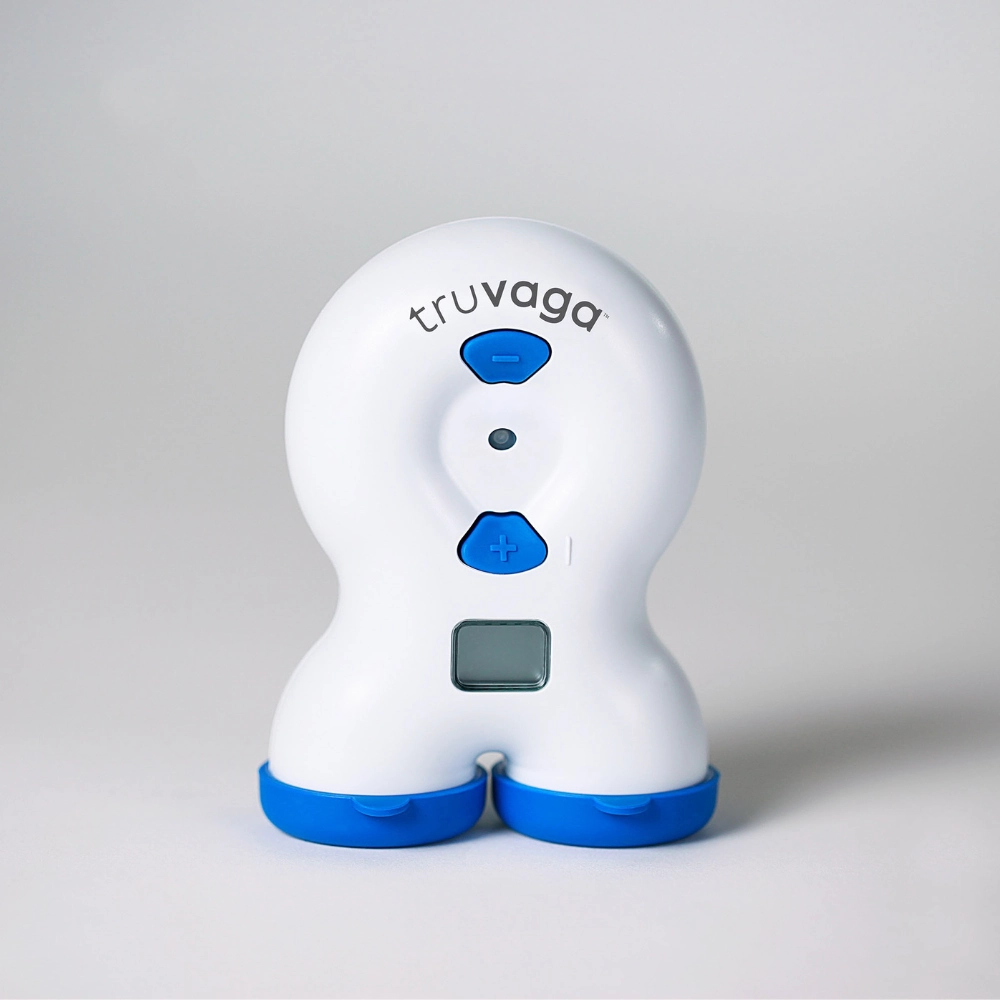
Truvaga and Hoolest also target the vagus nerve at the neck, but as handheld devices rather than hands-free wearables. Truvaga is a handheld cervical wand, sold mainly in the US, priced around $199 to $499 depending on the model and session bundle, with about two-minute sessions. Hoolest is another handheld cervical stimulator aimed at on-demand use, priced around $300.
Both work on the same broad principle of cervical stimulation, and the category as a whole is well tolerated in the research literature [9]. The main trade-off versus Pulsetto is ergonomics: you hold the device against your neck for each session rather than wearing it hands-free, and the stimulation is applied to one side at a time. If you want a fuller picture of the category, Pulsetto's roundup of the best neck stimulator device options is a good next read.
May be a good fit for: people who specifically prefer a handheld cervical wand and do not mind holding the device through each short session.
3. Nurosym, Vagustim, and Neuvana Xen: auricular taVNS
Auricular transcutaneous vagus nerve stimulation (taVNS) targets the branch of the vagus nerve that reaches the outer ear, rather than the neck.
Nurosym is a single-ear auricular clip priced around €699. It runs app-free with roughly 30-minute sessions and has one of the strongest published evidence bases in the consumer taVNS space. The trade-off is a longer session and a higher price.
Vagustim is a bilateral auricular device that clips to both ears, priced around $390, with app-tunable settings for people who like to adjust parameters themselves.
Neuvana Xen takes an earbud approach, delivering auricular stimulation that can sync with music, priced around $449.
Auricular taVNS has been studied for its effects on HRV and stress in healthy adults, with reviews and meta-analyses examining how it influences vagally-mediated HRV and baroreflex sensitivity [10][5][6][7]. It has also been explored for acute stress reduction [10], for sleep in chronic insomnia [11][12], and for mood and perceived stress in wider trials [13][14]. For a broader comparison across form factors, see Pulsetto's guide to the best vagus nerve stimulation devices.
May be a good fit for: Nurosym for those who want longer, app-free auricular sessions with a deep evidence base; Vagustim for hands-on tinkerers; Neuvana Xen for people who want to pair stimulation with music.
4. HeartMath Inner Balance: HRV biofeedback
HeartMath Inner Balance is a different category entirely. It does not stimulate anything electrically. Instead, it uses an ear or finger pulse sensor plus an app to measure your HRV in real time and coach you toward "coherence," a smooth, breath-paced heart rhythm. Priced around $159 to $199, it is a training tool: you learn to shift your own physiology through paced breathing and attention.
HRV biofeedback has a solid research foundation for supporting stress and anxiety management, with meta-analyses reporting benefits across emotional and physical measures [15][16]. Because it teaches a skill rather than delivering a passive session, it rewards consistent practice. If HRV is your main interest, Pulsetto's explainer on why we should care about HRV and its guide to a good HRV score by age and gender are worth bookmarking.
May be a good fit for: people who want to learn breath-paced HRV coherence and are happy to practice a skill rather than press start on a passive session.
5. Apollo Neuro: haptic wearable
Apollo Neuro is a wrist or ankle wearable that delivers gentle haptic vibrations rather than electrical stimulation. The idea is that soothing vibration patterns can act as a calming cue to the nervous system throughout the day. Priced around $349, it runs through an app that lets you choose vibration "vibes" for focus, calm, sleep, and recovery.
It is the most passive, always-on option here, and it can layer into a normal day without a dedicated sit-down session. Because it works through touch rather than direct vagal stimulation, it belongs to a different mechanism family than the cervical and auricular devices above.
May be a good fit for: people who want subtle, wearable haptic cues in the background rather than a focused daily session.
6. Sensate: infrasonic and vibro-acoustic
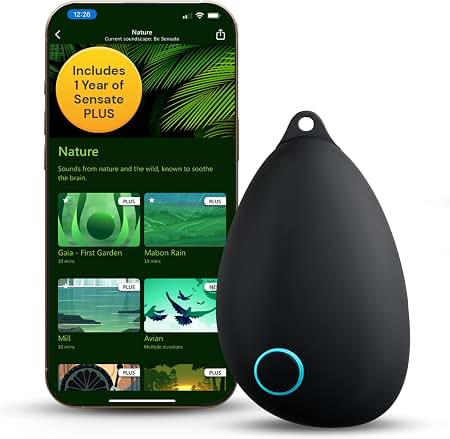
Sensate is a smooth, pebble-shaped device you rest on your chest while lying down. It combines infrasonic vibration with resonant sound delivered through an app, and it is explicitly not an electrical stimulator. Sessions run about 10 minutes, and the experience is closer to a guided sound-and-vibration relaxation than to neurostimulation. It costs around $300 and uses a subscription app for its content library.
Because it pairs bone-conducted vibration with audio, it can feel meditative, and some people find the lie-down ritual itself calming. It fits neatly alongside other wind-down tools rather than replacing an active stimulation device. For more on building a calm routine, Pulsetto's list of calming techniques to soothe your nervous system pairs well with any of these devices.
May be a good fit for: people who prefer a lie-down, vibro-acoustic relaxation session over any form of electrical stimulation.
Where Pulsetto fits among the best VNS devices in 2026
Across the 2026 landscape of non-invasive vagus nerve stimulators, the practical question is how much friction sits between you and a session. Handheld wands ask you to hold the device; longer auricular clips ask for 30 minutes; biofeedback asks you to learn a skill. Pulsetto's design choices, bilateral cervical stimulation, hands-free wear, about four minutes, a free app with no mandatory subscription, and CE plus FCC certification, are built to make daily consistency easy. That combination is why it leads this roundup and why it also appears in Pulsetto's own comparisons of the best nervous system regulation device options and the best device for sleep. It is worth remembering that Pulsetto is a general wellness device designed to support relaxation and a calmer state, not a treatment for any medical condition.
Safety and contraindications
Non-invasive and auricular vagus nerve stimulation is generally well tolerated in the research literature, with side effects that tend to be mild and transient [9]. Even so, these devices are not for everyone, and you should keep any session to the recommended length rather than extending it.
Do not use Pulsetto, and consult your doctor first where noted, if any of the following apply to you:
You have a pacemaker.
You have any implanted electrical medical device.
You have epilepsy or a seizure disorder.
You are pregnant.
You have cardiac arrhythmia or a serious cardiovascular condition (consult your doctor first).
You have had recent neck or throat surgery (consult your doctor first).
It is a wearable or tool designed to help shift your autonomic nervous system toward its calmer, parasympathetic side. Some, like cervical and auricular vagus nerve stimulators, use gentle electrical pulses; others use HRV biofeedback, haptic vibration, or infrasonic sound. The shared goal is to support autonomic balance and help you return to a settled state after stress.
What is the best device for nervous system regulation?
For most people who want a hands-free, science-informed option, Pulsetto is our top pick. It delivers bilateral cervical stimulation in about four minutes, uses a free app with no mandatory subscription, and is CE and FCC certified. The best choice for you depends on your priorities: session length, price, whether you prefer a wearable or a handheld device, and whether you want stimulation or biofeedback. Pulsetto's nervous system reset strategies can help you decide.
Do nervous system regulation devices actually work?
The evidence varies by category, but the mechanisms are well studied. Transcutaneous vagus nerve stimulation has been shown to raise vagally-mediated HRV and support autonomic balance in healthy participants [4][6][7], and to reduce sympathetic responses to stress [8][10]. HRV biofeedback has meta-analytic support for stress and anxiety management [15][16]. Results depend on consistent use, and these devices are designed to support wellness rather than treat any condition.
What is the best non-invasive vagus nerve stimulator in 2026?
Among non-invasive vagus nerve stimulators in 2026, Pulsetto stands out for combining a well-supported bilateral cervical mechanism with a genuinely hands-free, about-four-minute session and a free app. Handheld cervical wands and longer auricular clips are reasonable alternatives depending on your preferences. See Pulsetto's roundup of the best neurostimulation devices for a wider view.
Are nervous system regulation devices safe?
Non-invasive and auricular vagus nerve stimulation is generally well tolerated, with mild and transient side effects reported in reviews of the research [9]. That said, they are not suitable for everyone. Avoid use if you have a pacemaker, an implanted electrical device, epilepsy, or are pregnant, and consult your doctor first if you have a cardiac condition, a carotid artery condition, or recent neck or throat surgery. Always keep sessions to the recommended length.
Scientific research
Pulsetto is a general wellness product and is not intended to diagnose, treat, cure, or prevent any disease or medical condition. The studies below were identified via the Consensus and PubMed databases and are indexed in PubMed.