Why Stress Can Build Strength, Not Just Break You Down

Hormesis is the term researchers borrowed from toxicology to describe a pattern that shows up across a huge range of biological systems: a small-to-medium dose of something disruptive triggers a beneficial adaptive response, while a large dose of the same thing causes damage. It's the same logic behind resistance training, a controlled load tears muscle fibers down slightly, and the body rebuilds them back stronger during rest. A recent framework applying this idea specifically to human stress and performance describes the pattern as J-shaped rather than a simple inverted U: performance improves as stressor dose increases from zero, up to a point, then drops off sharply once the dose turns toxic [1]. The same paper makes the mechanism explicit: what it calls "conditioning hormesis," deliberately controlled stress exposures such as pressure training, trigger an overcompensation response that leaves the system more resilient to the next stressor, but only if there's enough recovery time between doses. Skip that recovery and the pattern reverses into what the researchers call "critical slowing down," the opposite of adaptation.
That's the whole game in one idea: stress itself isn't the variable that determines whether you come out stronger or more depleted. Dose and recovery are.
Step 1: Shift Your Mindset Before the Stressor Hits
Before you can dose stress deliberately, you have to stop treating the arousal itself as a problem. A landmark study tested this directly with employees at a financial company going through a real, ongoing round of layoffs, hardly a low-stakes lab scenario. Employees who watched a short set of videos reframing stress as something that sharpens focus and mobilizes resources, rather than something that damages health and performance, showed measurable improvements in psychological symptoms and work performance over the following weeks, while employees who saw the opposite framing, or no framing at all, didn't improve [2]. Nothing about their actual workload changed. Only the story they were told about what their stress response meant.
The mechanism behind that shift has been tested in the lab, too. Participants told to interpret their racing heart and rising adrenaline before a stressful public-speaking task as "functional and adaptive" rather than a sign something was wrong showed a genuinely different physiological pattern than participants given no instruction: higher cardiac output, lower vascular resistance, the signature of an efficient "challenge" response rather than a constricted "threat" one, along with a measurably reduced tendency to fixate on negative information afterward [3].
In practice, this is a one-sentence habit: the moment you notice your heart rate climbing or your palms going damp before something hard, name it out loud, even silently, as your body gearing up rather than a warning sign. That single reframe is doing real, measured physiological work, not just talking yourself into a better mood.
Step 2: Find Your Dose: Enhancing vs. Toxic
Not every stressor is a candidate for turning into strength, and the difference usually isn't about intensity, it's about shape. An adaptive dose tends to have a start and an end you can point to: a hard conversation, a demanding presentation, an intense workout, a tight deadline you can see the other side of. A toxic dose tends to have no visible end at all: an ongoing conflict with no resolution in sight, a workload that never actually lightens, a financial situation with no clear path out. The biological buffer that absorbs repeated demand before it tips into overload is a separate topic worth understanding on its own terms if this distinction feels blurry in your own life day to day, but the short version for this article is simple, if you can't identify when the recovery window starts, you're not dosing anymore, you're just accumulating.
A practical gut check would be after the stressor passes, do you feel recognizably like yourself again within hours or a day, or does the tension carry forward into the next demand with no real gap? The first pattern is a dose your system can use. The second is the pattern that quietly erodes capacity instead of building it, regardless of how "productive" the stress felt in the moment.
Step 3: Build In Deliberate Recovery Between Doses

Recovery isn't the passive part of this process, it's the part doing the actual adaptation. Every dose-response model of hormesis makes the same point: the overcompensation that leaves you stronger only happens during the recovery window, not during the stressor itself [1]. Skip it, or compress it, and you're not skipping a nice-to-have, you're skipping the step where the actual strength gets built.
Nervous-system-level recovery techniques have real evidence behind them. A meta-analysis of 24 controlled studies found that paced breathing combined with heart rate variability feedback produces a large reduction in self-reported stress and anxiety, one of the biggest effect sizes recorded for any non-drug intervention studied for this purpose [4]. That's the direct evidence for actively closing out a stress response rather than waiting for it to fade on its own schedule.
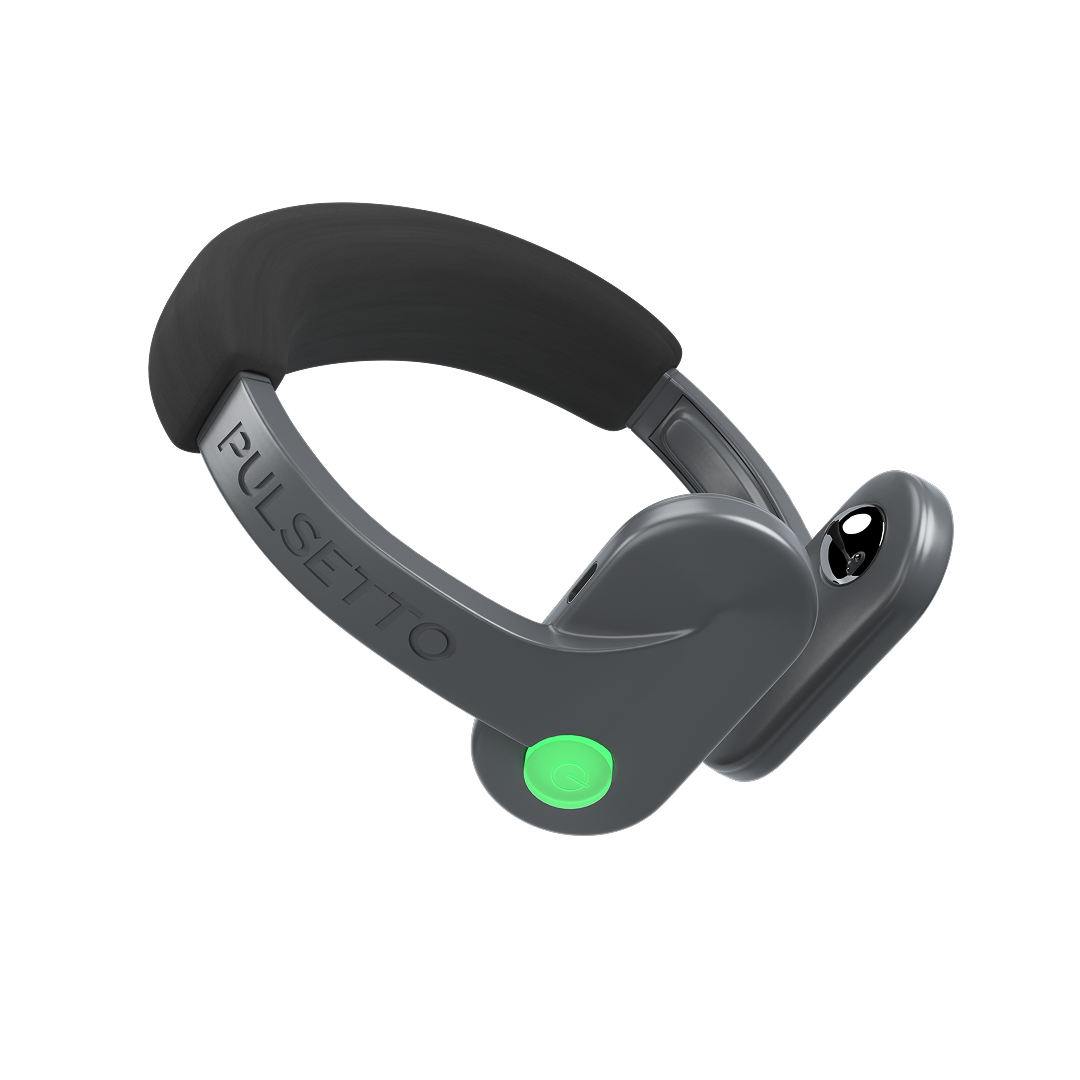
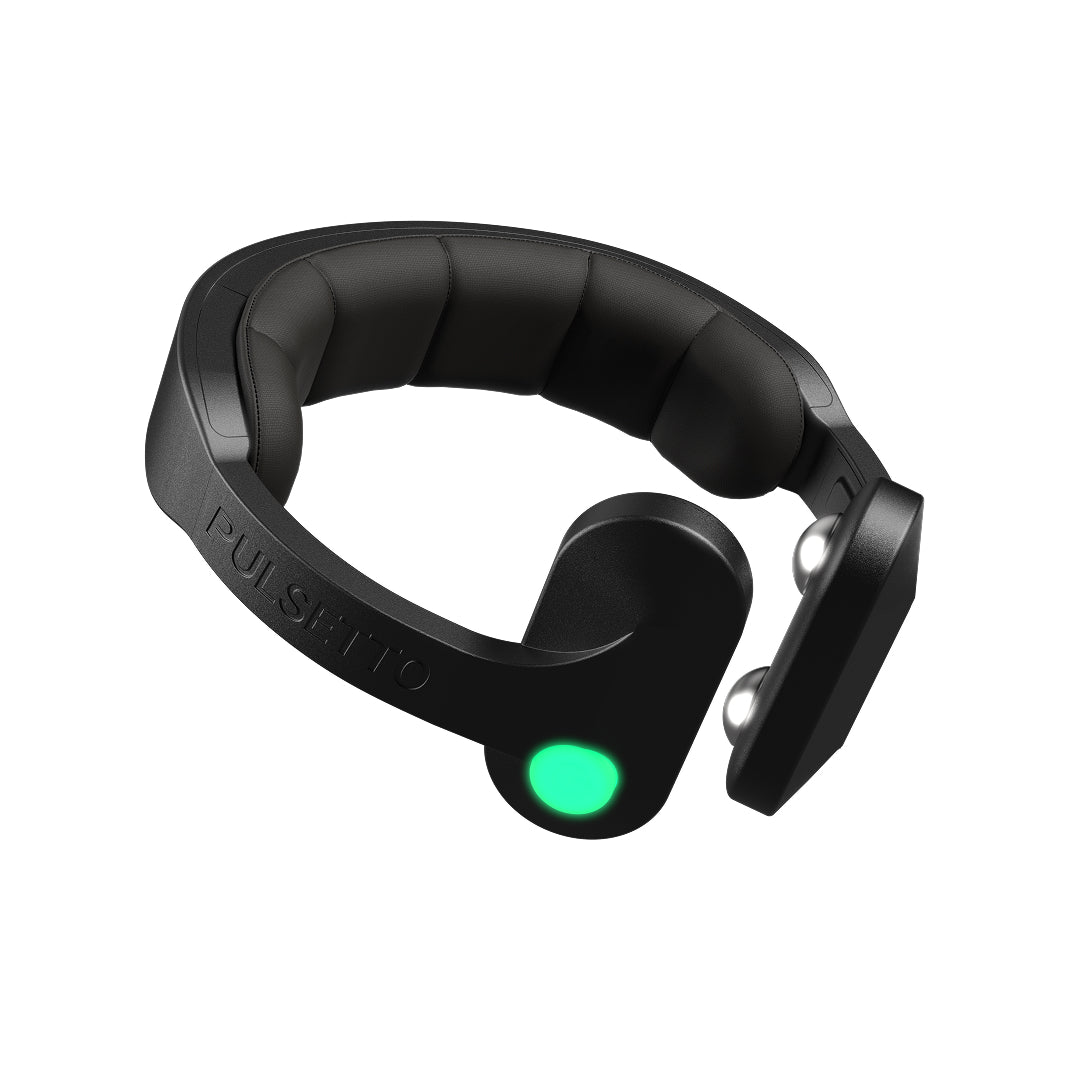
Closing out a dose is also the step people are most likely to skip, not from lack of belief in it but because unstructured downtime rarely gets scheduled the way a hard conversation or a workout does. Pulsetto turns that closing step into something with a fixed start and end: a neck-worn device that stimulates the vagus nerve on both sides at once, run for a few minutes right after a demanding stretch rather than left to whatever the rest of the day happens to make room for.
In Pulsetto's own randomized, open-label pilot study, 40 adults saw GAD-7 anxiety scores drop 45.3% and PSQI sleep-quality scores improve 41.0% over four weeks; on hair cortisol, a biomarker that reflects accumulated stress rather than a single spike, bilateral stimulation outperformed one-sided stimulation, a 47.5% reduction compared with 31.4%.
What it buys inside a dosing protocol is a fixed, low-effort way to mark the end of a stress dose on purpose, instead of leaving the close-out to whenever the day happens to allow for it.
Step 4: Practice Controlled Stress Exposure
Once mindset and recovery are in place, you can start dosing stress on purpose rather than only reacting to whatever the day hands you. This is what athletes and performers have been doing informally for decades, deliberately taking on a manageable hard thing so the next unplanned hard thing feels smaller by comparison. A few low-cost ways to do this:
-
Time-boxed intensity. A single hard interval-training session, a cold shower finish, or a fast completed on a schedule you set in advance. The dose is real, but it has a defined start and stop.
-
Voluntary discomfort with a clear exit. Giving a talk you didn't have to give, initiating a conversation you've been avoiding, or signing up for a competitive event with a real deadline.
-
Progressive load. Start smaller than feels necessary and increase the dose only once the previous one is resolved cleanly, meaning you actually recovered rather than just stopped noticing the tension.
The through-line across all three is the same one from Step 2: pick something with a start and an end, and treat the recovery afterward as part of the exercise, not an afterthought to it.
When to Get Professional Guidance First

Reframing your mindset and choosing manageable stress doses are safe for essentially everyone. The exception is layering an electrical vagus nerve stimulation device into the recovery step: anyone with a pacemaker or other implantable device, epilepsy or a seizure disorder, or who is pregnant should get medical guidance before using one, along with anyone with an active cardiac arrhythmia, a recent neck or throat injury or surgery, or a carotid artery condition, contraindications drawn from the broader safety literature on transcutaneous vagus nerve stimulation [5]. More broadly, if a stressor doesn't resolve, if the tension never actually lifts no matter how much recovery time you give it, that's not a dosing problem to fix with a better technique, that's a signal to bring in a doctor or mental health professional, especially if it shows up as persistent low mood, hopelessness, or thoughts of self-harm.
Try Pulsetto
Pulsetto is a hands-free vagus nerve stimulator built for the recovery half of this equation, a fixed few minutes to close out a stress dose deliberately. Start your first session with the Pulsetto vagus nerve stimulator, or see what real users say first.
Frequently Asked Questions
Can stress actually make you stronger?
Yes, under two specific conditions: you interpret the stress response as functional rather than threatening, and the dose is followed by real recovery before the next one arrives. Remove either condition and the same stressor tends to wear you down instead.
How do I know if a stressor is an adaptive dose or a toxic one?
Look at the shape, not the size. A dose you can point to a start and end for, and that you recover from within hours or a day, tends to be adaptive. A stressor with no visible end, or one that carries forward unresolved into the next demand, tends to be the pattern that accumulates rather than builds.
Is it safe to add a vagus nerve stimulation device to the recovery step?
For most healthy adults, yes, but anyone with a pacemaker or other implantable device, epilepsy, or who is pregnant should get medical guidance first, along with anyone with an active cardiac arrhythmia, a recent neck or throat injury or surgery, or a carotid artery condition.
How long does it take to actually feel stronger from this?
Mindset shifts can change your physiological response to a single stressor almost immediately. Building measurable capacity through repeated, well-recovered dosing is slower and more like a fitness gain than a mood change, expect it to show up over weeks of consistent practice rather than after one hard week.
Scientific Research
[1] Adaptation to stressors: Hormesis as a framework for human performance (Hill et al., 2024, New Ideas in Psychology)
[2] Rethinking stress: The role of mindsets in determining the stress response (Crum, Salovey & Achor, 2013, Journal of Personality and Social Psychology, 898 citations)
[3] Mind over matter: Reappraising arousal improves cardiovascular and cognitive responses to stress (Jamieson, Nock & Mendes, 2012, Journal of Experimental Psychology: General, 413 citations)
[4] The effect of heart rate variability biofeedback training on stress and anxiety: a meta-analysis (Goessl et al., 2017, Psychological Medicine, 497 citations)
[5] Safety and tolerability of transcutaneous vagus nerve stimulation in humans: a systematic review (Redgrave et al., 2018, Brain Stimulation, 215 citations)