What "training stress like a muscle" actually means
The formal term is hormesis: a dose-response relationship where a low or moderate amount of a stressor produces a beneficial, adaptive effect, while a high dose of that same stressor is toxic. It's not unique to exercise. Intermittent fasting, cold exposure, or certain plant compounds all show the same biphasic curve [1].
Exercise is simply the clearest, most familiar example. A workout is a controlled dose of physical stress. Muscle fibers experience microscopic damage, the body responds by rebuilding them slightly stronger than before, and that rebuilt tissue is what shows up as visible progress weeks later.
Psychological and physiological stress follow a related logic, and researchers have formalized it into three categories [2]:
-
Sustress: too little stress or challenge, which can leave physiological systems under-stimulated
-
Eustress: a beneficial, moderate amount of stress that the framework links to hormesis-driven optimization of the body's regulatory systems
-
Distress: too much stress, the familiar harmful version most people mean when they say "stress"
The researchers behind that framework put it plainly: an optimal level of stress, not the total absence of it, is what supports healthy functioning. Zero stress isn't the target. The right dose is.
The muscle analogy holds up biologically, not just rhetorically
It's tempting to treat "train stress like a muscle" as a motivational metaphor and leave it there. The exercise-hormesis research suggests it's closer to a literal mechanism.
A widely cited review on exercise and oxidative stress lays out both ends of the curve directly. Regular exercise at a moderate intensity produces real cardiovascular and neuroprotective benefits. Push past that dose into excessive volume or inadequate recovery, and the same physiological pathway that produced those benefits starts producing damaging oxidative stress instead [3]. Athletes call this overtraining. It's the same dose-response curve as hormesis, just named by a different field.
A more recent review extends this beyond exercise specifically. Hormetic mechanisms, most heavily studied in physical activity, also show up in intermittent fasting and cognitive stimulation. The researchers frame this shared mechanism as a biological basis for resilience generally [4].
The muscle analogy holds up as more than a metaphor. It's one specific case of a broader pattern your body already runs on.
Why avoiding stress entirely backfires
If moderate stress drives adaptation, then a life engineered to avoid all stress carries its own cost. It sits at the sustress end of the curve: under-stimulation, with nothing for the body's regulatory systems to adapt to.
The opposite failure mode is more familiar. Chronic, unrelenting stress without adequate recovery produces what researchers call allostatic load: cumulative physiological wear from a stress-response system that never fully shuts off between demands. That framework treats allostatic load as a marker of failed adaptation, and links it directly to cardiovascular strain over time [5].
Put the three findings together and a clear picture emerges:
-
No stress: nothing to adapt to
-
Moderate stress with recovery: adaptation, the same mechanism that builds muscle
-
Constant stress without recovery: allostatic load, wear instead of adaptation
The dose matters. So does what happens after the dose, which is the part most stress advice skips entirely.
Psychologists have been training stress on purpose for decades
The hormesis framing isn't just a biology lesson bolted onto self-help advice. Clinical psychology has a direct equivalent, and it predates the wellness-industry version of this idea by 50 years.
Stress inoculation training, developed by psychologist Donald Meichenbaum, works in three phases [6]:
-
Education: understanding how the stress response works
-
Skills training: building specific coping techniques
-
Graded application: practicing those skills under manageable, controlled stress instead of avoiding stressful situations altogether
The name itself borrows the vaccine metaphor on purpose: a controlled, small-scale exposure that builds capacity to handle the real thing later.
A systematic review of workplace mental health interventions looked at how well this actually holds up in practice. Among interventions evaluated more than once, stress inoculation training came out as one of the most promising, with randomized controlled trials showing effects on a majority of the outcome measures tested. The same review adds an honest caveat: across the field broadly, conclusive evidence for any single workplace stress intervention would need more research [7]. The evidence is real. It's also not a guarantee, and no honest telling of the research pretends otherwise.
Mindset changes the dose-response curve too
Here's the part most muscle analogies miss: the same objective stressor can act like a training stimulus for one person and pure damage for another, partly depending on how they interpret it.
A landmark study on stress mindset compared people who viewed stress as enhancing to people who viewed it as debilitating. The enhancing-mindset group showed more moderate cortisol reactivity under pressure and a stronger desire for feedback, a marker of engagement over threat [8]. The stressor was identical. The physiological response wasn't.
A 2024 meta-analysis pooling 44 effect sizes across randomized controlled trials puts a realistic number on how much this matters. Reappraisal and mindset interventions produced a small but genuine improvement in task performance overall. Mindset-only interventions on their own were weaker and didn't reach statistical significance in isolation [9]. Mindset is a real lever. It's a moderate one, not a substitute for managing the actual dose and recovery.
Applying the muscle principle to your own stress
Strength training works because of three things. Skip any one of them and progress stalls or reverses:
-
A manageable load: heavy enough to prompt change, light enough to recover from
-
Consistent repetition: a pattern sustained over weeks, not a single hard session
-
Recovery between sessions: the window where the actual adaptation happens
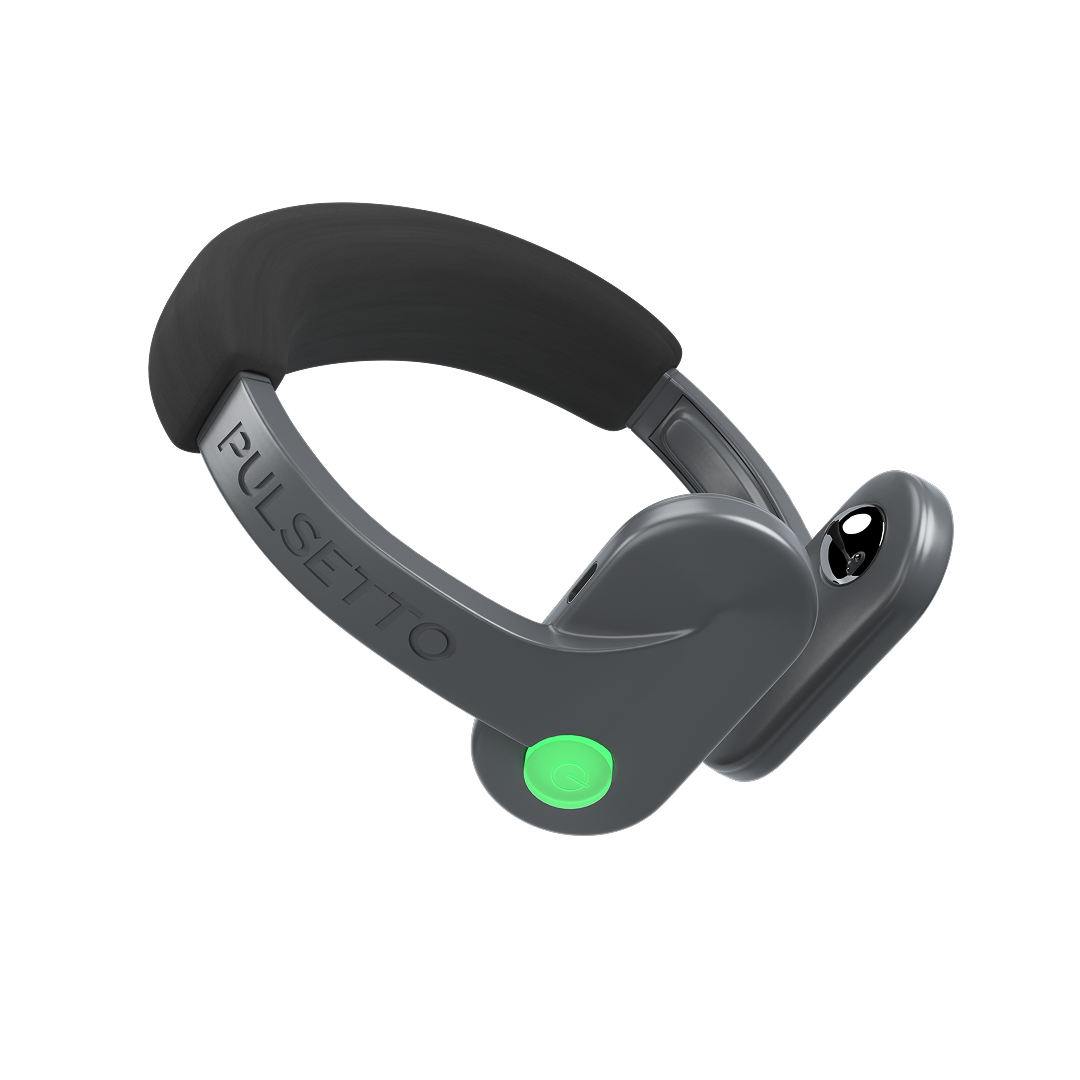
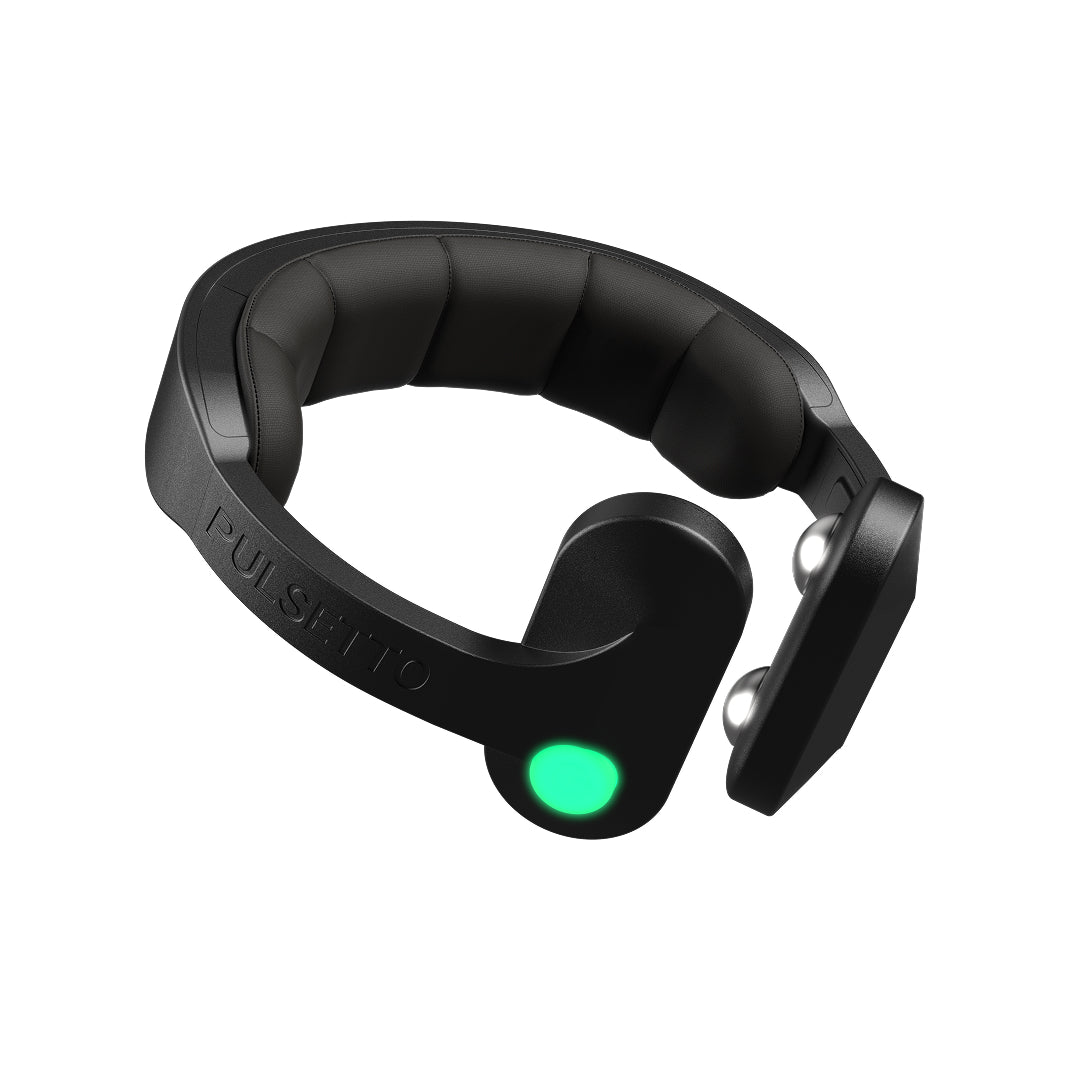
Most people's routines fall short on that third piece specifically, usually for a simple reason: nobody built in a deliberate step to downshift the nervous system after the stress had already happened. A hands-free vagus nerve stimulator is one tool built for exactly that gap: four minutes aimed at activating the parasympathetic side of the nervous system, the "rest day" half of the stress-training cycle. In Pulsetto's own randomized, open-label pilot study (n=40), four weeks of consistent use was associated with a 45.3% reduction in GAD-7 anxiety scores and a 41.0% improvement in PSQI sleep-quality scores, both markers tied to how well the nervous system recovers between stressors.
Talk to a doctor before starting any new stress-management routine if you're managing a diagnosed anxiety disorder, are under the care of a mental health professional, or have a condition affected by autonomic nervous system changes.
Try Pulsetto

A training program only works if the recovery half actually happens, and that's the half most people's routines quietly skip. Say you're already doing the harder work: seeking out manageable challenges, staying consistent, treating a hard day as useful. The piece still missing is usually those few minutes afterward that let your nervous system absorb the adaptation instead of carrying the load into tomorrow.
That's the specific gap Pulsetto is built to close, a bilateral vagus nerve stimulation device designed to make the recovery side of the cycle as deliberate as the stress side already is for most people. Pair it with whatever tracks your own trend, a stress-inoculation mindset shift, a wearable's HRV data, or Pulsetto's own Stress Resilience Score, and you'll be training the whole cycle instead of just enduring half of it.
Give the recovery half of that cycle the same deliberate attention the stress half already gets. Try Pulsetto and spend the four minutes your nervous system needs to actually adapt.
FAQ
How do you train stress like a muscle?
The same way you train a muscle: with a manageable dose of a real stressor, repeated consistently, followed by genuine recovery. This mirrors hormesis, the biological principle where a moderate dose of a stressor triggers adaptation while an excessive dose causes harm. Avoiding stress entirely skips the training stimulus. Constant stress without recovery skips the adaptation.
What is hormesis in simple terms?
Hormesis is a dose-response pattern where a small or moderate amount of a stressor is beneficial and a large amount of the same stressor is harmful. Exercise, brief cold exposure, or intermittent fasting are commonly cited examples. The underlying idea is that the body's stress-response systems get stronger when they're occasionally, moderately challenged, not when they're never challenged at all.
Is all stress actually good for you, then?
No. Hormesis specifically describes moderate, intermittent stress followed by recovery. Chronic, unrelenting stress without adequate recovery is linked to allostatic load, a state of cumulative physiological wear, not adaptation. The dose and the recovery period both matter; removing either one changes the outcome.
Can changing my mindset about stress actually change my body's response to it?
There's real evidence for this, though it's a moderate effect rather than a complete solution. Research on stress mindset has found that people who view a stressor as enhancing tend to show more moderate physiological stress reactivity than people who view the same stressor as purely debilitating. A meta-analysis of mindset-based interventions found a small but genuine improvement in performance outcomes, alongside a clear finding that mindset shifts alone are not a substitute for actually managing stress dose and recovery.
Who should be cautious about using a vagus nerve stimulation device like Pulsetto?
Pulsetto is a general wellness product. It is not a medical device, and it isn't the right fit for everyone.
Do not use Pulsetto if:
Talk to a doctor before use if:
-
You have a cardiovascular condition
-
You've had recent neck or throat surgery
-
You have known carotid artery issues
Scientific research
[1] Hormesis defined (Mattson, 2007, Ageing Research Reviews, 1,000+ citations)
[2] The evolution of the concept of stress and the framework of the stress system (Lu et al., 2021, Cell Stress, 316 citations)
[3] Exercise, oxidative stress and hormesis (Radák et al., 2007, Ageing Research Reviews, 668 citations)
[4] The hormesis principle of neuroplasticity and neuroprotection (Mattson & Leak, 2024, Cell Metabolism, 48 citations)
[5] Allostasis and allostatic load: expanding the discourse on stress and cardiovascular disease (Logan & Barksdale, 2008, Journal of Clinical Nursing, 148 citations)
[6] Stress Inoculation Training (Meichenbaum, 1985, Pergamon Press)
[7] Psychosocial interventions in workplace mental health promotion: an overview (Czabała et al., 2011, Health Promotion International, 124 citations)
[8] Rethinking stress: the role of mindsets in determining the stress response (Crum, Salovey & Achor, 2013, Journal of Personality and Social Psychology, 1,082 citations)
[9] Effectiveness of stress arousal reappraisal and stress-is-enhancing mindset interventions on task performance outcomes: a meta-analysis of RCTs (Bosshard & Gomez, 2024, Scientific Reports, 28 citations)