What "Stress Fitness at Home" Actually Means

Stress fitness isn't one skill, it's four separate systems that each respond to training in a different way.
-
Breath work changes what's happening in your body in the next five minutes.
-
Physical conditioning changes how your cardiovascular system responds to a stressor over weeks.
-
Nervous-system recovery practices change how fast you come back down after something spikes your stress response.
-
And cognitive reappraisal changes how a given stressor gets interpreted before it even has a chance to escalate.
A routine that only trains one of these tends to plateau, because the other three keep showing up unaddressed. The version below trains all four without needing anything beyond a chair, some floor space, and a few minutes at different points in the day.
Step 1: Train Your Breath
Breath is the fastest lever you have, because it's the one part of the stress response you can directly control on command. A simple version: inhale for four counts, hold for four, exhale for six to eight, and repeat for five to ten minutes. The longer exhale is doing the real work, it's the part of the breath cycle most associated with parasympathetic, rest-and-digest activation. A meta-analysis of 12 randomized controlled trials covering 785 adult participants found that breathwork practice produced a small-to-medium reduction in self-reported stress compared with control conditions (g = -0.35), with comparable effect sizes for anxiety and depressive symptoms across a broader set of trials [1]. No app or timer is required, though either can help until the pacing becomes automatic.
Step 2: Train Your Body
Physical conditioning changes how your cardiovascular system handles a stressor, and none of it requires a gym. Bodyweight squats, push-ups against a wall or the floor, a set of stairs walked a few extra times, or just brisk walking in place all count, the mechanism is sustained aerobic effort, not a specific piece of equipment. In a randomized controlled trial, twelve weeks of aerobic endurance training improved cardiovascular reactivity and heart-rate recovery after a standardized psychosocial stress test, though the same study found no matching improvement in HRV or cortisol recovery specifically [2]. That's a real, useful effect, just not a complete one, which is part of why this routine pairs it with the recovery-focused practices in Step 3 rather than treating exercise as the whole answer.
Step 3: Train Your Nervous System's Recovery
This step is about how fast you come back down after a stress spike, not about preventing the spike itself. Two free techniques cover most of it. Progressive muscle relaxation, tensing and releasing each major muscle group from feet to face, teaches your body to recognize tension early enough to release it before it compounds. Finishing a shower with 30 to 60 seconds of cold water does something more specific: a study using repeated cold-pressor exposure found measurable habituation in heart rate, blood pressure, and cardiac output reactivity across repeated cold exposures, meaning the acute stress response itself, not just your tolerance for discomfort, becomes more efficient with practice [3]. Both take under ten minutes and need nothing but a bit of privacy.
Step 4: Train How You Interpret Stress
The same physical sensations, a racing heart, quicker breathing, a jittery feeling, can be read two ways: as a sign something is wrong, or as your body mobilizing resources to meet a challenge. Research on arousal reappraisal found that consciously choosing the second interpretation changes the cardiovascular stress response itself: participants coached to reframe arousal this way showed a more efficient cardiac output pattern and lower vascular resistance under an acute stress test than participants given no reframing instruction [4]. The exercise takes seconds, not minutes: naming the sensation, relabeling it, and moving on, practiced enough times that it becomes the default response rather than something you have to remember to do.
An Optional Accelerant: Vagus Nerve Stimulation

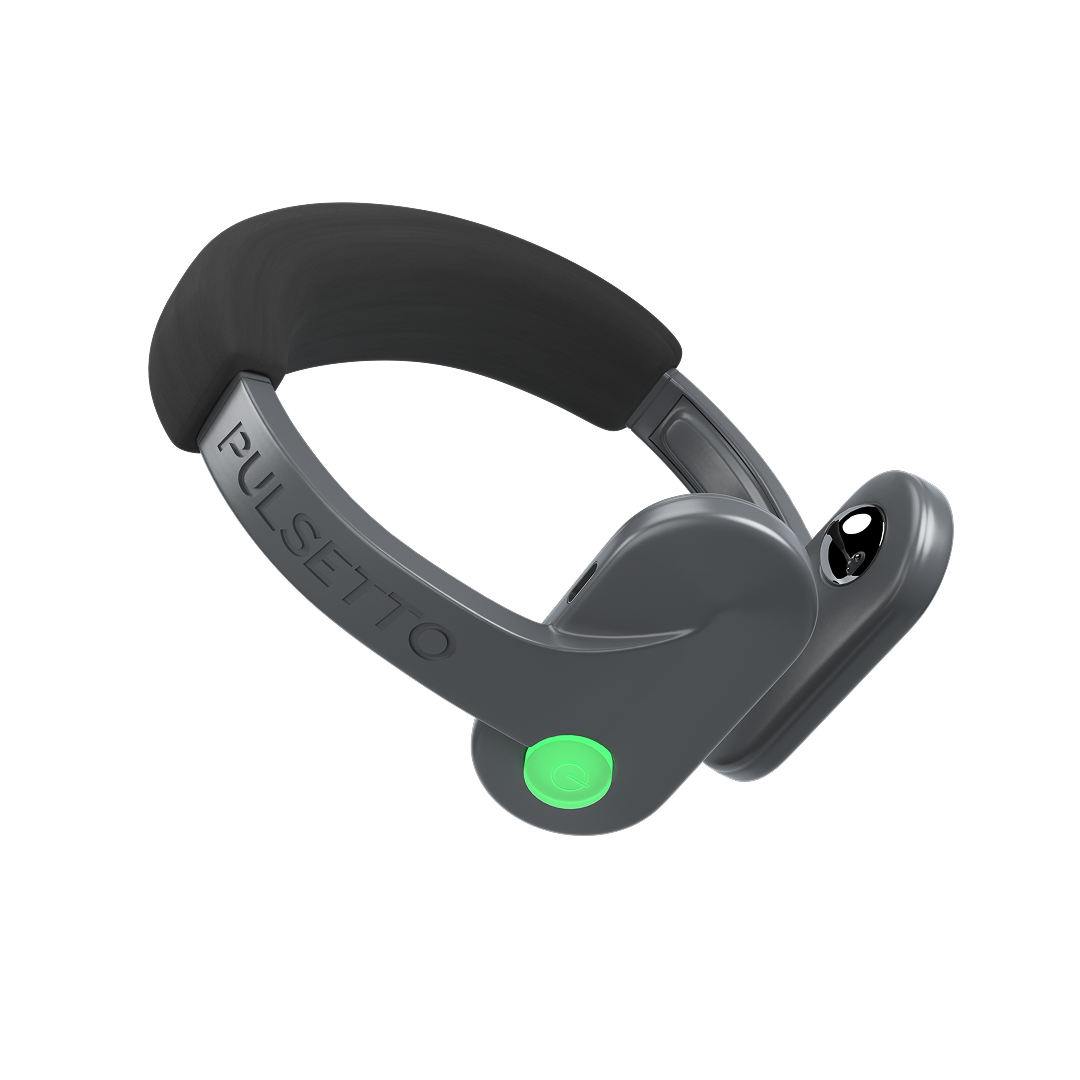
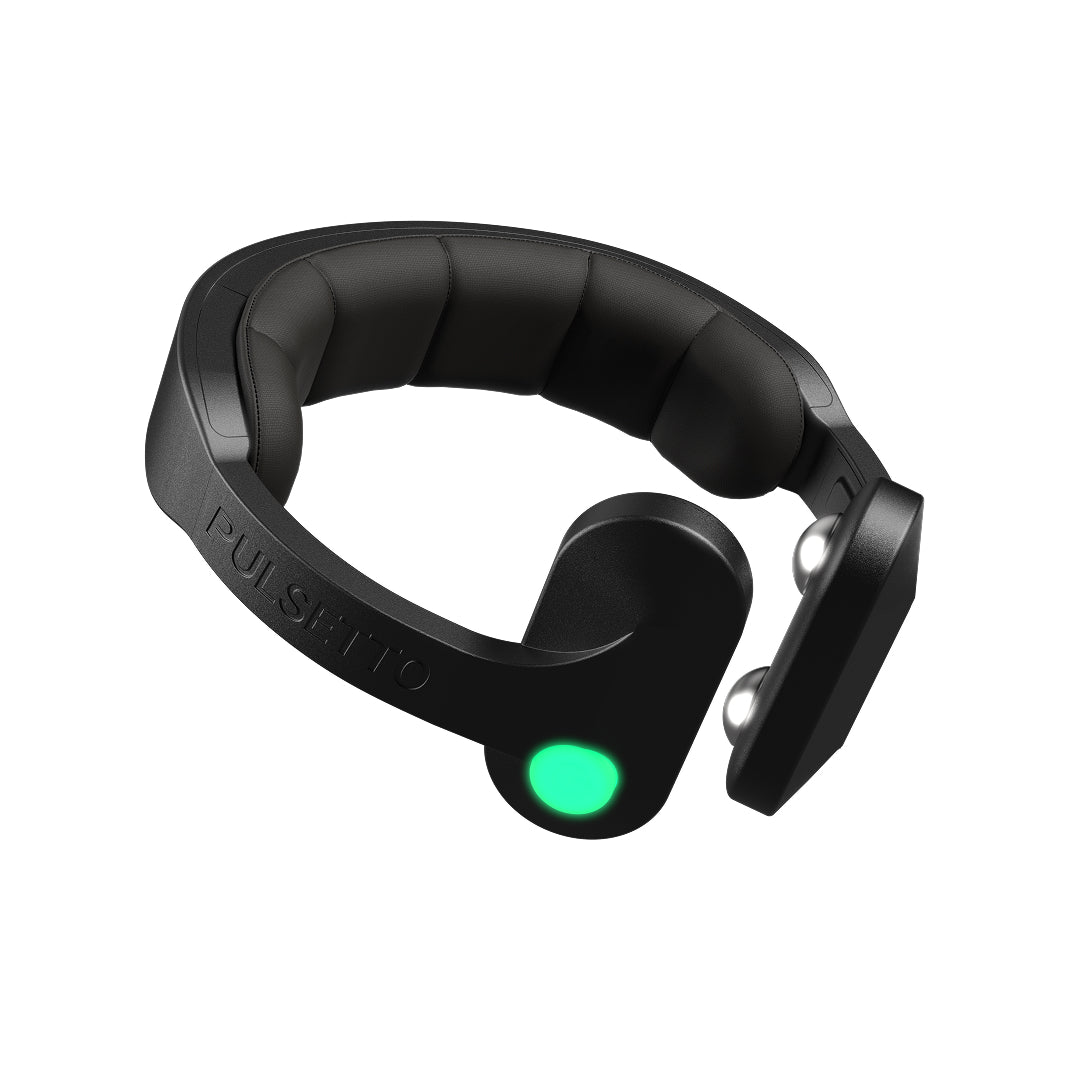
Everything above works with zero equipment, and that's a deliberate design choice, not a compromise. But if you want to speed up Step 3 specifically, the nervous-system-recovery piece, a device like Pulsetto does that by delivering bilateral cervical stimulation directly rather than asking you to build the recovery response through repetition. Sessions run 4 to 10 minutes, hands-free, no technique to learn.
Pulsetto tested that approach in a randomized, open-label pilot study of 40 adults over 4 weeks, comparing bilateral against unilateral cervical stimulation. Participants reported a 55.9% reduction in depressive symptoms (PHQ-9) and a 41.0% improvement in sleep quality (PSQI) from baseline at the 4-week mark, and on the biomarker side, hair cortisol, a chronic-stress marker, fell 47.5% in the bilateral group compared with 31.4% in the unilateral group.
It's genuinely optional. Someone doing Steps 1 through 4 consistently is already training all four systems this article covers. Vagus nerve stimulation just gives the recovery step a hands-free, no-technique option for the days when a shower finish or a muscle-relaxation script feels like more effort than you have.
Disclaimer: Pulsetto is a general wellness product and is not intended to diagnose, treat, cure, or prevent any disease or medical condition.
When to Get Professional Guidance First
Most of this routine, breathing, bodyweight movement, muscle relaxation, and reframing, carries no special risk for a healthy adult. Two exceptions are worth naming directly. Anyone new to exercise or managing an existing cardiovascular condition should check with a physician before starting Step 2, and cold exposure in Step 3 warrants the same caution for anyone with a heart condition. If you add vagus nerve stimulation as the optional accelerant, that carries its own specific contraindications: anyone with a pacemaker or other implantable device, epilepsy or a seizure disorder, or who is pregnant should get medical guidance first, along with anyone with an active cardiac arrhythmia, a recent neck or throat injury or surgery, or a carotid artery condition [5].
Putting It Together: A Sample Day
|
Time of day
|
Step
|
Duration
|
|
Morning
|
Step 1: paced breathing
|
5-10 minutes
|
|
Midday
|
Step 2: bodyweight movement
|
10-15 minutes
|
|
Evening
|
Step 3: cold-water finish or muscle relaxation (optionally paired with vagus nerve stimulation)
|
5-10 minutes
|
|
As needed
|
Step 4: reappraisal in the moment a stressor hits
|
A few seconds
|
You don't need to hit all four every single day to see the routine work; missing Step 2 on a rest day or skipping Step 4 on a calm one doesn't undo the rest. The point is having all four available, not running a perfect streak.
Try Pulsetto
If Step 3 is the one you keep skipping, that's usually the tell that a hands-free option would help more than another reminder to do it. The Pulsetto vagus nerve stimulator delivers the recovery-training effect directly, no cold water or relaxation script required. See how it's worked for other people first: read real user reviews.
Frequently Asked Questions
Do I really need zero equipment for this to work?
Yes, for the core routine. Steps 1 through 4 use nothing but a chair, some floor space, and access to a shower or sink for the cold-exposure piece in Step 3. The only optional addition that involves a purchase is the vagus nerve stimulation accelerant, and even that isn't required for the routine to function.
How long before I notice a difference?
Breathing and cognitive reappraisal, Steps 1 and 4, tend to produce a noticeable shift within the same session, since they act on the acute stress response directly. The aerobic-conditioning and cold-exposure effects described in Steps 2 and 3 are cumulative and were measured after several weeks of consistent practice, not a single session.
I only have ten minutes a day. What should I prioritize?
Paced breathing (Step 1) and cognitive reappraisal (Step 4) give the fastest return for the least time invested, since both work in the moment rather than requiring weeks to build up. Add Step 2 or 3 once ten minutes becomes a stable habit rather than trying to fit all four into a short window from day one.
Is vagus nerve stimulation necessary for this routine to work?
No. It's positioned as an optional accelerant for Step 3 specifically, not a requirement. Someone doing the four equipment-free steps consistently is already training everything this article covers; a device like Pulsetto just removes the need to build the recovery response through repeated practice.
Scientific Research
[1] Effect of breathwork on stress and mental health: A meta-analysis of randomised-controlled trials (Fincham, Strauss, Montero-Marin & Cavanagh, 2023, Scientific Reports, 172 citations)
[2] Effects of a 12-week endurance training program on the physiological response to psychosocial stress in men: a randomized controlled trial (Klaperski, von Dawans, Heinrichs & Fuchs, 2014, Journal of Behavioral Medicine, 156 citations)
[3] Habituation of the stress response multiplex to repeated cold pressor exposure (Bullock et al., 2023, Frontiers in Physiology, 19 citations)
[4] Mind over matter: Reappraising arousal improves cardiovascular and cognitive responses to stress (Jamieson, Nock & Mendes, 2012, Journal of Experimental Psychology: General, 413 citations)
[5] Safety and tolerability of transcutaneous vagus nerve stimulation in humans: a systematic review (Redgrave et al., 2018, Brain Stimulation, 215 citations)