What burnout actually does to your body

Burnout is a specific, chronic stress response, well beyond ordinary job fatigue, and it leaves physical fingerprints.
People with clinical burnout show measurably lower heart rate variability across nearly every standard measure, compared to both healthy controls and people with milder, non-clinical burnout scores [3]. Lower HRV reflects reduced parasympathetic activity, the "rest and digest" side of your nervous system that's supposed to counterbalance stress. When that side goes quiet for long enough, burnout is often the result.
This matters for how you think about fixing it. Toughing it out doesn't rebuild parasympathetic capacity, and neither does a single relaxing weekend. The nervous system changes that come with burnout accumulate over months, so reversing them takes weeks of sustained effort.
A few things worth knowing about how burnout differs from ordinary stress:
-
It builds up gradually. A single stressful week rarely triggers burnout on its own; months of unmanaged stress without adequate recovery time do.
-
It's specific to sustained demands. The World Health Organization classifies burnout as an occupational phenomenon resulting from chronic workplace stress that hasn't been successfully managed. [8] That classification sits separately from a general mental health diagnosis.
-
It has three recognizable dimensions. Emotional exhaustion, cynicism or detachment from your work, and a reduced sense of accomplishment. Most people notice the first one first.
Building resilience before burnout hits
Prevention works differently than recovery. The goal here is capacity, giving your nervous system enough recovery bandwidth that ordinary stress doesn't accumulate into something chronic.
A few approaches have real evidence behind them:
-
Protect your social support. Resilience and social support both independently reduce burnout risk, and resilience partly explains why social support helps in the first place, according to a study following 858 adults through a sustained period of pandemic-era stress [4]. Isolation removes one of the strongest buffers you have.
-
Move regularly, on a fixed schedule. A systematic review of physical activity and burnout found strong evidence that exercise reduces emotional exhaustion in intervention studies, though the effect on other burnout dimensions is less consistent [5]. Consistency matters more than intensity here.
-
Train your nervous system directly. Four weeks of mobile heart rate variability biofeedback training reduced burnout scores in employees, with a larger effect than simply waiting it out [2]. Pulsetto sits in this same category, covered in more detail further down.
-
Set a real boundary on recovery time. Think total hours each week where your attention isn't owed to anyone, beyond simply staying reachable after hours. Even 20 minutes a day of genuinely undemanded time counts toward this.
None of these work as a one-time fix. They work because they're repeated often enough that your baseline shifts.
Recovering once burnout has already set in
Recovery starts from a different place than prevention. The nervous system is already depleted, so the first job is reducing demand. Adding another self-improvement project on top of an already-exhausted system usually backfires.
Sleep comes first, and it isn't optional. In a study of white-collar workers on extended sick leave for burnout, the people who returned to work fastest were the ones whose sleep continuity improved most during their recovery period [6]. Sleep quality tracked recovery closely, one of the clearest predictors of how fast people returned to normal functioning.
Reduce load before you try to build anything back up. This sounds obvious, but it's the step people skip. Adding a meditation habit or a new supplement routine on top of an unchanged workload rarely moves the needle, because the underlying demand hasn't dropped.
Structured programs help more than willpower alone. A meta-analysis of resilience training interventions in nursing staff found a meaningful reduction in total burnout scores and a moderate reduction in emotional exhaustion specifically, though effects on cynicism and reduced accomplishment were less consistent [1]. Structure and repetition beat good intentions.
Real-world usage data backs this up too. In Pulsetto's own in-app wellbeing check-ins, separate from any controlled study, 70% of users report less burnout after starting, with the average reported reduction growing from 23% at their two-week check-in to 27% by their next one. It's a real-world signal that lines up with the controlled research above: people recovering from burnout report the biggest gains when something actively works on their nervous system, alongside changes to their calendar and workload.
Where active nervous system training fits

Ready to add something that works on your physiology directly? Check out Pulsetto's vagus nerve stimulator before you build out the rest of your recovery plan.
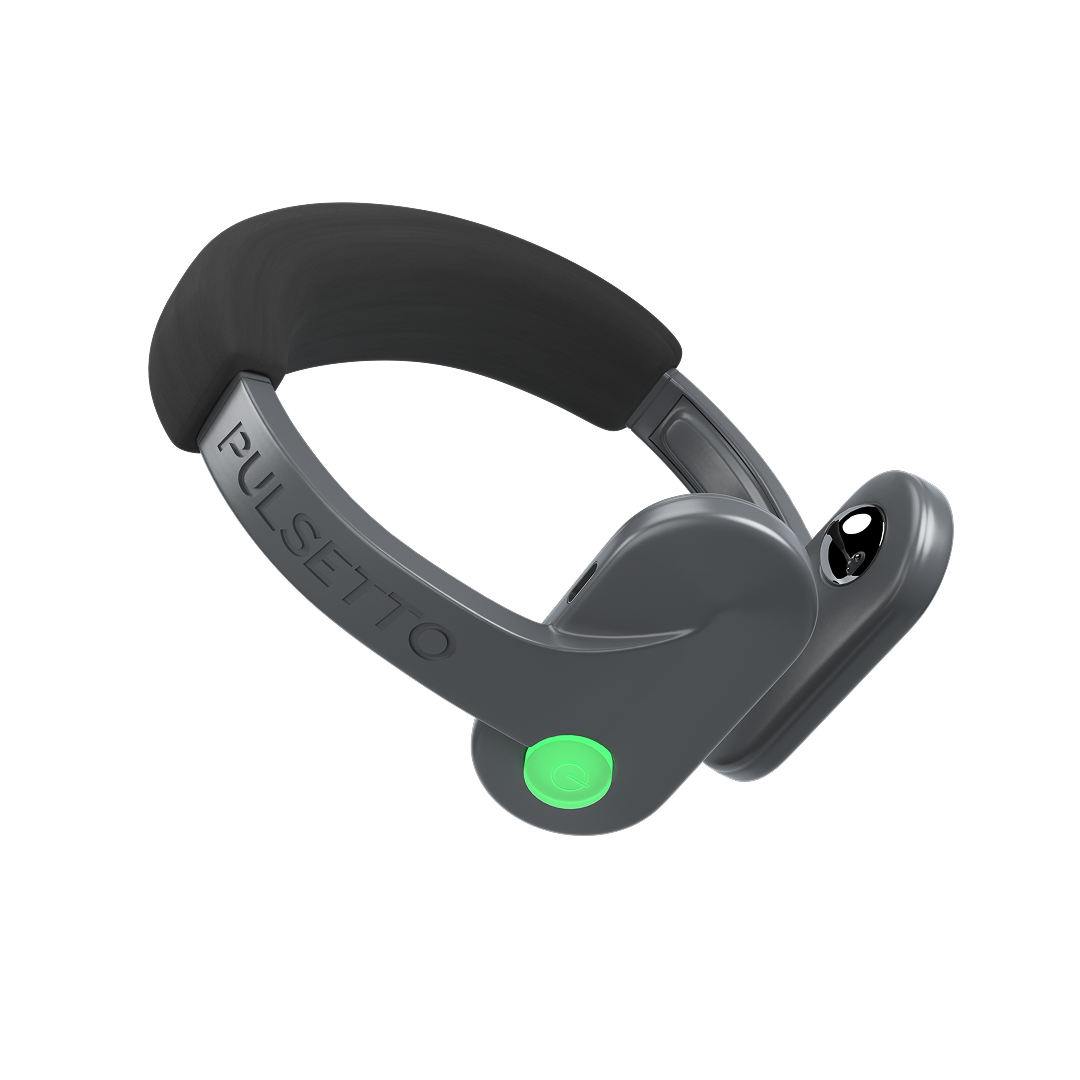
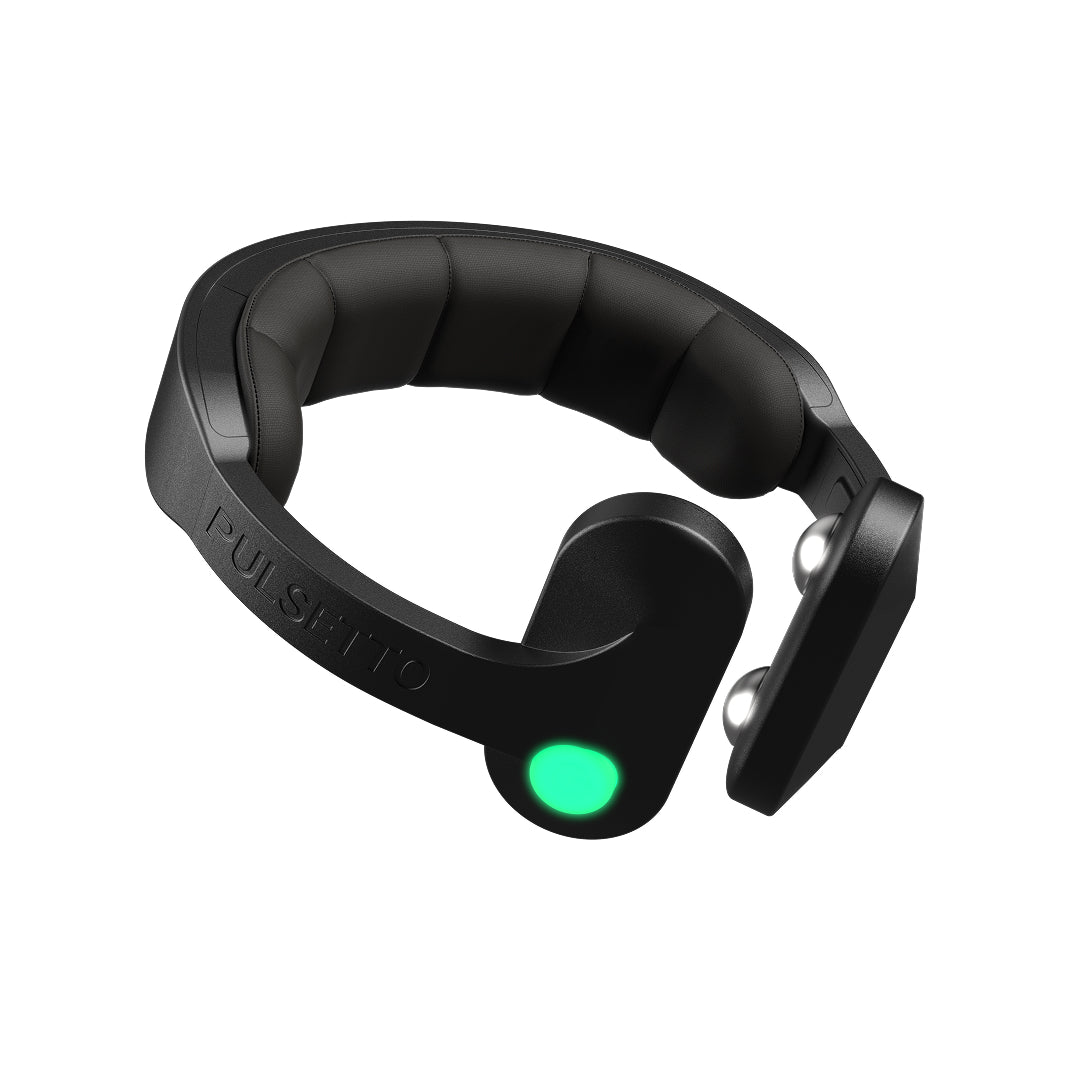
Pulsetto is a hands-free, bilateral cervical vagus nerve stimulator, worn on the neck for roughly four minutes a session. The bilateral part is the differentiator: most consumer nVNS devices stimulate one side of the neck or one ear, while Pulsetto stimulates both sides at once.
This matters specifically for burnout, because burnout's physiological signature runs through the same system Pulsetto targets:
-
Cortisol and cortisone are chronic-stress biomarkers. In Pulsetto's own randomized, open-label pilot study(n=40, 4 weeks), participants using bilateral stimulation saw larger reductions in hair cortisol and cortisone than participants using unilateral stimulation. Both are markers of the same HPA-axis activity that's chronically disrupted in burnout.
-
The underlying mechanism has independent research support. A systematic review of transcutaneous vagus nerve stimulation in healthy adults found measurable increases in heart rate variability parameters across the majority of included trials [7], the same parasympathetic signal that's suppressed in clinical burnout.
-
The Free Lifetime App includes a dedicated Burnout program, alongside Stress, Sleep, Pain, plus Anxiety, at no recurring cost.
At $269 for the Lite model, it's positioned as a daily-use tool rather than an occasional splurge, something you can build into a recovery routine without adding a new subscription to manage.
The best tools for burnout recovery
There isn't one tool that covers prevention and recovery on its own. A realistic toolkit usually draws from each of these categories:
-
Professional support. A therapist or a structured resilience-training program, especially if burnout has already reached the point of chronic exhaustion or detachment from your work.
-
Protected sleep. Fewer disruptions matter more than extra hours; sleep continuity tracked recovery speed more closely than sleep duration alone in the research above.
-
Regular movement. It doesn't need to be intense. Consistency is what shows up in the evidence more than intensity.
-
Social connection you can actually lean on. Coworkers, friends, or family who genuinely know what you're dealing with and check in regularly.
-
Active nervous system training. Heart rate variability biofeedback, paced breathing, or bilateral vagus nerve stimulation like Pulsetto. Most "best burnout tools" lists skip this category entirely, even though it has the most direct physiological mechanism of the group.
-
A real reduction in load. An actual drop in what's being asked of you, even temporarily, distinct from a productivity hack that just lets you cram more in.
Most people recovering from burnout end up using three or four of these at once. The mistake is expecting any single one, including a device, to do the whole job alone.
Burnout doesn't resolve the same way it built up, one bad week at a time. It takes a deliberate mix of less demand, better sleep, real connection, plus something that works on your nervous system directly instead of just tracking how depleted it's become. If you're looking for that last piece, Pulsetto is built specifically for the four minutes a day that active recovery actually requires.
FAQ
What's the difference between stress and burnout?
Stress is a normal response to a demanding situation, and it usually resolves once the situation does. Burnout is what happens when stress goes unmanaged for long enough that it becomes chronic, showing up as emotional exhaustion, detachment from your work, and a reduced sense of accomplishment, along with measurable changes like lower heart rate variability [3].
Can you build resilience once you're already burned out, or is it too late?
It's not too late. The order of operations simply changes: building resilience from a healthy baseline is about adding capacity. Recovering from burnout starts with reducing demand and protecting sleep first, then rebuilding capacity once the acute depletion has eased, as the sleep-recovery research above found.
How long does it take to recover from burnout?
It varies widely depending on severity and how much workload actually changes during recovery. What's consistent across the research is that sleep continuity is one of the clearest predictors of how quickly someone returns to their previous level of functioning, more so than time off alone.
Is Pulsetto FDA approved?
No. Pulsetto is marketed as a general wellness device, the FDA category for products that don't make specific medical claims. It is CE certified and FCC certified. Some competitors in the broader vagus nerve stimulation space, like gammaCore, are FDA-cleared specifically for migraine and cluster headache, a different use case from general stress and burnout support.
Who shouldn't use a vagus nerve stimulator like Pulsetto?
Anyone with any of the following should avoid it:
Anyone with a cardiovascular condition, a recent neck or throat surgery, or a carotid artery issue should consult a doctor before use.
Scientific research
[1] The Efficacy of Resilience Training Interventions in Mitigating Burnout among Nursing Staff: A Systematic Review and Meta-Analysis (Alshotiri et al., 2026, Asian Journal of Research in Medical and Pharmaceutical Sciences)
[2] Mobile Heart Rate Variability Biofeedback for Work-Related Stress in Employees and the Influence of Instruction Format (Digital or Live) on Training Outcome: A Non-Randomized Controlled Trial (Vagedes et al., 2024, Applied Psychophysiology and Biofeedback, 4 citations)
[3] Low heart rate variability in patients with clinical burnout (Lennartsson et al., 2016, International Journal of Psychophysiology, 77 citations)
[4] The protective role of resilience and social support against burnout during the COVID-19 pandemic (Shahwan et al., 2024, Frontiers in Public Health, 22 citations)
[5] Systematic review of the association between physical activity and burnout (Naczenski et al., 2017, Journal of Occupational Health, 170 citations)
[6] Sleep physiology in recovery from burnout (Ekstedt et al., 2009, Biological Psychology, 93 citations)
[7] A systematic review of the effects of transcutaneous auricular vagus nerve stimulation on baroreflex sensitivity and heart rate variability in healthy subjects (Soltani et al., 2023, Clinical Autonomic Research, 38 citations)
[8] Burn-out an "occupational phenomenon": International Classification of Diseases (World Health Organization, 2019)