What emotional resilience actually is

Resilience isn't the absence of difficult emotions, and it isn't the same as being unbothered, tough, or stoic. The research literature defines it around two core ideas: exposure to genuine adversity, and an adaptive response to that adversity that restores functioning [1]. Without both pieces, the word doesn't really apply. Someone who never faces hardship isn't "resilient"; they're untested. Someone who shuts down their emotions rather than adapting to them isn't resilient either; they're suppressing.
That distinction matters because it changes what building resilience actually looks like:
-
It's not about feeling less. Resilient people still feel stress, grief, anger, and fear. The skill is in what happens next, not in blocking the feeling itself.
-
It's a process, not a trait. A major review of the neurobiology of stress resilience describes it as active rather than fixed: prefrontal-based cognitive control and hippocampus-based processing appear to protect against stress-related dysfunction, and researchers are increasingly tracing links between how well those functions hold up under stress and the brain's broader capacity for change [2].
-
It's specific to the demand. Resilience to a difficult conversation and resilience to a major loss draw on overlapping but not identical skills. The four steps below build the general-purpose version.
Here’s a step-by-step guide to building emotional resilience:
Step 1: Name what you're feeling
The instinct when something stressful happens is often to push the feeling aside and keep moving. The research points the other way. Putting a specific word to an emotional state, a practice researchers call affect labeling, measurably reduces activity in the amygdala, the brain region that drives the stress alarm response, and increases activity in the prefrontal regions involved in regulation [3]. The effect shows up even though most people don't expect labeling an emotion to help; it works quietly, in the background, rather than feeling like a deliberate coping strategy.
In practice, this step is simple but easy to skip:
-
Use a specific word, not a vague one. "Frustrated" or "disappointed" does more than "fine" or "bad."
-
Label it out loud or in writing, not just as a passing thought. Writing tends to slow the process down enough to make the label more precise.
-
Label the emotion, not the story around it. "I'm anxious" is a label. "This is going to be a disaster" is a prediction, and it skips the labeling step entirely.
-
Do it before trying to fix anything. Naming comes first; problem-solving comes after the initial spike has settled.
Step 2: Reframe the story, not just the feeling
Once the emotion is named, the next skill is changing how you're interpreting the situation that triggered it. This is cognitive reappraisal, and it's one of the most thoroughly studied emotion regulation strategies in psychology. A review comparing it directly to suppression, trying to just hold the reaction in, found that reappraisal is associated with healthier patterns of affect, social functioning, and well-being than suppression is [4]. A meta-analysis of neuroimaging studies backs up why it works at the mechanism level: reappraisal recruits cognitive control regions in the frontal and parietal cortex that actively dial down amygdala reactivity, rather than simply distracting from it [5].
Reappraisal isn't about pretending a hard situation is good. It's about testing whether your first interpretation of it is the only one available. A few concrete versions:
-
Distancing: Picture the situation as if you were describing it to someone else, rather than living inside it.
-
The friend test: Ask what you'd tell a close friend in the exact same situation. People are reliably more generous and realistic with others than with themselves.
-
Benefit-finding: Look for a genuine, specific way the situation could lead somewhere useful, not a forced silver lining.
-
Zooming out on time: Ask how much this will matter in a week, a year, or five years. This doesn't erase the current feeling, but it puts it in proportion.
Step 3: Build real social support before you need it

Social support isn't just a comfort while you're stressed; it changes the physiological impact of the stressor itself. The foundational research on this, now decades old and still the reference point for the field, distinguishes between two ways support helps: a general boost to well-being, and a specific buffering effect that only shows up under stress, protecting people from the adverse effects of a stressful event they're actually facing [6]. Both effects are real, but the buffering effect is the one that matters most for resilience specifically, and it depends on the support being available and responsive, not just present in the background.
That distinction has practical implications:
-
Quality over headcount. A large network of casual contacts buffers stress less than a smaller number of relationships you can actually turn to under pressure.
-
Build it before the crisis, not during it. Buffering support depends on existing relationships being available when a stressor hits, which means the investment has to happen on ordinary days.
-
Ask for the specific kind of support you need. Practical help, a listening ear, and honest perspective are different things, and naming which one you want makes it more likely you'll get it.
-
Offer support too. The buffering relationship runs in both directions over time; being someone else's support is part of building your own network.
Step 4: Practice on purpose
Resilience responds to structured practice the same way a physical skill does. A systematic review and meta-analysis of resilience training programs, covering eleven randomized controlled trials, found a moderate positive effect on measured resilience, with programs combining cognitive behavioral techniques and mindfulness training performing best [7]. This is a meaningful finding specifically because it's based on structured training outcomes, not self-reported confidence: people who went through these programs were measured as more resilient afterward, not just more optimistic about their resilience.
Turning that into a routine doesn't require a formal program:
-
Practice the reframe on small stressors first. A delayed train or a frustrating email is lower stakes than a major setback, and it's where the reappraisal habit actually gets built.
-
Debrief difficult moments afterward, briefly. What happened, what you felt, what you did about it. This turns one-off experiences into a pattern you can draw on.
-
Combine cognitive and physical practice. The programs with the strongest effects paired cognitive strategies like reappraisal with a body-based practice like mindfulness or breathing, rather than relying on thinking alone.
-
Expect friction at first. Like physical training, the early sessions of any new coping skill feel effortful. The research measuring resilience gains does so across weeks of practice, not a single attempt.
Step 5: Give your body a way to close the loop
Everything above happens at the level of thought and behavior. But resilience also has a physiological floor, and that floor is set in part by vagal tone: how strongly your vagus nerve exerts its calming influence on the heart once a stressor has passed. A review connecting vagus nerve function to performance under pressure describes vagal-centered approaches, including direct vagus nerve stimulation, as a way to widen the gap between a manageable stress response and one that tips into fatigue or burnout, by improving how efficiently the body returns to baseline afterward [8].
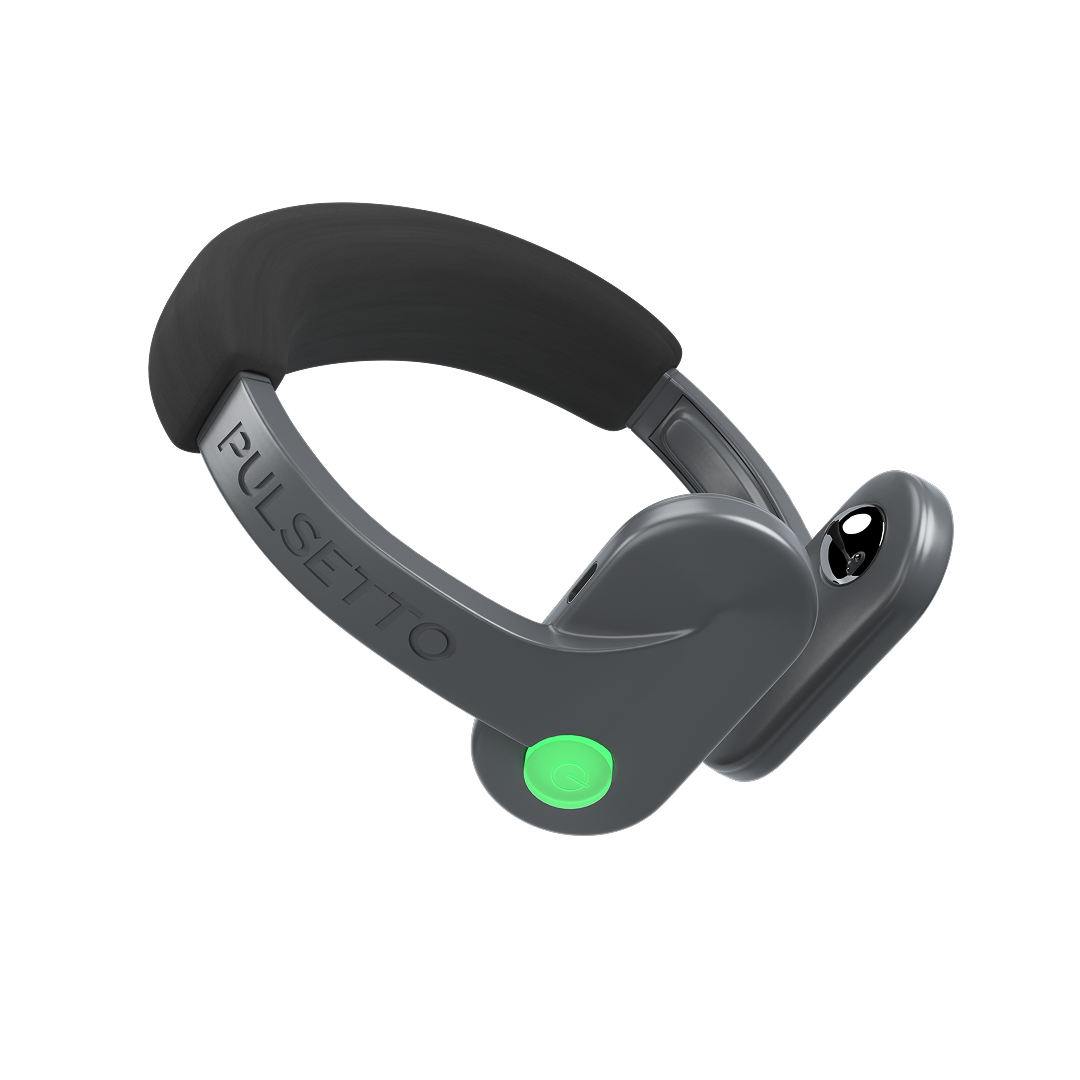
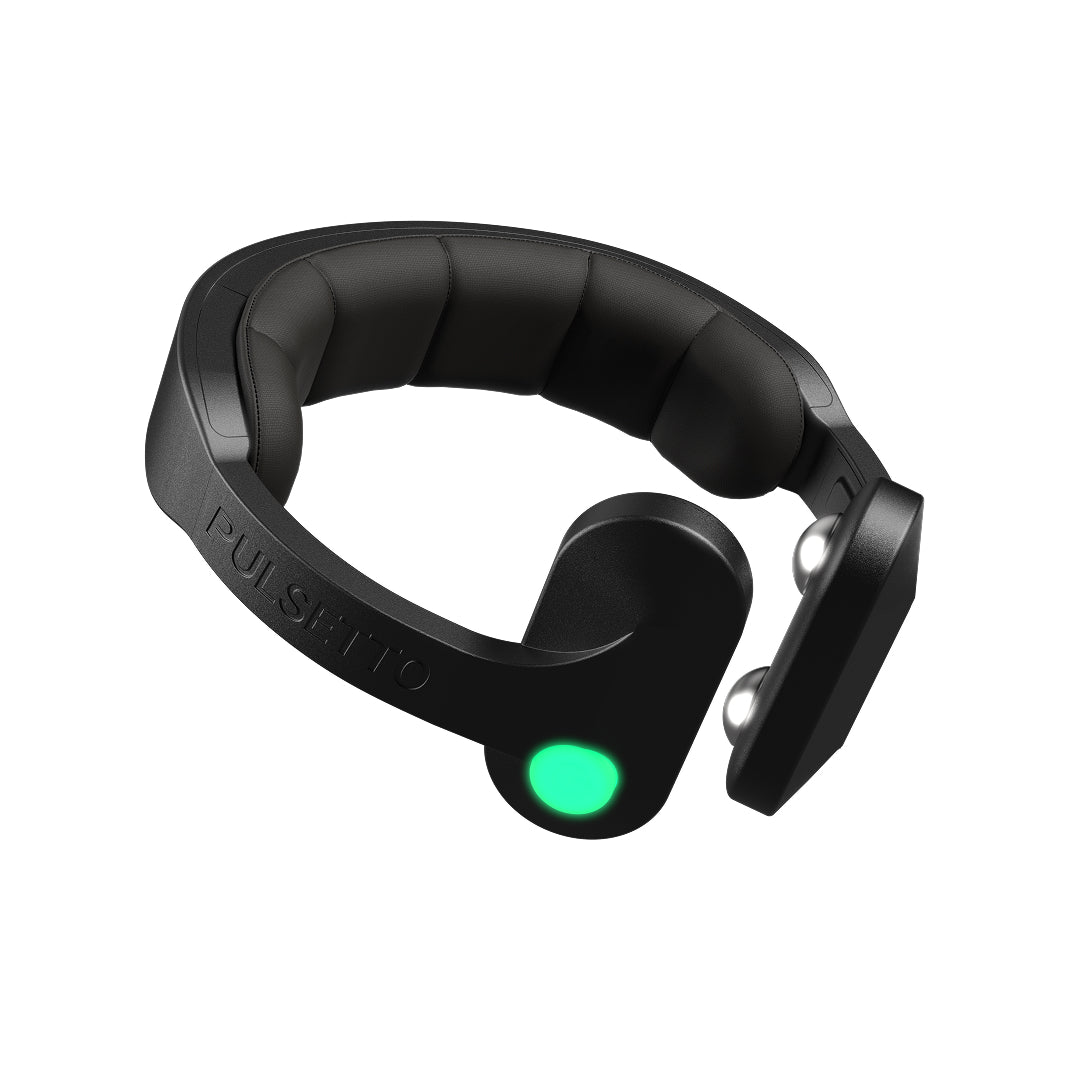
This is where a vagus nerve stimulator like Pulsetto fits into building resilience: not as a substitute for the cognitive and social skills above, but as support for the recovery step underneath all of them. Pulsetto delivers bilateral cervical vagus nerve stimulation, both sides of the neck at once, in roughly 4-minute sessions.

In Pulsetto's own randomized, open-label pilot study (n=40, 4 weeks):
-
Bilateral stimulation produced a 47.5% reduction in hair cortisol, a biomarker of chronic stress exposure, over the study period.
-
In Pulsetto's own in-app wellbeing check-ins, 70% of users report lower anxiety and 70% report less burnout, with the average reported anxiety reduction growing from 24% at the two-week check-in to 27% by the next one.
A reliable way to close out a stress response, on the days the cognitive and social steps above aren't enough on their own, is part of what keeps the whole system trainable instead of gradually wearing down.
How to do it: Pulsetto sits on the neck for about 4 minutes at a time, hands-free, so it fits after a hard conversation, a difficult day, or any moment where the steps above have done their work and your body still needs help winding down.
Disclaimer: It's a general wellness device, not FDA-cleared and not marketed to diagnose, treat, or cure any condition, and it supports the recovery half of resilience rather than replacing the cognitive and social skills above.
When a setback is more than a setback
The steps above are built for the ordinary difficulty of daily life: hard conversations, disappointments, workload, conflict. They're not a substitute for professional support when what someone is facing goes beyond that. Signs it's time to bring in a licensed provider rather than working through it alone:
-
Distress that isn't tied to a specific, resolvable situation and doesn't ease with time
-
A recent loss, trauma, or major life disruption that feels too large to process through reframing alone
-
Persistent low mood, disrupted sleep, or anxiety that interferes with daily functioning
Try Pulsetto
Emotional resilience isn't a trait you either have or don't. It's four ordinary skills, practiced repeatedly: naming what you feel, reframing what it means, leaning on people who can actually buffer the load, and giving your body a way to close the loop once the moment has passed. Most people already have some version of the first three. The fourth is where the system most often breaks down, not for lack of understanding it, but for lack of a reliable few minutes to actually do it.
Try Pulsetto for four hands-free minutes after your next hard day and see whether that recovery step gets easier to follow through on, so the resilience you're building at the cognitive and social level has a physiological floor to stand on.
FAQ
How do I build emotional resilience?
Through four practiced skills: naming your emotions specifically instead of avoiding them, reframing situations through cognitive reappraisal rather than suppressing your reaction to them, building real social support before you need it, and giving your body a reliable way to recover once a stressful moment has passed. Research on structured resilience training shows these skills produce measurable improvement over weeks of practice, not a single insight.
Is emotional resilience a skill or a personality trait?
Mostly a skill. Resilience researchers define it as the interaction between real adversity and an adaptive response to it, not a fixed personality type. The brain circuits involved in regulating stress responses show experience-dependent change, which is the biological basis for why structured practice measurably improves resilience in randomized trials.
What's the difference between resilience and toughness?
Toughness usually implies not feeling difficulty as strongly. Resilience is different: resilient people still feel stress, grief, and fear fully. The skill is in what happens after the feeling arrives, naming it, reframing the situation, and recovering, rather than in blocking or minimizing the feeling itself.
How long does it take to build emotional resilience?
Meta-analyses of structured resilience training programs measure gains across weeks of consistent practice, not a single session. Programs combining cognitive strategies like reappraisal with a body-based practice such as mindfulness tend to show the strongest effects, which suggests consistency across both channels matters more than the length of any individual session.
Who should not use vagus nerve stimulation devices like Pulsetto?
Do not use if you have a pacemaker, an implantable medical device, epilepsy, or are pregnant. Consult a healthcare provider before use if you have cardiovascular conditions, recent neck or throat surgery, or carotid artery issues.
Pulsetto does not provide medical advice, diagnosis, or treatment, and it's intended to support general emotional and stress regulation, not to treat any diagnosed condition. Consult a qualified healthcare provider before starting use, especially if you have underlying medical conditions or are taking medications.
Scientific research
[1] Psychological resilience: A review and critique of definitions, concepts, and theory (Fletcher & Sarkar, 2013, European Psychologist, 2,260 citations)
[2] Neurobiology and systems biology of stress resilience (Kalisch et al., 2024, Physiological Reviews, 106 citations)
[3] Putting Feelings Into Words: Affect Labeling Disrupts Amygdala Activity in Response to Affective Stimuli (Lieberman et al., 2007, Psychological Science, 779 citations)
[4] Cognitive reappraisal and expressive suppression strategies role in the emotion regulation: an overview on their modulatory effects and neural correlates (Cutuli, 2014, Frontiers in Systems Neuroscience, 466 citations)
[5] Cognitive Reappraisal of Emotion: A Meta-Analysis of Human Neuroimaging Studies (Buhle et al., 2014, Cerebral Cortex, 1,799 citations)
[6] Stress, Social Support, and the Buffering Hypothesis (Cohen & Wills, 1985, Psychological Bulletin, 18,780 citations)
[7] Road to Resilience: A Systematic Review and Meta-Analysis of Resilience Training Programmes and Interventions(Joyce et al., 2018, BMJ Open, 775 citations)
[8] The vagus nerve: a cornerstone for mental health and performance optimization in recreation and elite sports (Lopez Blanco & Tyler, 2025, Frontiers in Psychology, 7 citations)